



| IN A NUTSHELL |
|
The construction industry is undergoing a significant transformation as it seeks to reduce its environmental impact. With the rise of hydrogen fuel cells as a sustainable alternative to diesel generators, the sector is exploring innovative ways to minimize emissions. The United Kingdom’s HS2 project exemplifies this shift, showcasing hydrogen technologies’ potential for greener construction practices. However, the adoption of hydrogen is not without its challenges, including high costs and logistical hurdles. This article examines the growing role of hydrogen in construction, highlighting the advancements and obstacles that define its future in this industry.
The Rise of Hydrogen Fuel Cells in Construction
Hydrogen fuel cells are gaining traction as a viable energy source in the construction industry, offering a promising alternative to traditional diesel generators. Companies like GeoPura are leading the charge, developing hydrogen generators that aim to reduce carbon emissions in one of the most polluting sectors. Despite the potential, the journey toward widespread hydrogen adoption has been challenging. The year 2024 witnessed several companies facing difficulties, raising concerns about the scalability of this technology.
The HS2 project in the UK, however, provides a beacon of hope. This extensive infrastructure project employs hydrogen fuel cells to power construction sites, illustrating how these technologies can be integrated into large-scale endeavors. The potential for hydrogen in construction is significant, but its success hinges on overcoming economic and logistical barriers. As the industry grapples with these challenges, the promise of a cleaner, more sustainable future remains on the horizon.
Innovative Energy Solutions at the HS2 Site
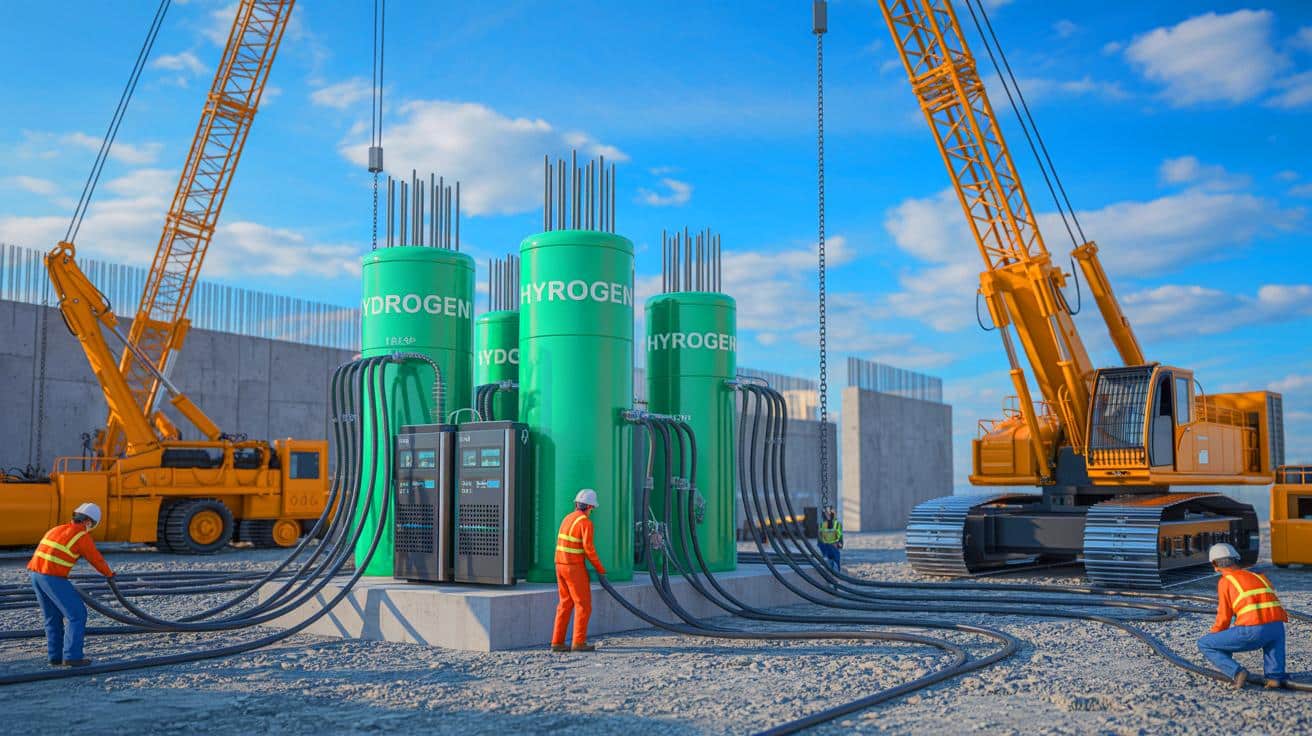
The HS2 construction site at Victoria Road in London serves as a testament to the potential of hydrogen fuel cells. Two unassuming white containers housing hydrogen fuel cells provide all the energy required for the site. This revolutionary energy solution could pave the way for emission-free construction.
Hydrogen is often hailed as the fuel of the future due to its abundance and energy density. It contains three times more energy than gasoline, and its combustion releases only water, eliminating carbon emissions entirely. This makes hydrogen an ideal candidate for powering heavy industries, including construction. The HS2 project demonstrates the feasibility of hydrogen fuel cells in real-world applications, offering a glimpse into a sustainable future for construction.
GeoPura’s Vision and Business Model
GeoPura, founded in 2019 in partnership with Siemens Energy Ventures, is pioneering hydrogen innovation in the UK. The company produces renewable hydrogen and supplies it to hydrogen power units (HPUs) leased to construction sites and events. By 2025, GeoPura plans to expand its fleet to 3,600 HPUs by 2033, investing in green hydrogen production facilities to foster a zero-emission construction industry.
GeoPura’s business model focuses on efficient hydrogen production and distribution, making it accessible for various applications. As hydrogen production costs decline, the economic viability of these solutions becomes increasingly apparent, bringing the construction industry closer to a cleaner, more sustainable future.
Economic Challenges and Future Prospects
Despite its potential, hydrogen’s deployment in construction faces significant economic challenges. The high cost of hydrogen compared to diesel generators and the logistics of production and distribution pose obstacles to its adoption. However, these challenges are not insurmountable.
Initiatives like those led by GeoPura are driving down production costs, and ongoing innovations in the field are paving the way for a less polluting construction industry. As more companies invest in hydrogen technologies, the sector may soon experience a green revolution. The question remains: how quickly can these changes be implemented, and what impact will they have on the industry’s carbon footprint?
The potential of hydrogen as a clean energy source for construction is undeniable. Projects like HS2 are leading the way, gradually shifting the industry towards more sustainable practices. However, the journey to widespread hydrogen adoption is fraught with challenges, particularly economic ones. As we look to the future, will hydrogen fuel cells transform the construction industry, and what new innovations will emerge along the way?