


Jonathan the tortoise’s DNA hints at how cells stay youthful
A study in Science Advances found that the energy switches in a 194-year-old giant tortoise’s cells look far younger than the rest of his genome.
 By
Callum Fairbairn
By
Callum Fairbairn
Most of Jonathan’s genome has aged just as you would expect, yet one set of genetic switches appears to have stayed young. A study published on 7 October in Science Advances sequenced the genome and epigenome of the giant tortoise, who is estimated to be about 194 years old and is widely regarded as the oldest living land animal. The surprise lay in the control system that governs mitochondria, the structures that supply cells with energy.
In brief
- A study published on 7 October in Science Advances sequenced the genome and epigenome of the giant tortoise, who is estimated to be about 194 years old and is widely regarded as the oldest living land animal.
- He told 404 Media that much more research is needed to follow the mitochondrial lead and to untangle the many genetic components that shape lifespan.
- For now, Jonathan offers researchers a rare window onto what can stay stable inside a body for nearly 200 years.
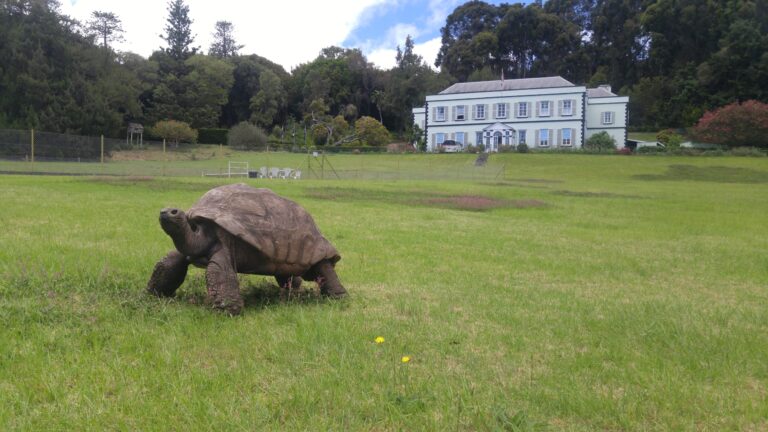
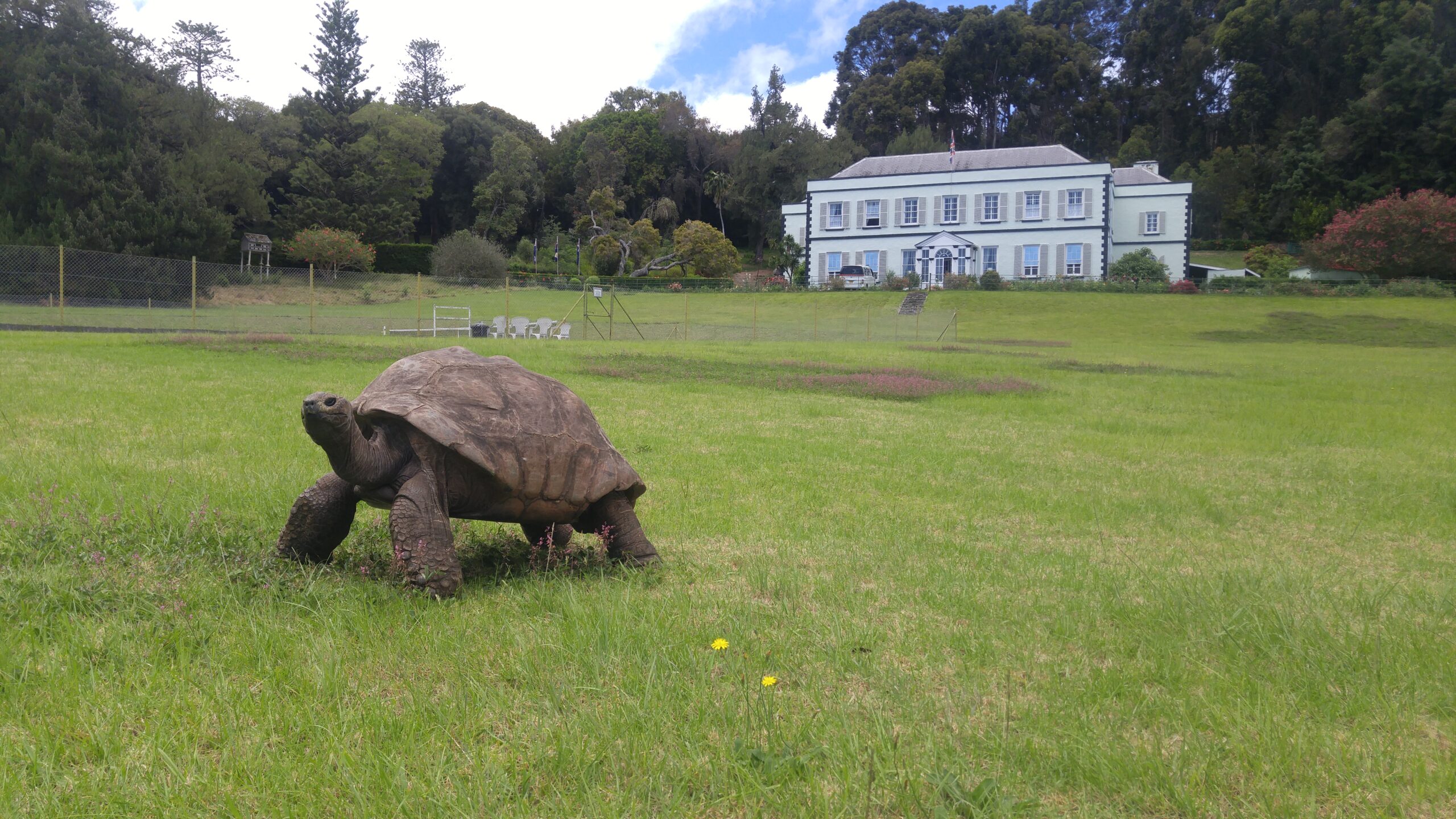
Jonathan is an Aldabra giant tortoise. He is thought to have hatched around 1832 in the Seychelles, the Indian Ocean archipelago, and he was shipped to St Helena in 1882, a remote British Overseas Territory in the South Atlantic. He has spent the decades since within the estate of Plantation House, home of the island’s governor, sharing the lawns with other giant tortoises. The 1832 date is an estimate rather than a record, and Vanderbilt University Medical Center describes an animal of roughly 450 pounds who is blind from cataracts but still hears well.
A question about cellular disorder
The question the researchers asked is simple to state. Ageing is partly a story of disorder building up inside cells, and one place where that disorder shows is in the methyl groups, small chemical tags that sit on DNA and help switch genes on or off. Together these tags form the methylome, part of the wider epigenome. In most animals the pattern of tags becomes messier with time. In Jonathan, the team found that the tags around genes involved in mitochondrial energy production were unusually orderly, a feature the authors call low methylation entropy.
Setting an old methylome beside a young one
The comparison with a much younger animal is what gives the result its weight. According to 404 Media, the team set Jonathan’s methylome beside that of a tortoise aged five, which means almost two centuries separated the two animals. Across most of his genome, the disorder matched his great age. The mitochondrial pathways were the exception, resembling those of the juvenile. Stephen Clark, the senior author, who works on ageing at the Kallel Foundation, said the analysis had not been attempted before: “No one’s ever done that, even in humans, because no humans live that long.”
Clark was also careful about what the finding does and does not show. He told 404 Media that much more research is needed to follow the mitochondrial lead and to untangle the many genetic components that shape lifespan. His words were: “Aging is very complicated, and there’s all these different hallmarks.” The study points to a promising avenue, and it does not yet identify a treatment.
Gene variants that dampen ageing
The genome itself added further detail, as summarised in Yahoo’s report on the work:
- 287 gene variants appear to dampen the usual effects of ageing;
- they touch on DNA repair, inflammation, insulin regulation and the suppression of cancer;
- good genes alone do not explain his longevity, the same article stresses.
Justin Gerlach, a biologist at the University of Cambridge and a co-author, said the regulators for energy production and DNA repair had stayed “incredibly stable” over almost two centuries, and the team believes this is the first look at the epigenome of any giant tortoise.
How the samples reached a laboratory
Getting the samples took years. Clark first approached the island’s veterinarian, Joe Hollins, in 2017 and asked for blood. That request was refused because of worries about Jonathan’s health. Instead, Hollins was allowed to take a small scrape from inside the tortoise’s cheek. Early samples proved incomplete, and the pandemic and new rules on access added delays, so the final material only reached a laboratory in Florida after the U.S. Space Force carried it from St Helena.
The money and the analysis came from a small circle of partners. The Stephen Voland Research Fund, which supports neuro-oncology research at Vanderbilt, contributed $50,000. Benjamin Vaisvil of the Kallel Foundation and Daniel Schmitt of the genomics firm Igenbio led the analysis, and the sequencing was done by the VANTAGE facility at Vanderbilt. Steve Horvath of UCLA, known for his methylation-based ageing clock, was among the outside experts who contributed.
The authors link the result to a separate finding in people: a 2025 study reported exceptionally efficient mitochondrial function in a woman who lived to 117. They suggest it may one day be possible to shield mitochondria from the effects of disordered gene expression, although that is a hypothesis for future work rather than a proven benefit.
Limits of a study built on one animal
There are limits to bear in mind. The study rests on a single, very old animal, and the cheek sample gives a less complete DNA sequence than blood would. Further work using blood will be needed to validate the finding, and the foundation says it plans to examine other long-lived species and other pathways tied to ageing. Clark’s organisation is a non-profit that aims to run trials of inexpensive generic drugs that commercial firms have little incentive to test, but those ambitions are goals, not results. For now, Jonathan offers researchers a rare window onto what can stay stable inside a body for nearly 200 years.
Featured image. Source: Wikimedia Commons. Credit: Kevstan. License: CC BY-SA 4.0.