


Electricity and internet gaps could stall World Bank’s small AI push
World Bank officials say reliable electricity, connectivity and safeguards must come first before small AI tools can spread widely across poorer regions.
 By
Callum Fairbairn
In brief
- The World Bank is urging developing countries to build ‘small AI’ models that run on mobile phones with low connectivity.
- Paschal Donohoe, the World Bank’s chief knowledge officer, cited Indian farmers using the AgriConnect scheme as an example.
- The annual IMF-World Bank meetings in Bangkok this week are discussing AI’s impact on jobs and growth.
- The World Bank says it mobilised $120bn in private capital over the past year despite aid cuts in the US and UK.
Small, specialised AI models that run directly on a mobile phone, even with a weak signal, could let developing economies skip decades of slower growth, according to the World Bank. Paschal Donohoe, the institution’s chief knowledge officer and a former Irish finance minister, says such tools differ from the large consumer products built by Silicon Valley because they are trained on narrower datasets for a specific local purpose.
“We argue that economic development in the countries that we serve and partner with that could have taken centuries to make happen, the potential is there for that economic development now to happen within decades,” Donohoe said. He added that small AI “would be available in a local setting, with low connectivity, and in the local language of the community, and tends to be available on your mobile phone.”
A farming example from India
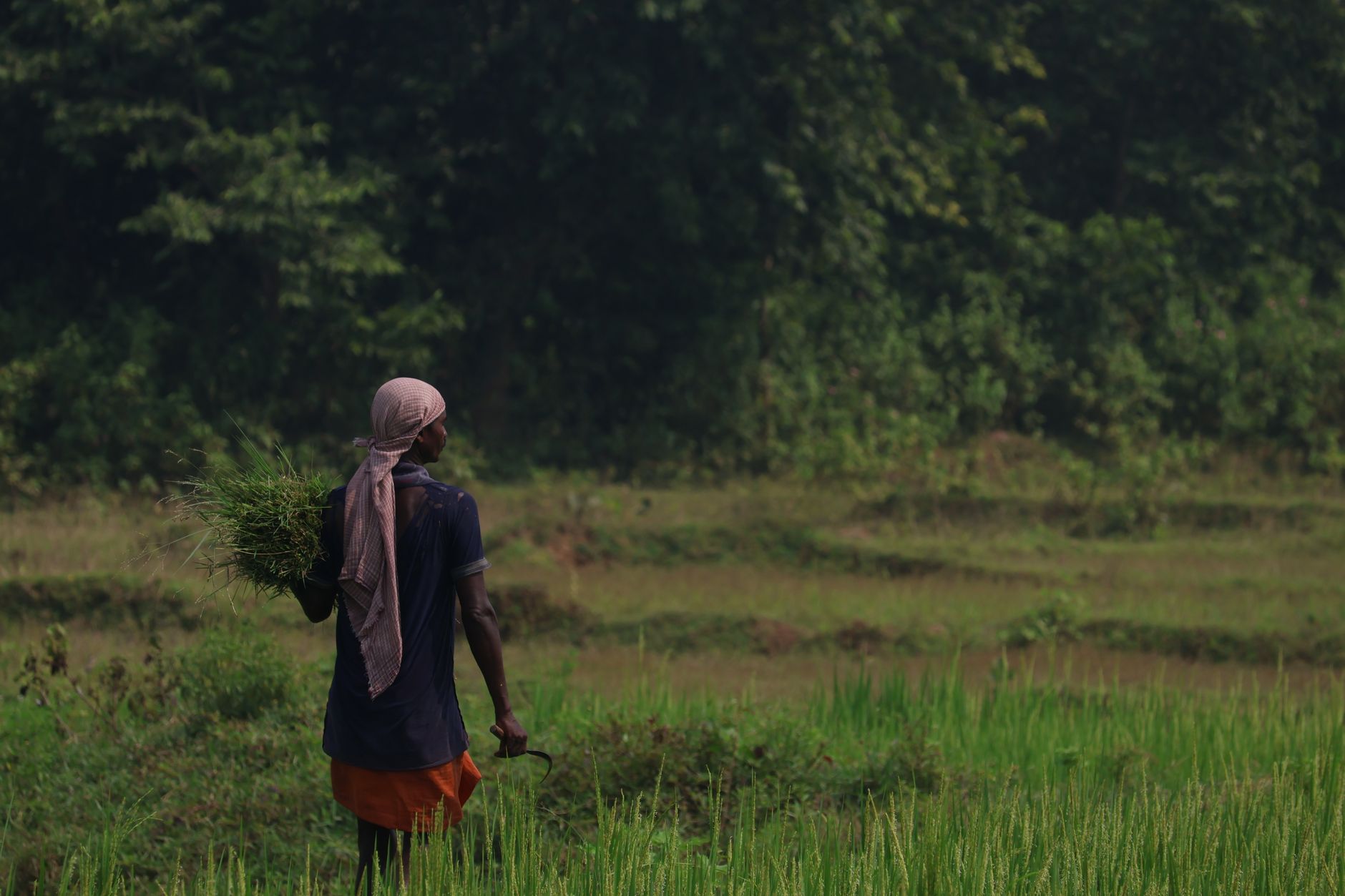
Donohoe pointed to farmers taking part in AgriConnect, the World Bank’s agricultural scheme in India, who need soil analysis delivered in their own language.
“There’s not going to be enough scientists and agricultural experts to do that for every small farm in India. And this is where what we describe as ‘small AI’ comes in. Because small AI is AI that would be available on your phone, that can help deliver against those information needs.”
Paschal Donohoe, World Bank’s chief knowledge officer
Rather than pointing to a single actor as the driving force, Donohoe described a shared effort, with the Bank, national governments and private firms each bringing something different to building these tools for local communities.
How artificial intelligence changes jobs and growth prospects is a running thread through this year’s gathering of finance ministers and officials in Bangkok, Thailand, where the World Bank and the International Monetary Fund are holding their annual meetings. On Monday, Kristalina Georgieva, the IMF’s managing director, joined a discussion on the technology and set out what she sees as the preconditions for adoption to work.

“You need access to electricity. You need access to digital infrastructure. People have to be geared to adoption. And the government should be able to give some safety, protect against bad actors so that adoption can work,” she said, adding that with the basics in place, adoption “can be very democratic. As democratic as the cellphone.”
Where the infrastructure gap bites hardest
The World Bank’s own annual world development report, published in August, praised AI’s potential while flagging how far behind the basic infrastructure still lags in parts of the world.
Georgieva pointed to a wider labour-market risk too, estimating that four in ten jobs globally stand to be reshaped or wiped out by AI over time, with newcomers to the workforce bearing the brunt of that shift, according to The Guardian.
Private capital as a second lever
Attracting private money into emerging markets has become a signature priority of the World Bank’s work under its president, Ajay Banga, running alongside the push on small AI.
Donohoe said guarantees and similar financial tools had drawn in that sum over the past twelve months, arriving just as several governments, the US and UK among them, were scaling back their own aid spending, according to APA. “We want to highlight the link between private capital mobilisation and jobs and economic development,” he said.
Taken together, the Bank’s pitch rests on two parallel tracks: small, locally tuned AI tools meant to reach people where big connectivity isn’t available, and private capital meant to fund the infrastructure, from electricity to broadband, that Georgieva says has to come first. Neither track works alone; the digital tools depend on the physical groundwork the infrastructure financing is meant to supply, and the financing in turn is being pitched partly on the promise that AI can make development spending go further in places where budgets, including aid budgets from wealthier nations, are tightening rather than growing.
Photo: Rideep Mahato / Pexels