




| IN A NUTSHELL |
|
The world of friction has long captivated scientists, especially when it comes to understanding this ubiquitous force at the microscopic level. Recent advancements in experimental tools have allowed researchers to delve deeper into friction’s atomic mysteries. A pioneering study by a Chinese team at the Lanzhou Institute of Chemical Physics, led by Professor Zhang Junyan and Associate Professor Gong Zhenbin, explores the enigmatic realm of quantum friction through folded graphene. This groundbreaking work not only challenges traditional friction models but also unveils a potential pathway for revolutionary technological applications.
Breaking New Ground with Folded Graphene
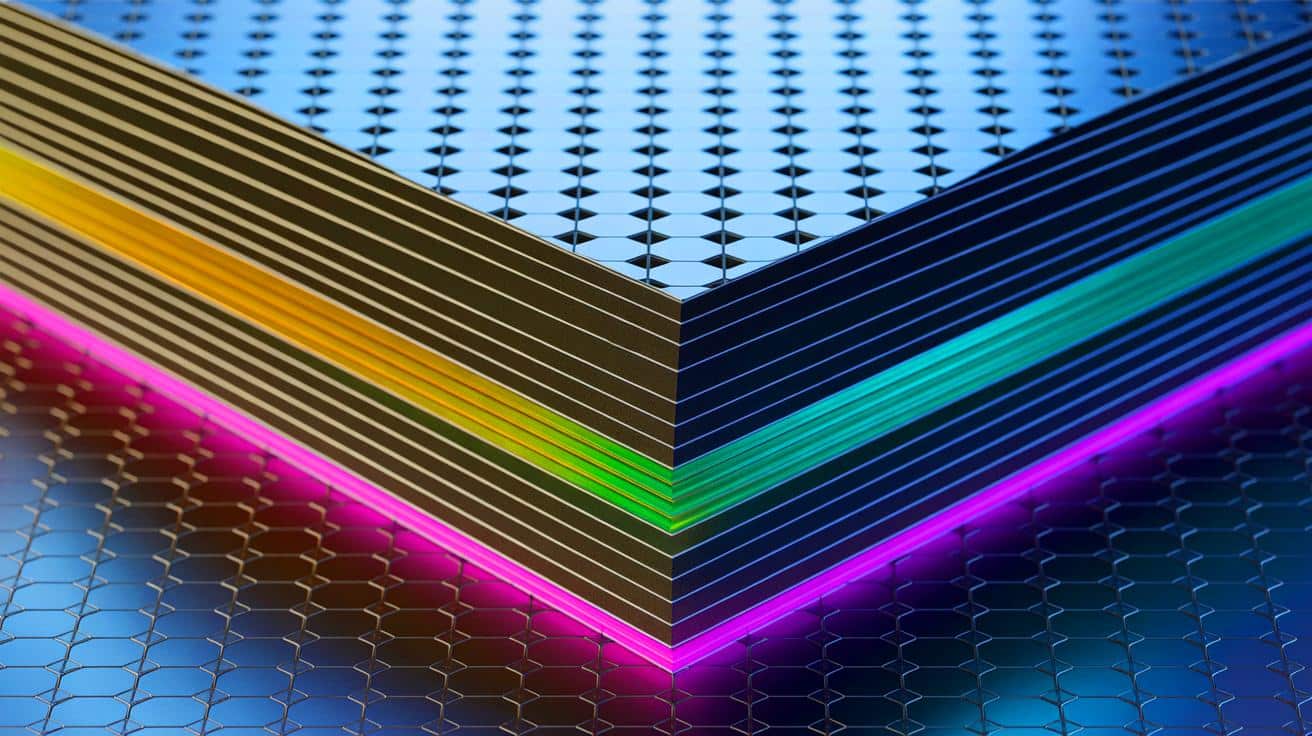
In an effort to push the boundaries of friction research, the team from Lanzhou meticulously crafted folded graphene systems. By inducing internal strain through precise nanomanipulation, they altered how electrons traversed the material. This technique enabled the researchers to examine friction at the nanoscale with unparalleled accuracy. The results were astounding: friction at the folded edges of graphene did not adhere to a linear pattern as the number of layers increased. Instead, it exhibited a highly nonlinear behavior, prompting fundamental questions about the applicability of classical friction laws to solid-solid quantum interfaces.
This discovery echoes a surprising revelation from 2022, where water flowed faster through narrower carbon nanotubes, defying conventional expectations. The Chinese researchers harnessed a similar approach to scrutinize the elusive effects of quantum friction at solid interfaces. Their findings suggest that this phenomenon could have significant implications for future technologies, marking the first experimental evidence of quantum friction between solid surfaces.
Innovative Approaches to Reducing Friction
The researchers’ innovative approach involved folding graphene to introduce pseudo-Landau levels, fixed energy states that minimized energy loss as heat. This reduction in energy dissipation led to lower friction at the interface. Conducting their experiments at ultra-low temperatures, the researchers demonstrated how internal strain could alter electron movement within the material. This manipulation of electron behavior presents exciting opportunities to explore similar effects in other materials.
The potential applications of this research are vast. Understanding quantum friction could revolutionize how energy is managed in nanoscale electronics and quantum computing systems. By minimizing energy loss, devices could operate more efficiently, paving the way for advancements that could transform numerous industries.
Implications for Future Technologies
The significance of discovering quantum friction between solid surfaces cannot be overstated. This revelation opens new avenues for research and development in various fields. By exploring quantum friction across a broader range of materials and temperature conditions, scientists hope to gain deeper insights into energy dissipation at the atomic level. The potential to actively manage or even minimize energy loss in practical devices is a tantalizing prospect.
This burgeoning understanding of quantum friction could lead to innovative technologies that enhance the performance and efficiency of devices, from consumer electronics to advanced quantum computing systems. The study, published in the prestigious journal Nature Communications, lays the foundation for future research that could reshape our technological landscape.
Charting a New Course in Friction Research
As researchers continue to investigate the intricacies of quantum friction, the potential for groundbreaking discoveries remains immense. This pioneering work by the Chinese team serves as a testament to the power of scientific curiosity and innovation. By challenging traditional models and exploring uncharted territories, these scientists have opened the door to a new understanding of friction at the quantum scale.
The implications of their research extend far beyond academia, offering the promise of transformative technologies that could redefine how we interact with the world. As we look to the future, the question remains: how will this newfound knowledge of quantum friction shape the next generation of technological advancements?

Wow, quantum friction sounds like science fiction! Can someone explain how this works in simpler terms? 🤔
This is a groundbreaking discovery! I can’t wait to see how it impacts quantum computing. 🚀
Why haven’t other scientists discovered this before? Is it really that revolutionary?
Great work by the Chinese researchers. This could change so many industries. Thank you for sharing! 🙏
Fascinating read! But how long until we see practical applications of this discovery?
Quantum friction? Next, they’ll be telling us there’s a quantum version of WD-40! 😂
I’m skeptical about these claims. More research is needed to validate these findings.
Could this mean my smartphone will stop heating up after prolonged use? That would be amazing!
Has anyone considered the environmental impact of using folded graphene on a large scale?
Quantum friction is an interesting concept. How does it differ from regular friction?