


Drumcree parade ban of 9 October 2026: the decision, the policing case and the reactions
On 9 October 2026 Chris Bryant banned the Garvaghy Road procession in Portadown. The policing case for the ban, the timeline of the dispute and the reactions reported that day.
 By
Ellis Marwood
By
Ellis Marwood
In brief
- He judged that letting the march go ahead would not serve the public interest.
- He said that anyone who had acted unlawfully should face the consequences, and he urged an end to all protests, rallies and demonstrations.
- Developments after that date, such as any court ruling or police decision, are not covered.
On the evening of Friday 9 October 2026, Northern Ireland Secretary Chris Bryant announced a ban on the Orange Order procession planned for the Garvaghy Road in Portadown, County Armagh. He judged that letting the march go ahead would not serve the public interest. The Guardian’s account described the decision as the end of a stand-off of about two weeks that pitted the Orange Order against nationalist residents. This article sets out what the reporting of that day established, who said what, and which questions were still open when the announcement was made.
The decision and the policing case
Bryant told the Press Association, in remarks carried by Belfast Live’s report, that he had spent the previous fortnight trying to resolve the dispute. He had received representatives of the residents and of the Orange Order and talked the situation through with each, but no accommodation had proved possible. He said that earlier on the Friday the PSNI chief constable, Jon Boutcher, had contacted him and asked whether the original determination of the Parades Commission should still stand. Having looked at the changed situation in Portadown, and at how hard it had become for the procession to proceed, Bryant said he had decided to ban it.
According to RTÉ’s report, Boutcher said the police had concluded that every lawful and proportionate route to completing the procession had been used up. In his assessment, what remained would have meant a large public order operation that was not judged proportionate, with a risk of serious injury and of disorder spreading across Northern Ireland. In a statement quoted by the Press Association report on Yahoo News, he added that the ongoing costs to the force were significant and, given its funding pressures, could not be carried indefinitely. He welcomed the ban and said it was in everyone’s interest to create time and space for talks on long-term solutions to what he called a complex and sensitive issue.
In the same Press Association report, Bryant acknowledged that, as the courts had affirmed, the Portadown District had held a determination from the Parades Commission that allowed its procession. He thanked Portadown LOL No 1 for its peaceful conduct and its cooperation with the police, and he thanked those who had taken part in the negotiations at Hillsborough. He said that anyone who had acted unlawfully should face the consequences, and he urged an end to all protests, rallies and demonstrations. Asked whether the episode might bring unrest to other contentious marches, he told the Press Association that the country could not go back to the 1990s, and that 95% of processions in Northern Ireland went ahead without any dispute. He also said that, overall, events had unfolded relatively peacefully, and he commended the police.

How the dispute reached this point
- September 2026: the Parades Commission ruled that a restricted march was allowed to use the Garvaghy Road. The Guardian presented this as a reversal of bans imposed in succession over 28 years. RTÉ reported that this was the first such clearance in nearly three decades for the Portadown District of the Orange Order, which the DUP and the TUV backed, to complete its traditional route.
- Sunday 27 September 2026: according to RTÉ, the application the commission approved was for 35 Orangemen to walk at 8am, without a band or supporters. The walk from the church at Drumcree towards Portadown never took place, as a big crowd of protesters filled the road. The Guardian reported that police prevented the march after thousands of residents and supporters blocked the route.
- The following days: RTÉ reported that a legal action by the residents’ coalition failed. The coalition, which People Before Profit supported alongside Sinn Féin and the SDLP, then began a sustained protest of several days and took further legal action. As a result, the Northern Ireland Court of Appeal put off its ruling because it wanted extra time.
- Friday 9 October 2026: the chief constable asked for a review, and Bryant announced the ban that night.
The Guardian recalled that in the 1990s Orangemen and police had clashed in pitched battles over the same route, and said the recent standoff had brought those memories back for residents.
Reactions on 9 October, as reported
- Residents: cheers went up in the Drumcree Community Centre once the ban was announced. Breandán Mac Cionnaith, speaking for the Garvaghy Road Residents Coalition, described the outcome as sensible, reasonable and logical, according to the Guardian.
- Sinn Féin: Mary Lou McDonald and Michelle O’Neill issued a joint statement paying tribute to the residents and describing an “enormous sense of relief”. On The Late Late Show on RTÉ, O’Neill said the ban was the right decision but that Bryant could have acted at the start of the process.
- SDLP: leader Claire Hanna welcomed the ban. She said it should have come two weeks earlier and that, in her view, the parade should not have been given permission at all.
- DUP: Gavin Robinson, who leads the party, said the rule of law had been “fundamentally undermined” and asked Bryant to explain how the government would restore confidence in it. In the Guardian’s account, Robinson accused both Boutcher and Bryant of yielding to republican agitation.
- Irish government: Taoiseach Micheál Martin said the decision would be a significant relief to the Garvaghy Road community. He acknowledged that it would disappoint others, among them members of the Portadown Lodge, and said triumphalism had no place. Foreign Affairs Minister Helen McEntee welcomed the certainty it brought and said the situation on the ground had stayed peaceful and safe.
What was still open on 9 October
RTÉ reported that the Orange Order had indicated it might challenge the ban in the courts. Belfast Live, citing the Press Association, said loyalist activist Jamie Bryson had indicated that his side was preparing an emergency judicial review. Per RTÉ, the Northern Ireland Court of Appeal had reserved its judgment after the residents’ coalition took further action.
A second strand concerned the police inquiries that followed the protests. RTÉ reported that the PSNI had written to O’Neill that Friday, asking her to attend an interview under caution on a voluntary basis over the Garvaghy Road protests, and that McDonald expected to receive a similar letter. The Guardian described the letter as examining alleged criminal offences linked to her role. RTÉ added that a number of other Sinn Féin members had been sent correspondence asking them to come forward for interview, and that unionist politicians have said the protests were unlawful. O’Neill described the protest as peaceful, said she would cooperate with the investigation and said she would keep standing with the residents. The Guardian wrote that the dispute had provoked bitter exchanges in the Stormont assembly, with unionists demanding that she step down as first minister over allegations of breaking the law. None of the reports used for this article records any outcome of those inquiries.
The reporting summarised here dates from 9 October 2026. Developments after that date, such as any court ruling or police decision, are not covered.
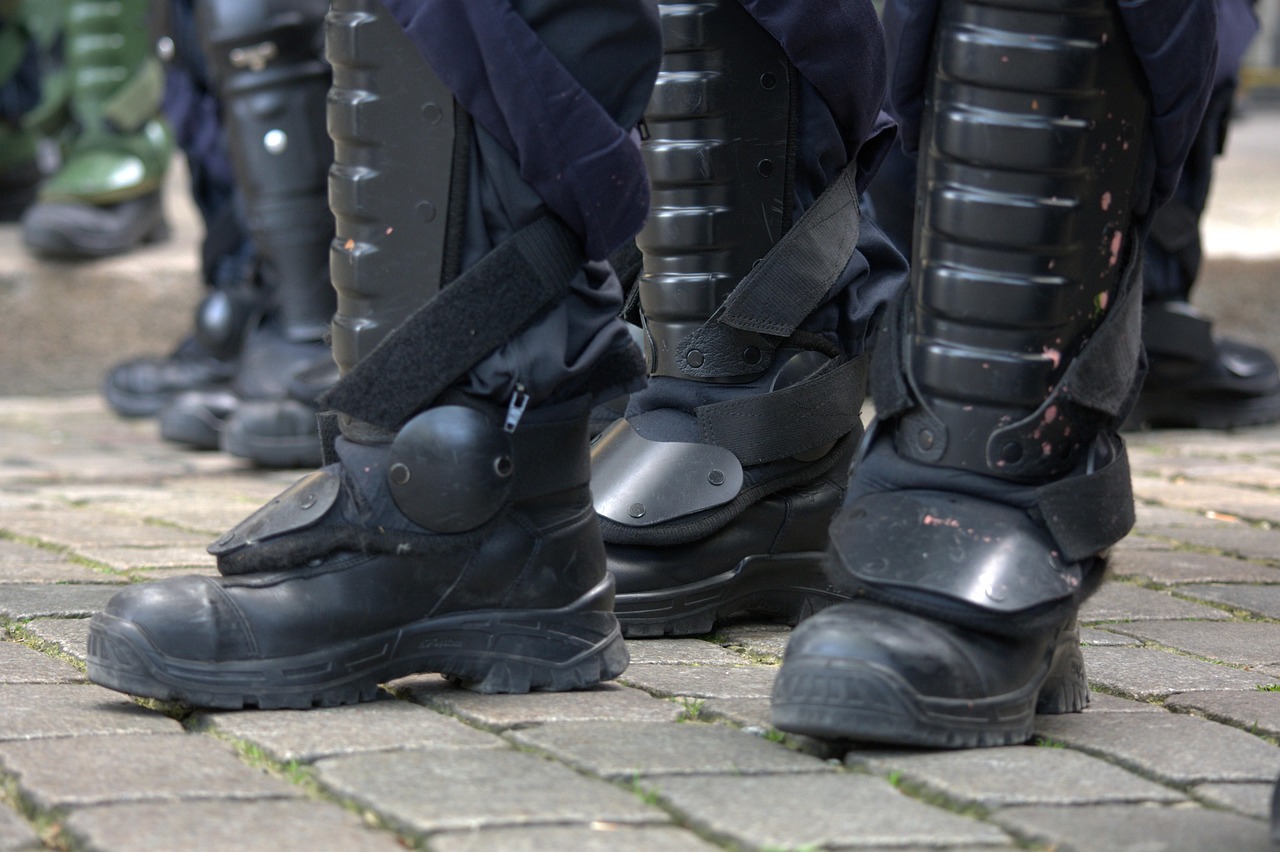
Featured image. Source: Pixabay. Credit: fsHH. License: Pixabay Content License.