



| IN A NUTSHELL |
|
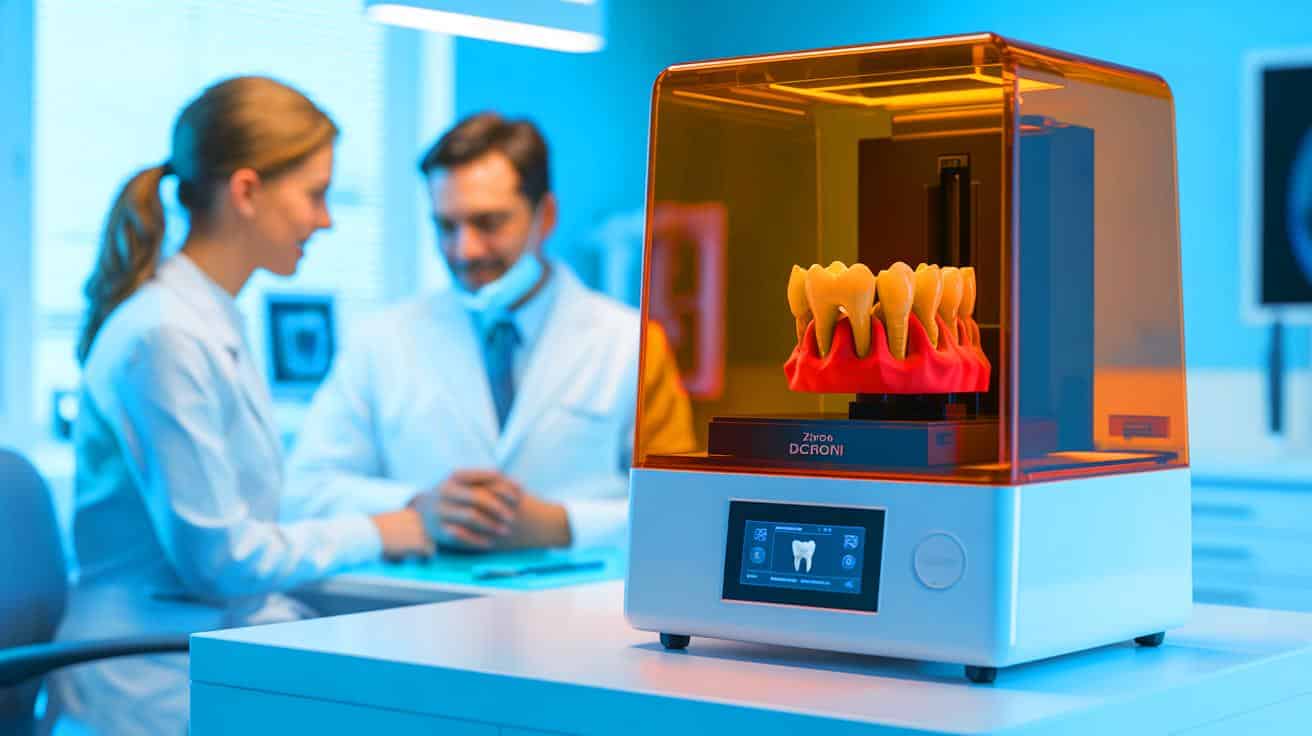
In a major advancement for dental care, researchers at the University of Texas at Dallas have developed a groundbreaking technology that enables the 3D printing of zirconia dental crowns directly in dental offices. This innovation cuts the traditional processing time significantly, allowing patients to receive permanent restorations in just a few hours. The technology promises to transform the dental industry by making procedures faster, more personalized, and convenient. With support from the National Science Foundation, the team is working towards commercializing this technology, which could soon make lengthy waits for crowns a thing of the past.
Breaking Through the Debinding Bottleneck
The UT Dallas team has tackled a significant hurdle in the production of 3D-printed zirconia crowns: the lengthy debinding process. Debinding is the step after 3D printing that involves removing the resin binding the zirconia particles. Traditionally, this process can take anywhere from 20 to 100 hours, making same-day service impractical. Dr. Majid Minary, a professor of mechanical engineering at UT Dallas, emphasized the challenges, noting that speeding up debinding typically risks damaging the crown due to gas build-up.
The breakthrough comes in the form of a new method that reduces debinding time to less than 30 minutes. This was achieved by using porous graphite felt to enhance heat transfer and a vacuum system to efficiently remove gas. This innovation allows for the rapid production of zirconia crowns without the risk of cracking, marking a significant step forward in dental restoration technology.
Faster, Stronger, Smarter Solutions
This project is a collaborative effort involving partnerships with various organizations and experts. Notably, Pan-AM Dental Laboratory and 3DCeram Sinto Inc. have contributed to the advancements. The team also includes Dr. Amirali Zandinejad, a prosthodontist, and several other contributors from UT Dallas. This collaboration has recently been bolstered by a $550,000 NSF Partnerships for Innovation, Technology Translation award, which aims to support the commercialization of the technology.
The benefits of this new approach are manifold. 3D-printed zirconia crowns offer greater strength and customization compared to existing resin alternatives. Unlike milled zirconia, these crowns can be designed with increased complexity and reduced risk of fractures. This not only enhances the durability of the crowns but also reduces material waste and costs. As Dr. Minary points out, this innovation offers patients a more personalized and efficient treatment experience, allowing for the completion of permanent restorations in a single visit.
“Early Eye Tests Spark Anxiety”: The US Faces Alzheimer’s Risk Revelation Years Ahead
Transforming Dental Practices
The practical implications of this technology are profound for dental practices. With the ability to produce high-quality zirconia crowns chair-side, dentists can significantly improve the patient experience. The speed of the process, combined with the strength and customization offered by zirconia, means that patients can receive permanent solutions without the need for temporary crowns or multiple visits.
Moreover, the shift from resin-based crowns to zirconia marks an upgrade in durability and quality. Zirconia is often considered the gold-standard material for dental restorations due to its strength and aesthetic appeal. The ability to offer such high-quality restorations on the same day is a game-changer for both patients and dental professionals.
Looking to the Future
With further clinical validation and regulatory approval, this technology could soon become a staple in dental practices worldwide. The researchers are optimistic about its potential to eliminate the long waiting periods currently associated with permanent dental crowns. The study’s findings, published in Ceramics International, provide a solid foundation for the next steps towards commercialization and widespread adoption.
The transition to this new method could bring about a significant shift in how dental care is provided, offering patients more efficient and effective treatment options. As the technology continues to develop, the question remains: How will this impact the broader dental industry and patient care standards in the coming years?