



| IN A NUTSHELL |
|
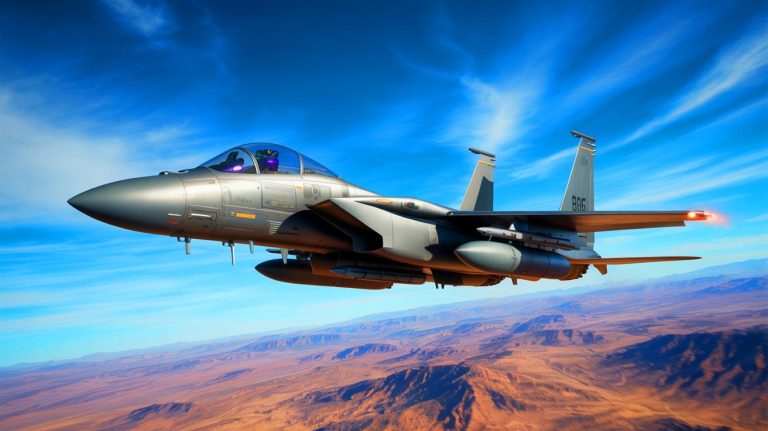
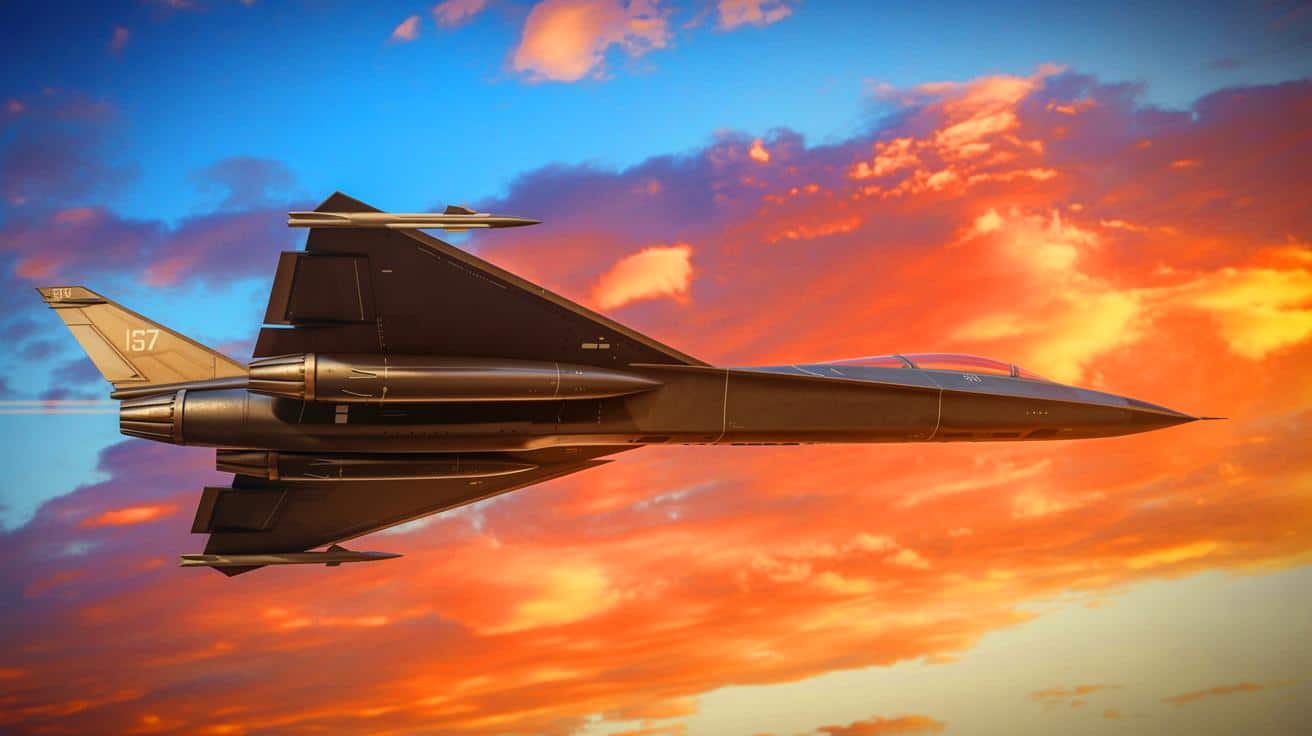
The United States Air Force has officially announced the production of the F-47 Next Generation Air Dominance (NGAD) fighter, a significant step in maintaining the nation’s air superiority. This new fighter, expected to enter service by the end of the decade, will replace the F-22 Raptor, which has been the backbone of America’s air supremacy for years. The decision to proceed with the F-47 project comes after months of speculation, particularly concerning budget constraints and defense priorities. As the U.S. prepares to introduce this sixth-generation fighter jet, several aspects of the project stand out, including its technological advancements and strategic implications.
The Significance of the F-47 Decision
The announcement of the F-47’s development marks a pivotal moment in U.S. military aviation history. The decision to move forward with the project was made by the Air Force and supported by the then-President Trump, amidst concerns about federal spending cuts. This move represents a commitment to strengthening the U.S. military’s capabilities against potential adversaries. The F-47 is set to replace the F-22 Raptor, a fighter that has long been considered the pinnacle of air superiority.
The F-47 project, conceived in 2016, has been in the works for several years, with the Air Force and the Defense Advanced Research Projects Agency (DARPA) conducting secret flight tests of a prototype. These tests have brought the project to an advanced stage, facilitating the decision to proceed with production. The use of new digital techniques and government-owned architecture has reportedly streamlined the development process, allowing for faster and more efficient progress.
Contract and Industry Implications
A significant aspect of the F-47’s development is the awarding of the engineering and manufacturing development contract to Boeing, rather than Lockheed Martin, the manufacturer of the F-22 Raptor and F-35 Lightning II. This $19.6-billion contract underlines a major shift in defense contracting dynamics, reminiscent of the 2001 F-35 competition when Boeing was sidelined. The selection of Boeing has generated discussions within the industry, considering the company’s recent setbacks in its civilian and space sectors.
Despite Boeing’s win, Lockheed Martin’s expertise in stealth fighter development remains invaluable. As a result, Lockheed might still play a crucial role as a subcontractor to ensure production capacity and efficient procurement cycles. The estimated cost per F-47 unit is expected to start at $300 million, although efforts are underway to reduce this to $100 million per unit, aligning with the costs of the F-35.
US Air Force Secretary Frank Kendall has emphasized the goal of reducing production costs to ensure the fighter’s affordability and sustainability.
Technological Advancements and Features
The F-47 stands out as a sixth-generation fighter with several technological advancements. It will be a pilot-optional aircraft, incorporating cutting-edge stealth technology and a tailless diamond-wing design that minimizes its radar cross-section. Advanced radar-absorbing materials and electronic warfare capabilities will further enhance its stealth and survivability.
The fighter’s propulsion system, the Next Generation Adaptive Propulsion (NGAP) engine, will enable it to supercruise above Mach 1 without afterburners. This capability, combined with surplus electric power, will support the integration of directed energy weapons, such as lasers and microwave beams, as well as hypersonic missile launches. The F-47’s increased fuel capacity will make it well-suited for long-range operations, particularly in the Indo-Pacific region.
One of the most significant advancements is the integration of artificial intelligence and a suite of sensors. These features will transform the F-47 into a command platform capable of combat decision-making, real-time battlefield awareness, and enhanced networking with other military assets, including Collaborative Combat Aircraft (CCA), arsenal aircraft, ships, satellites, and ground forces.
Strategic Implications and Future Prospects
The introduction of the F-47 fighter jet will have far-reaching implications for U.S. military strategy and global security. As the world’s first sixth-generation fighter, it represents a significant leap in technological capabilities and strategic positioning. President Trump, during a White House press briefing, emphasized the unparalleled attributes of the F-47, stating that it will provide unmatched speed, maneuverability, and payload capacity.
The F-47’s development aligns with the broader goal of maintaining U.S. air superiority in an increasingly competitive global landscape. Its advanced features and capabilities will ensure that America’s adversaries are kept at bay, bolstering national security and defense readiness. However, as the project progresses, questions remain about the balance between cost management and technological innovation.
As the U.S. Air Force continues to develop the F-47, it faces both challenges and opportunities in maintaining its technological edge. The project’s success will depend on effective collaboration among industry partners and the ability to navigate budgetary constraints. Looking ahead, how will the introduction of the F-47 influence global military dynamics, and what role will it play in shaping future defense strategies?