

Balloon Girl turns a Cardiff parachute tragedy into satire
Hannah McPake’s time-travelling comedy at the Sherman Theatre links a teenage balloon stunt of 1896 to a modern tech billionaire’s race to Mars.
 By
Farah Choudhury
In brief
- Balloon Girl is written and directed by Hannah McPake at the Sherman Theatre in Cardiff.
- It draws on Louisa Maud Evans, a 14-year-old parachutist from Bristol who died in 1896.
- The satire takes in reality TV, AI, journalism and tech machismo.
- The Guardian’s reviewer finds the pace sometimes too fast but the show fun.
A forgotten teenager and a fictional space tycoon share the stage in Balloon Girl, and the pairing works better than it sounds. In its review for The Guardian, the play is described as a high-wire drama that, despite its complications, lifts off and becomes a complete blast.
A real girl at the centre of the story
Hannah McPake writes and directs the production, which plays at the Sherman Theatre in Cardiff. It takes its cue from the history of the city: an assistant to a balloonist in the Victorian era, who carried out a parachute stunt high over the skyline.
The assistant in question was Louisa Maud Evans, a real 14-year-old from Bristol. At the Fine Art, Industrial and Maritime Exhibition of 1896, she was hired to leap out of a hot-air balloon, even though she had scarcely any experience of parachuting.
- At the Fine Art, Industrial and Maritime Exhibition, Louisa is taken on to descend by parachute after leaving a hot-air balloon.
- An unfavourable wind carries her out to sea, and she dies in the Bristol Channel.
- McPake’s play brings her back in several guises.
From quizshow to time travel
The play begins with Carol Gaudron (Elin Phillips), a famous billionaire from the tech world. She is a descendant of Auguste Eugene Gaudron (Keiron Self), the balloonist who hired Louisa for the doomed stunt. We first meet her through a reality quizshow, where a Bristol woman, still young, wins a place on a rocket to Mars that is broadcast on television.

Carol’s pitch is blunt: “Let’s get humanity off this planet and into the stars,” she declares. The reviewer calls it a nifty way to join the Victorian urge to conquer the skies, with its public showmanship, to today’s tech ambitions in the space race.
From there the play leaves the studio behind:
- Carol travels through time with a young navigator, also called Louisa (Mari Fflur).
- They are joined by a lifesize talking seagull played by Oliver Wood.
- The trio visits the past and the future in a hot-air balloon, before Carol returns to her present, transformed.
The reviewer detects shades of A Christmas Carol in the redemptive structure.
Satire with a climate message
The targets range from reality TV to AI and journalism, and the play mocks tech bro machismo and Musk-style Martian escapes. No real link to Elon Musk is claimed; the reference is to the type of escape fantasy.
Under the humour, the reviewer detects a serious point about the climate and the planet’s resources. There is a price to pay in pace: the plot at times comes at the audience so thick and fast that some are left behind, although the review says the evening stays enjoyable despite its muddled moments.
Hayley Grindle’s set shifts between puppetry on a modest scale and sweeping images of a hot-air balloon. McPake has created a number of productions for this theatre, and the critic rates this one among her finest, which is an opinion rather than an established fact.
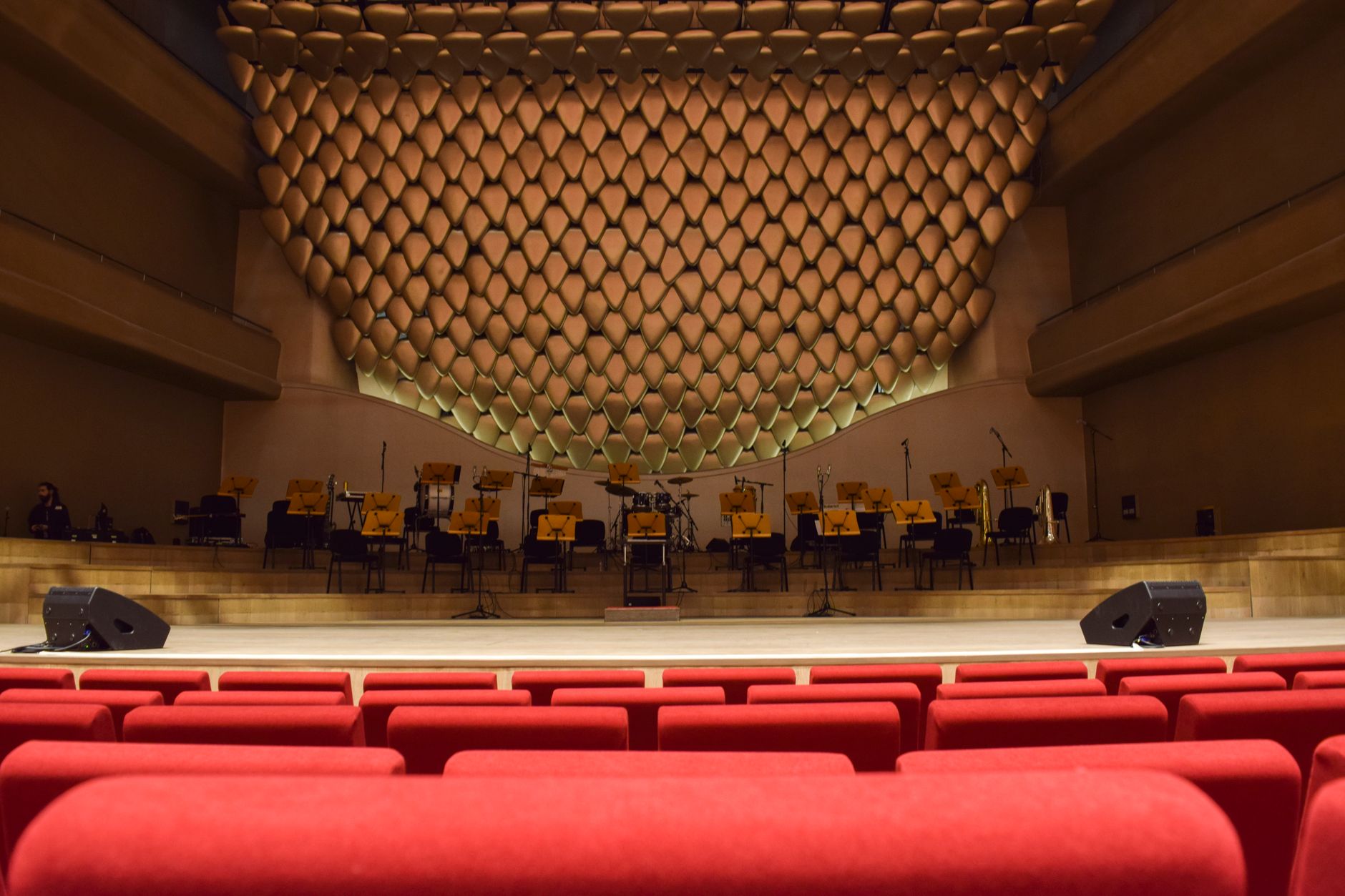
Photo: Noura Zaher / Pexels