



| IN A NUTSHELL |
|
The way we store our jewelry can significantly impact its lifespan and appearance. While many people may not give much thought to how they store their necklaces, rings, and bracelets, doing so improperly can lead to tarnishing and damage. This article explores the reasons behind jewelry oxidation and highlights practical steps to preserve your valuable pieces. By understanding the chemical interactions between different metals and the importance of proper storage, you can keep your jewelry looking its best for years to come.
Chemistry Behind Jewelry Tarnishing
Jewelry composed of various metals such as gold, silver, and copper is susceptible to tarnishing when stored together. This occurs due to a chemical reaction known as oxidation, which is accelerated when different metals are in contact. Marcus Young, an associate professor at the University of North Texas, explains that this interaction forms a galvanic cell, essentially a “battery” that facilitates the movement of ions between metals.
This ion exchange can lead to corrosion and discoloration, commonly seen as tarnish on jewelry. Silver and copper, prevalent in many pieces, are particularly reactive. For instance, 14-karat gold is only about 58.5% pure gold, with the remainder comprising other metals like silver and copper. The presence of these metals in an alloy increases the likelihood of oxidation, although the rate can vary depending on the metal composition.
The Importance of Proper Storage
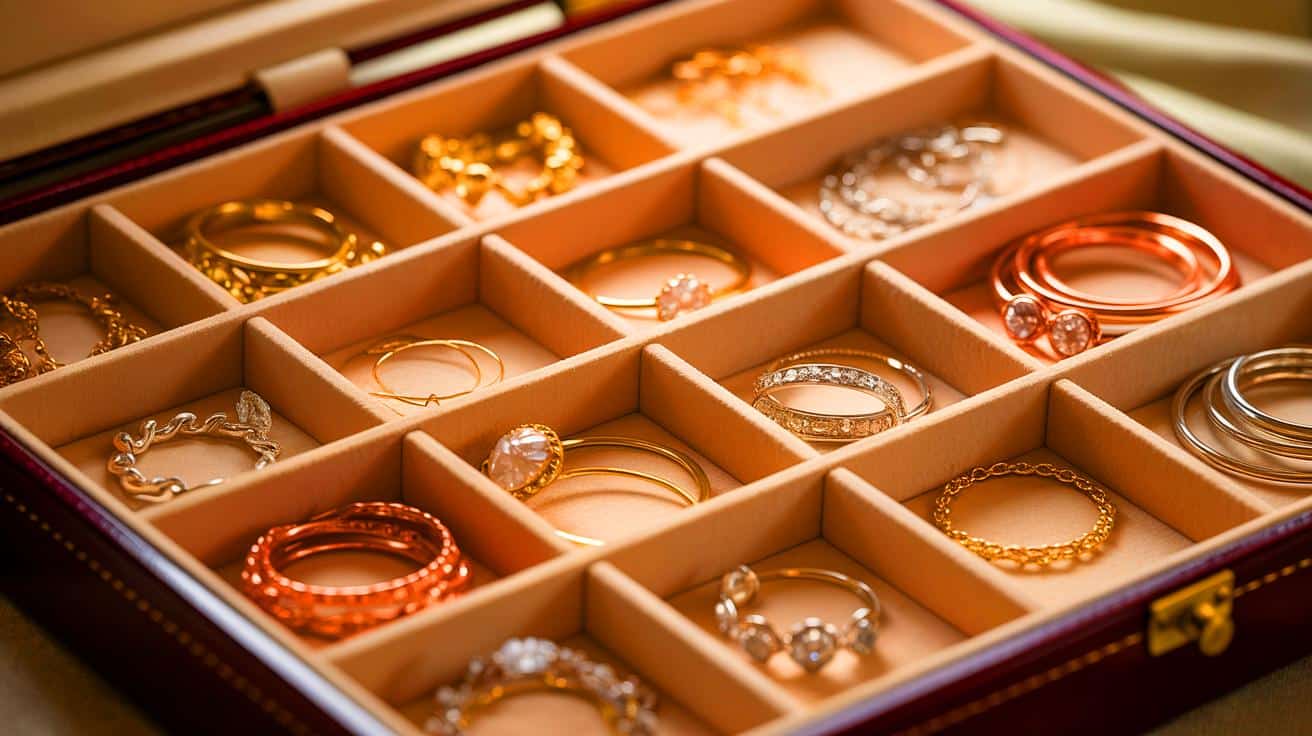
Storing jewelry correctly is crucial to preventing tarnish and scratches. Experts recommend keeping pieces in separate compartments to avoid contact between different metals. For example, while platinum is resistant to oxidation, it can still be scratched by harder metals like gold. Therefore, storing each piece individually can help maintain its appearance and integrity.
Additionally, the environment where you store your jewelry plays a significant role. High humidity levels can exacerbate tarnishing by promoting the formation of hydroxide and oxide. Thus, it is vital to store jewelry in a clean, dry place, free from moisture. Some individuals go as far as using individual bags for each piece to further reduce the risk of damage.
Maintenance and Care
While proper storage is essential, regular maintenance is equally important. Over time, even well-stored jewelry may show signs of wear. Gold pieces can benefit from professional cleaning and polishing by a jeweler to restore their shine. Silver jewelry, on the other hand, can usually be cleaned with a commercial cleaner to remove tarnish.
To extend the time between cleanings, jewelry owners should handle their items with care and attention. This includes avoiding exposure to harsh chemicals and wearing jewelry only when necessary. By adopting these practices, you can reduce the frequency of maintenance and keep your jewelry looking fresh.
Preventing Common Jewelry Mistakes
Many people inadvertently hasten their jewelry’s tarnishing by making common mistakes. One such mistake is storing all pieces together in a single box, which can lead to scratches and increased oxidation. Another error is neglecting regular cleaning routines, which allows tarnish to build up over time.
By being mindful of these potential pitfalls and adopting recommended storage practices, you can better protect your jewelry. Consider investing in a jewelry box with separate compartments or using individual pouches for each piece. These simple yet effective strategies can significantly enhance the longevity and appearance of your jewelry collection.
Understanding the science behind jewelry tarnishing and implementing proper storage techniques can ensure that your cherished items remain in pristine condition. By taking proactive steps, you can avoid the common pitfalls that lead to tarnishing and damage. How will you adjust your jewelry care routine to protect your valuable pieces for the future?