

The Nobel chemistry breakthrough that makes one molecular mirror image dominate
Henri B Kagan and Kensō Soai showed how reactions can strongly favour one molecular mirror image, a capability relevant to drug chemistry and the asymmetry of living systems.
 By
Farah Choudhury
By
Farah Choudhury
Henri B Kagan and Kensō Soai won the 2026 Nobel Prize in Chemistry on 7 October for discoveries that let reactions strongly favour one molecular mirror image.
The award recognises their work on nonlinear effects and autocatalysis in asymmetric organic synthesis. In practical terms, they established two different routes by which a small imbalance in a chemical system can be amplified, producing far more of one molecular form than its reflected counterpart.
That outcome is not routine. A reaction involving chiral molecules can generate both mirror-image versions, even when only one has the properties a chemist wants. Kagan and Soai showed how that balance could instead be driven decisively towards one side.
Why molecular mirror images are not interchangeable
A molecule is described as chiral when it can exist in two mirror-image forms that cannot simply be placed on top of each other, much as left and right hands have the same components but a different orientation. Amino acids, the units from which proteins are assembled, provide a central biological example.
The distinction can have functional consequences because molecules interact through their three-dimensional shapes. A molecular form that fits one receptor, protein or other target may not interact identically when its spatial arrangement is reversed.
This is particularly important in medicines. The body contains many chiral structures, including proteins targeted by drugs, so the two mirror forms of a drug molecule can produce different or weaker effects. As The Guardian explains, the award concerns discoveries that enabled reactions to yield an overwhelming excess of one form.
The Nobel does not mean that every medicine depends on these particular discoveries. It recognises a fundamental advance in understanding and controlling asymmetric synthesis, the broader field concerned with selectively making one mirror-image molecular form.
Two discoveries amplified handedness in different ways
Kagan and Soai did not arrive at the result through the same mechanism. Kagan’s work concerned the composition of a chiral catalyst mixture, while Soai developed a reaction in which the product helped make more of itself.

| Researcher and date | Starting mechanism | Effect on the reaction |
|---|---|---|
| Henri B Kagan, 1986 | A catalyst mixture containing its left-handed and right-handed forms | The composition of that mixture could increase the proportion of either handed form in the resulting product. |
| Kensō Soai, culminating in 2003 | An autocatalytic process in which the reaction product also functions as a catalyst | A slight initial difference became self-reinforcing, eventually yielding almost entirely one mirror-image form. |
A catalyst speeds a chemical reaction without being consumed as an ordinary reactant. Kagan demonstrated that mixing the two handed versions of a chiral catalyst did not necessarily produce a proportional, neutral outcome. Instead, the mixture could create a nonlinear effect, increasing the share of one handed product.
Soai’s route introduced a feedback mechanism. Once a little more of one form was present, that product helped generate further molecules of the same kind. Repeated through the reaction, a modest asymmetry could grow into a near-exclusive result.
The Conversation describes Kagan’s catalyst finding and Soai’s self-amplifying reaction as the two advances behind the chemistry award. Their distinction matters: one concerns a nonlinear response to a catalyst mixture, while the other uses autocatalysis to reinforce the product imbalance.
What Soai’s reaction reveals about life’s chemical asymmetry
Living systems display an unusually consistent molecular handedness known as homochirality. Proteins are constructed almost entirely from L-amino acids. By contrast, the sugars forming the structural backbones of DNA and RNA use the opposite D-configuration.
This consistency presents a scientific puzzle because an ordinary laboratory reaction may produce comparable quantities of both mirror forms. Life, however, relies on systems in which one orientation predominates. That selectivity affects how enzymes bind molecules and how biological structures fit together.
In 2003, Soai demonstrated an autocatalytic reaction that generated almost exclusively one mirror-image product. The result reproduced, within a chemical reaction, the type of one-sided molecular distribution found in organisms. It showed that a very small initial difference could be amplified until one form dominated.
The experiment did not determine how biological homochirality first arose. Its significance lies in showing a plausible chemical mechanism by which a minute imbalance can become much larger through self-reinforcement, rather than remaining close to an even mixture.
That connection gives the Nobel-recognised work two related dimensions. It provides chemistry with methods for steering the handedness of products, a concern with direct relevance to molecular interactions in medicines. It also demonstrates how asymmetry can propagate through a reaction, helping researchers examine the broader question of why life uses such consistently one-handed molecular building blocks.
The award follows the 2026 medicine prize for work enabling the control of selected cells with light, explained in Sterling Times’ account of how optogenetics lets researchers test neuronal functions. The chemistry prize addresses a different scale of control: not the activity of a cell, but which three-dimensional version of a molecule a reaction preferentially creates.
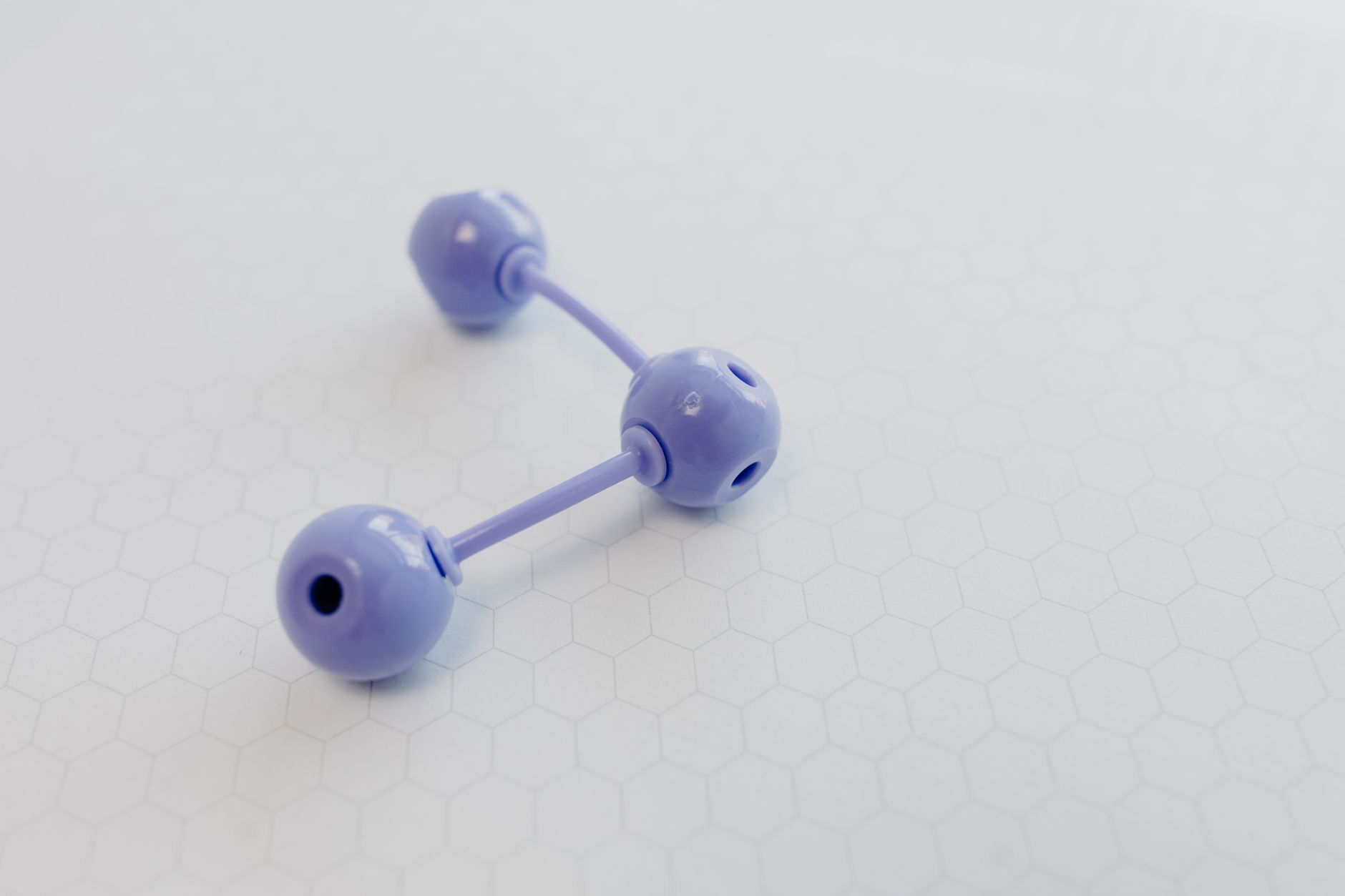
Featured image. Source: Pexels. Credit: Tara Winstead. License: Pexels License.