

Oxfam says the super-rich profit twice from climate crisis
Oxfam says the richest 0.1% hold stakes in both polluting industries and the growing business of rebuilding after disasters, and it wants new taxes in response.
 By
Farah Choudhury
In brief
- Oxfam says the richest 0.1% are heavily invested in disaster preparedness, recovery and reconstruction.
- Its new index tracks 217 companies that fuel climate breakdown or sell ways to adapt to it.
- The charity wants higher taxes on the wealthy, private jets and polluting firms, plus UK climate finance in grants.
The planet-warming pollution, and now the business of dealing with its aftermath, are enriching the world’s wealthiest individuals, according to an Oxfam study covered by The Guardian. The charity states that the top 0.1% of the population holds large financial stakes in disaster readiness, rebuilding and reconstruction work after catastrophes.
The weight of the richest 0.1%
This group totals 8 million people. According to Oxfam’s report, their carbon output exceeds that of the 3.5 billion poorest people taken together, and their contribution to extreme heat events is 125 times greater than that of the typical individual.
Lifestyle plays a part: the world’s private jets release more CO2 in two seconds than most people emit in a whole year. Yet the report finds that the largest share of this group’s impact stems from where their money is placed, rather than from what they burn.
What Oxfam calls a double dividend
Oxfam argues that this market gives the wealthy a “double dividend” from the climate crisis. It also says they have an incentive to delay or disrupt action on the problem. People bearing the least blame for global heating end up paying those bearing the most, whether through higher food prices, repairs to storm-damaged homes or relocation.
Jean McLean, Oxfam’s chief influencing officer, put it this way: “The populations who contributed least to the climate crisis are absorbing its worst consequences, while those who caused it are best equipped to protect themselves.”

Oxfam adds that wealthy nations and individuals are somewhat insulated, for now, since they can pay for costlier food, sturdy housing, emergency evacuation, private healthcare and personal security. That, the charity says, makes them less inclined to deploy their lobbying power in favour of action on the climate, and may even push them to hold back emissions cuts that could hurt their wealth.
Who is in the destroy and rebuild index
In its new destroy and rebuild index, Oxfam singles out 217 corporations that either drive climate breakdown or make money from adapting to it, by selling cooling devices, flood barriers, firefighting equipment, transport, food, insurance and loans.
| Measure | Oxfam’s finding |
|---|---|
| Companies in the index | 217 |
| Average profit last year | $1.8bn |
| Average dividends paid last year | $1bn |
| Asset managers listed in their own right | Six |
| Index companies in which BlackRock and Vanguard hold shares | 92%, worth more than $1tn |
Oxfam also says that extreme weather or war-driven crises have usually boosted profits at leading food trading firms controlled by billionaires, whose fortunes have grown by $120bn since 2020. It points to cocoa prices that jumped 231% following extreme weather in west Africa in 2024, a rise from which, it says, local farmers gained nothing.
The human toll
Oxfam says the yearly emissions of the richest 1% will lead to 1.9 million excess heat deaths, a figure drawn from estimated consequences for people’s health, crop yields and rising seas. Over 75% of these deaths would occur in low- and middle-income countries, which are responsible for only 8% of emissions.
What Oxfam wants
- Higher taxes on the rich, private jets, and oil, gas and polluting companies.
- International climate finance from the UK government based on grants rather than loans.
- An end to profiteering from climate disasters.
Nafkote Dabi, climate change policy lead at Oxfam International, said: “What’s complex about talking about climate change is everyone likes to think it’s a shared problem, but it’s not.”
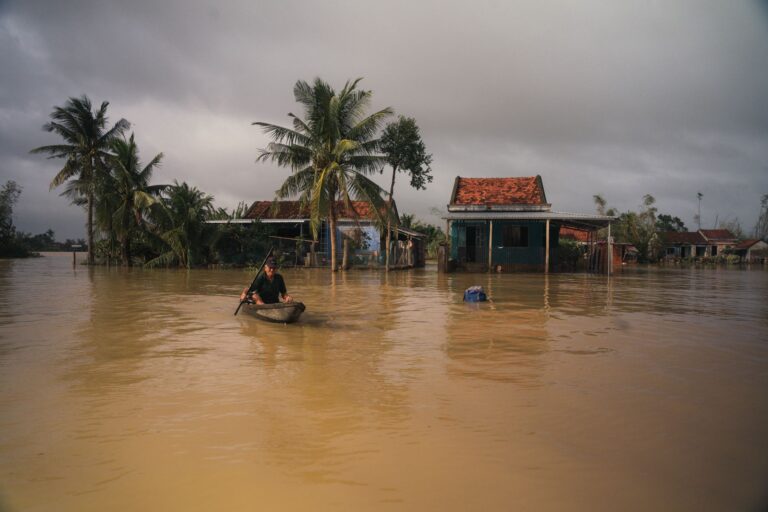
Photo: Long Bà Mùi / Pexels