


Adults don’t lose their creativity, they lose the confidence to use it
Judges rated grown-ups' work as more original and useful than that of children aged four to seven, yet adults reported less confidence and more anxiety.
 By
Farah Choudhury
In brief
- Adults produced work that judges found more original, useful and creative than preschoolers’ work.
- Children said they felt more confident and motivated, and less anxious, than adults did.
- The study compares only two age groups, so it cannot show how creativity changes with ageing.
The idea that children are naturally more creative than adults does not survive a new experiment. Judges rated the work of grown-ups as more original, more useful and more creative overall than the work of preschoolers, in research run by a team at the University of Graz in Austria.
The paper appeared in the journal Plos One and was produced in collaboration with UCLouvain in Belgium and Yale University. As reported by The Guardian, the adults were also the more anxious group and the less confident one. The finding challenges the widespread assumption that creativity is something people gradually lose on the way to adulthood.
How the experiment worked
The team gathered two groups: 92 preschoolers between the ages of four and seven, and 70 adults who were mostly in their 20s. Every participant completed the same three tasks, each drawing on imagination in a different way.
| Task | What participants did | Time allowed |
|---|---|---|
| Uses for a tin | Think of as many creative uses as possible | Three minutes |
| Free drawing | Draw anything they liked | No stated limit |
| Imaginary animal | Draw an animal that does not exist | Eight minutes |
Judges scored the results for originality, usefulness and overall creativity. Participants themselves then rated each task: how much they enjoyed it, how motivated and self-assured they felt, and how much anxiety it caused.
Better results, shakier nerves
Adults came out ahead on all three judged measures, and the gap was clearest when tasks came with clear goals and time limits. Children, by contrast, said they felt more confident and more motivated, and less anxious, than the adults did.
Dr Mathias Benedek, who is the senior author and works at Graz, described the mismatch this way: “Adults outperformed children, demonstrating higher creative potential, but they had far less confidence. We need to look at what makes adults so anxious about their original ideas being rejected,”
The pattern fits the contrast the researchers observed in how each group went about the work. The adults were rated higher by the judges, yet their own accounts of the experience were the gloomier ones, while the children reported the more positive feelings about the same tasks.
Why grown-ups hold back
Benedek points to the way each group approaches a task. Children, he said, showed stronger intrinsic motivation and enjoyed the play itself, while adults concentrate on the goal, which limits their enjoyment. In his account, the youngsters experimented freely and treated errors as a normal part of the process. Adults, worried about being judged, frequently discarded unconventional ideas before they had tried them out.
That difference, in his view, explains a common misreading. “Children are so intrinsically motivated and absorbed in play that we often mistake their engagement with greater creative ability.” He and his colleagues describe the belief that creativity fades into adulthood as a misconception, and Benedek put it plainly: “Adults don’t lose their creativity, instead they lose the confidence to use it,”
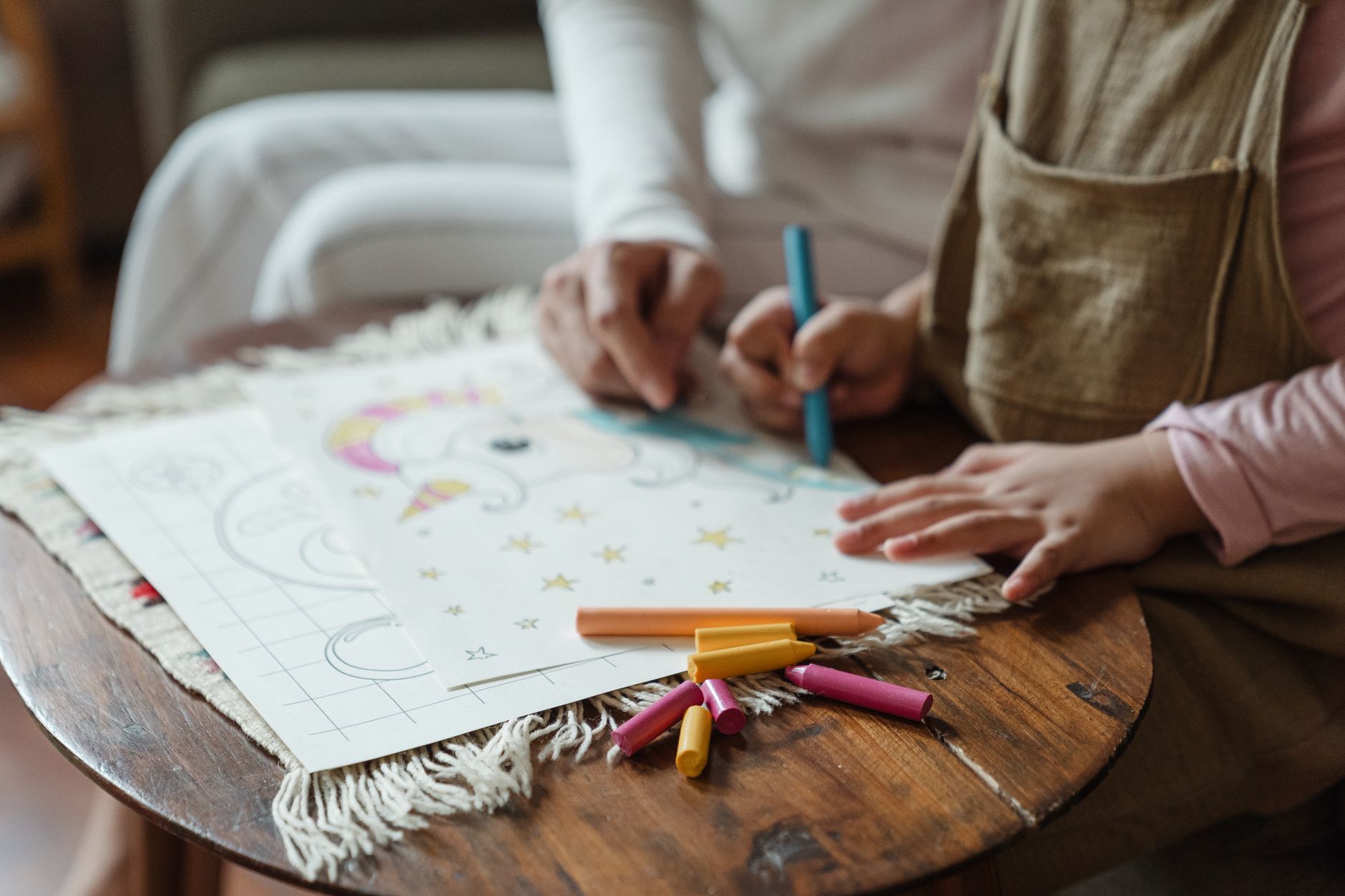
Photo: Ketut Subiyanto / Pexels