




| IN A NUTSHELL |
|
The U.S. military is on the cusp of enhancing its capabilities to detect hostile drones at greater distances, thanks to a new AI-enabled system demonstrated at the recent Technology Readiness Experimentation event. This cutting-edge system, developed by L3Harris Technologies in collaboration with Shield AI, promises faster detection of unmanned aerial vehicles (UAVs), even when they are partially obscured by environmental factors such as buildings or clouds. As the threat landscape evolves, the ability to identify potential drone threats swiftly is becoming increasingly crucial for maintaining national security and operational effectiveness.
Unmanned Threats That Require Faster Responses
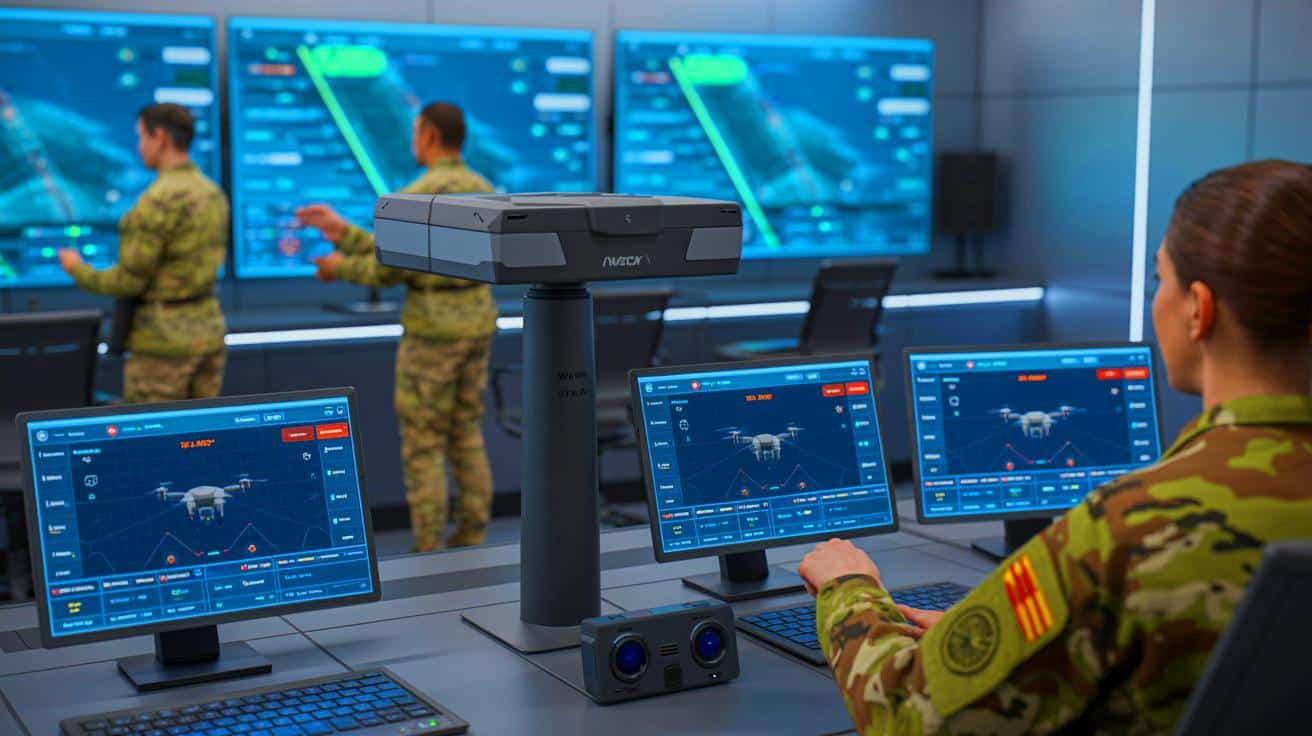
The modern battlefield is rapidly evolving with the proliferation of unmanned aerial systems (UAS), necessitating quicker and more efficient detection methods. L3Harris has risen to this challenge by testing the passive capabilities of its WESCAM MX-Series electro-optical and infrared sensors, integrated with Shield AI’s Tracker counter-UAS software. This collaborative effort aims to detect multiple types of UAVs, providing a strategic advantage to U.S. warfighters and allies.
Tom Kirkland, Vice President and General Manager of Targeting and Sensor Systems at L3Harris, emphasized the importance of these advancements. He stated, “Our warfighters and allies are facing a new breed of unmanned threats that require faster responses at greater ranges without being detected themselves.” By leveraging the strengths of both companies, the system offers a vital layer of protection for operators, enabling them to respond swiftly and effectively to emerging threats.
Fine-Tuning Different Airborne Object Behavior Models
The next phase in the collaboration between L3Harris Technologies and Shield AI involves refining models that track different airborne object behaviors. This fine-tuning process is crucial for enhancing performance across various domains, including air, land, and sea, during both day and night operations. The integration of AI-powered capabilities with the L3Harris VAMPIRE Counter-Unmanned System aims to bolster defenses against small drones, which are becoming increasingly prevalent in complex environments.
Christian Gutierrez, Vice President of Hivemind Solutions at Shield AI, highlighted the challenges posed by the growing use of drones by adversaries. “Adversaries are fielding more drones, cheaper and in more complex environments than ever before,” he explained. The collaboration aims to create technology that is not only intelligent and adaptable but also passive, ensuring that it meets urgent operational needs effectively.
Targeting Systems Support Intelligence
The WESCAM MX-Series, a key component of this new system, is renowned for its multi-sensor, multi-spectral capabilities. These systems support a wide range of missions, including intelligence, surveillance, reconnaissance, and target acquisition, across various platforms. L3Harris has demonstrated that its turrets outperform competitors in crucial performance areas, offering the longest target identification and designating ranges in the industry.
Designed for precision and reliability, the WESCAM MX-Series systems are field-proven and extensively deployed. They boast high-sensitivity multi-spectral sensors for diverse mission profiles, including day, low-light, and nighttime operations. Additionally, the systems feature geo-pointing technologies that simplify operations, regardless of aircraft movement or obstructions. These capabilities ensure that military teams can maintain a strategic advantage on the battlefield around the clock.
Implications for National Security
The introduction of advanced drone detection systems like the one developed by L3Harris and Shield AI has significant implications for national security. As drone technology becomes more accessible, potential threats are evolving, requiring robust countermeasures. The ability to detect and respond to UAVs efficiently is crucial for safeguarding military assets and protecting civilian populations.
Moreover, this technological advancement underscores the importance of innovation in defense strategies. By integrating AI and multi-spectral sensors, the system not only enhances current capabilities but also sets a precedent for future developments in the field. As military operations continue to adapt to new challenges, the role of technology becomes ever more vital in ensuring effective and timely responses to emerging threats.
As the U.S. continues to develop and deploy advanced drone detection systems, questions remain about the future of drone warfare and defense. How will these technological advancements influence global security dynamics, and what ethical considerations will arise as AI becomes more integrated into military operations?