



| IN A NUTSHELL |
|
In recent years, the demand for advanced propulsion systems for space-based defense has grown exponentially. This need is driven by the increasing sophistication of adversarial threats in the space and missile defense domains. Ursa Major, a Colorado-based company, is at the forefront of developing cutting-edge propulsion technology to address these challenges. Their latest development, the Draper engine, represents a significant leap in the field of hypersonic defense and in-space propulsion. With a contract worth $34.9 million from an undisclosed U.S. aerospace and defense firm, Ursa Major is set to enhance the Draper engine to meet critical national security needs in space.
The Rise of the Draper Engine
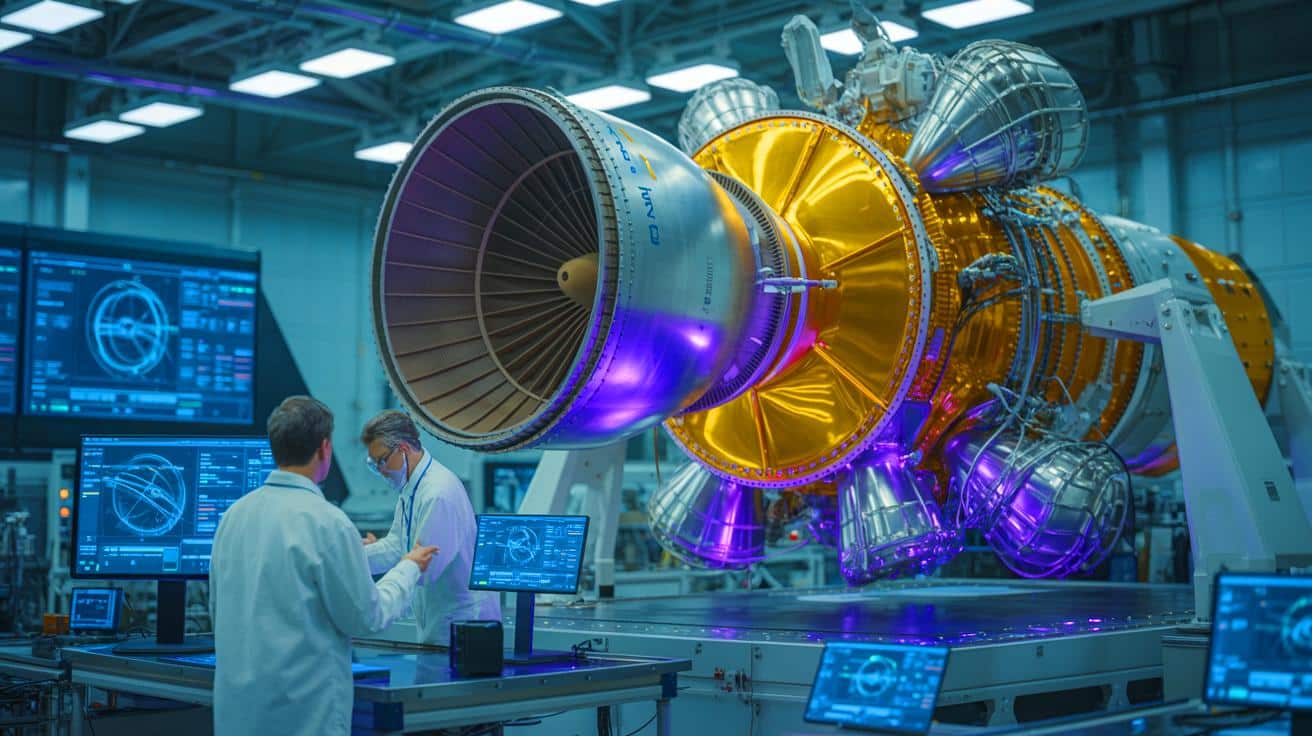
The Draper engine is a tactical, storable liquid rocket engine specifically designed for rapid response applications and in-space maneuverability. Unlike traditional solid rocket motors, the Draper engine offers the same launch readiness and storability but with additional capabilities. These include restart capability, throttle control, and precise maneuverability. This flexibility allows it to support new mission profiles, providing the U.S. with a strategic advantage in defending against emerging threats.
“As adversaries increase their activity in space and missile defense becomes more multidomain, Draper provides the responsiveness, control, and flexibility required for the U.S. to defend against emerging threats,” said Dan Jablonsky, CEO of Ursa Major.
The engine’s design marks a paradigm shift in defense propulsion by integrating high-speed, affordable mass propulsion systems across land, sea, air, and space. This innovative approach ensures that the U.S. remains at the cutting edge of defense technology.
Draper’s Role in Hypersonic Defense
The Draper engine’s application in hypersonic defense is particularly notable. Its low part count and the use of 100% American-made components, with nearly two-thirds being additively manufactured, make it an affordable option throughout its development stages. This approach not only reduces costs but also accelerates production timelines.
Ursa Major’s recent contract with the U.S. Air Force Research Laboratory, valued at $28.6 million, further underscores the engine’s potential. This contract aims to demonstrate the Draper engine in flight by the end of the year, showcasing its capabilities for hypersonic applications. Such advancements are crucial as the U.S. seeks to enhance its hypersonic defense capabilities.
The engine operates on non-cryogenic, non-toxic propellants and uses a closed catalyst cycle. Having been successfully hot-fired over 250 times, the Draper engine is not only safe and reusable but also storable for at least a decade. These features make it an ideal choice for simulating hypersonic threats, addressing a critical gap in America’s current defense capabilities.
Chaos Erupts in the Skies as New Tech Shields Cities from Unseen Threats and Unprecedented Attacks
Technological Innovation and Strategic Advantages
Solid rocket motors have traditionally powered vehicles used for testing missile defense systems. However, they lack the ability to change thrust in real-time, limiting their effectiveness against complex and erratic hypersonic threats. The Draper engine’s liquid rocket technology provides active throttle control and a wide throttle range, offering the maneuverability and flexibility needed for effective hypersonic defense.
“Draper represents a paradigm shift in defense propulsion on land, at sea, in the air, and now, in space,” emphasized Dan Jablonsky.
This technological innovation positions the Draper engine as a key component in the U.S.’s strategic defense arsenal, providing a significant advantage over traditional propulsion systems.
Future Prospects and Challenges
As Ursa Major continues to develop and deploy the Draper engine, several challenges and opportunities lie ahead. The engine’s success in operational environments will be crucial in validating its performance and flexibility. Additionally, continued advancements in additive manufacturing and propulsion technology will play a vital role in maintaining the engine’s competitive edge.
The collaboration between Ursa Major and various U.S. defense entities highlights the importance of public-private partnerships in advancing defense technology. As adversarial threats continue to evolve, the ability to rapidly adapt and innovate will be essential in maintaining national security.
Looking ahead, how will the integration of advanced propulsion systems like the Draper engine impact the future of space-based defense, and what further innovations might we expect to see in this rapidly evolving field?