



| IN A NUTSHELL |
|
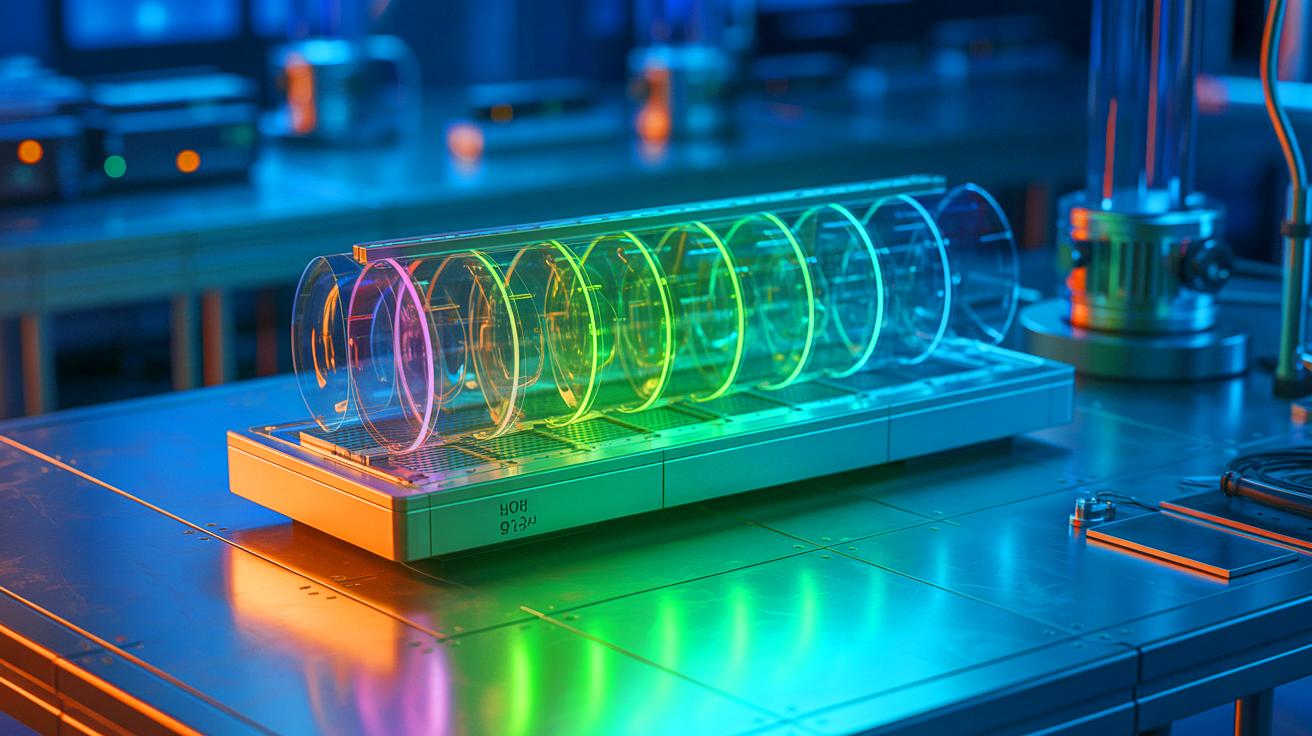
Microsoft’s latest innovation in computing technology could redefine the boundaries of artificial intelligence and optimization tasks. The tech giant has developed an analog optical computer (AOC) that uses beams of light rather than electrons to perform computations. This prototype promises to tackle complex problems with unprecedented speed and efficiency, potentially running AI processes up to 100 times faster than current processors. By employing commercially available components, Microsoft aims to create a cost-effective solution that could eventually be mass-produced. This approach not only speeds up computations but also offers significant energy savings, making it a promising candidate for future technological advancements.
Revolutionizing Financial Transactions
The application of the AOC in the financial sector represents a significant leap forward. Microsoft collaborated with Barclays Bank to test the AOC’s ability to optimize delivery-versus-payment securities transactions. This process is essential for settling trades between banks and currently involves thousands of transactions among numerous parties. Although the experimental setup was smaller than real-world clearinghouses, the results demonstrated the potential of the AOC to handle these transactions more efficiently in the future.
“It is an absolute giant problem with massive real-world finance impact,” noted Hitesh Ballani, who leads research on future AI infrastructure at Microsoft Research. The ability to optimize such complex financial operations not only enhances speed and efficiency but also reduces the risk of errors, potentially saving time and resources.
Overall, the success of the AOC in this domain highlights its capability to address real-world challenges and suggests a promising future for its broader application in finance.
Transforming Healthcare Diagnostics
The healthcare sector stands to benefit significantly from the AOC’s capabilities. Researchers utilized the digital twin of the AOC to reconstruct MRI scans, achieving promising results. While traditional MRI scans can take about 30 minutes, the optical system could theoretically reduce this time to just five minutes. This reduction in scanning time could dramatically improve patient throughput and access to diagnostic services.
Michael Hansen, a senior director at Microsoft Health Futures, emphasized the importance of the digital twin in demonstrating the feasibility of larger-scale MRI reconstructions. Though the technology is not yet ready for clinical implementation, these experimental results suggest a future where waiting times for diagnostic procedures could be significantly reduced.
This potential advancement in healthcare imaging underscores the transformative impact that the AOC might have, not only in improving efficiency but also in making healthcare more accessible to patients worldwide.
A Vision for AI’s Future
The potential of the AOC extends to artificial intelligence, where it could revolutionize the way AI workloads are managed. Current AI models, particularly large language models, require immense energy to process billions of parameters. The optical computing approach could handle tasks like “state tracking” with far greater energy efficiency.
“The most important aspect the AOC delivers is that we estimate around a hundred times improvement in energy efficiency,” explained Microsoft researcher Jannes Gladrow. While the prototype currently manages only 256 parameters, researchers are optimistic that it could scale to millions or even billions as technology advances.
For Microsoft, this development represents a significant step towards creating a sustainable future in computing. “Our goal is this being a significant part of the future of computing,” stated Ballani. The company’s vision aligns with broader industry trends towards energy-efficient computing solutions.
Looking Ahead
As Microsoft continues to refine its analog optical computing technology, the possibilities for its application seem boundless. By leveraging light instead of electrons, the AOC offers a glimpse into a future where computing is not only faster but also more energy-efficient. The findings published in the journal Nature highlight the potential of this innovation to transform various sectors, from finance to healthcare and beyond.
The ongoing development of the AOC raises intriguing questions about the future of computing. How will industries adapt to the capabilities of this technology? What new applications might emerge as researchers continue to explore its potential? As we stand on the brink of a new era in computing, the answers to these questions will shape the technological landscape of tomorrow.