




| IN A NUTSHELL |
|
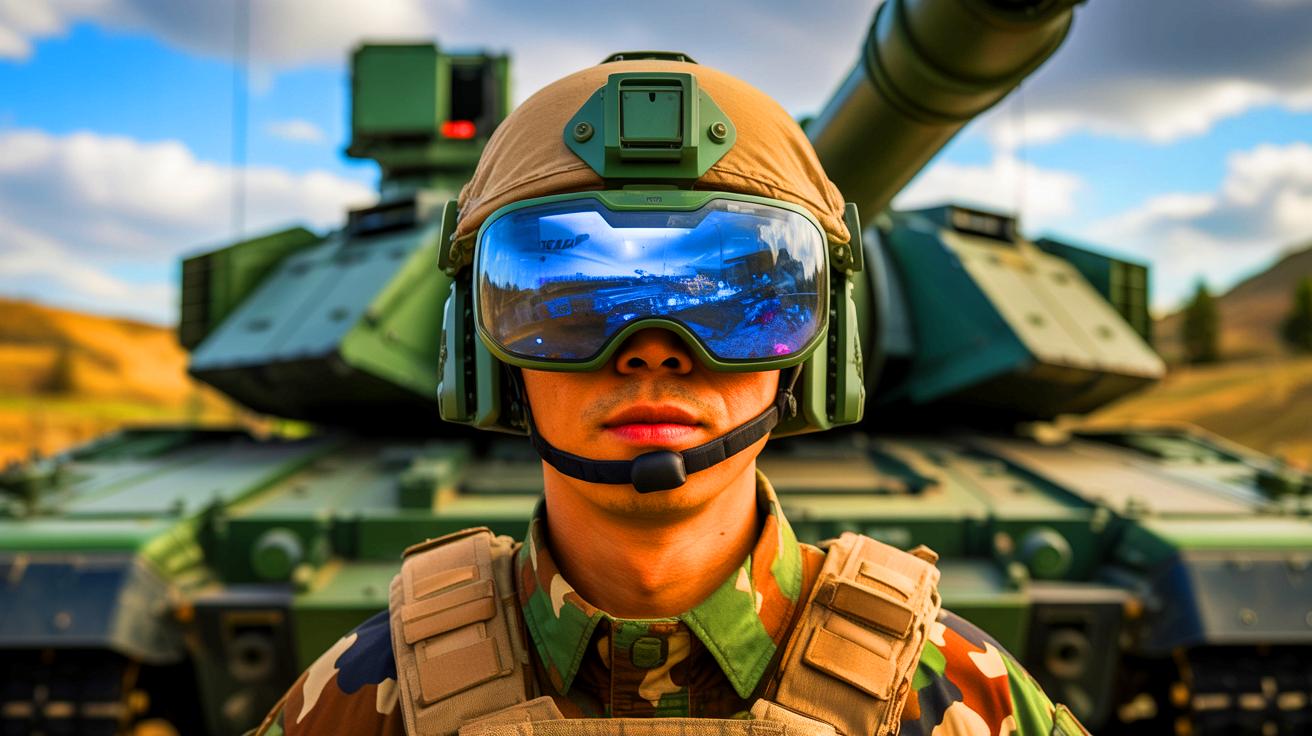
China’s military is once again at the forefront of technological innovation with the development of augmented reality (AR) headsets for its armored vehicle crews. These headsets are designed to significantly enhance battlefield awareness and reduce reaction times, offering a 360-degree view of the surroundings through a transparent heads-up display. The technology allows crew members to “see through” the armor of heavily protected vehicles, providing real-time video feeds overlaying critical data such as vehicle status, ammunition levels, and targeting information. This advancement aligns with China’s broader efforts to modernize its ground forces and integrate digital technology across military services.
Revolutionizing Battlefield Awareness
The introduction of AR headsets marks a significant leap in the way Chinese armored vehicle crews perceive their environment. Traditionally, the thick armor of tanks and infantry fighting vehicles limits visibility, posing challenges in dynamic combat situations. With the new AR system, crew members can access a comprehensive view of their surroundings, enhancing their situational awareness.
The headsets connect to an array of cameras and sensors affixed to the vehicles, which feed live images directly to the crew’s display. This setup allows commanders, drivers, and gunners to adopt various viewing modes tailored to their specific roles. Whether operating in open terrain or navigating through urban environments, the AR technology ensures that crews remain acutely aware of their environment, both during the day and at night.
The system provides “unprecedented situational awareness,” according to Chinese defense industry sources.
The modular nature of the AR system suggests its potential adaptability to various military platforms, indicating a broad scope for future implementation across different types of armored vehicles.
Weapon Control Integration
One of the standout features of the AR headsets is their capability to integrate weapon control functions. By allowing gunners to aim weapons simply by turning their heads or focusing their gaze, the technology promises to enhance reaction times significantly. This system is reminiscent of the U.S. Army’s Apache helicopter, where a 30 mm chain gun follows the pilot’s line of sight.
This seamless integration not only reduces cognitive workload but also introduces flexibility into battlefield operations. Crew members can switch roles as needed without compromising overall functionality. While gunners focus on targeting, commanders and drivers can maintain their specific operational duties.
Moreover, the reliance on external sensors positions the AR system as an ideal component for networked warfare. By sharing targeting and surveillance data across units, Chinese armored formations can achieve a collective view of the battlefield, enhancing coordination and strategic efficiency.
Digital Push in Ground Forces
China’s AR initiative is part of a larger global trend toward digital modernization in military operations. The U.S. Army’s ongoing testing of Integrated Visual Augmentation System (IVAS) goggles for soldiers echoes this movement. By adapting similar technology for armored vehicles, China demonstrates its commitment to integrating digital capabilities across its military services.
The AR headsets not only project real-time imagery but also include mission-critical displays of vehicle status and system health. This integration enables crews to make informed decisions swiftly, without having to rely on separate information screens.
While it remains uncertain whether these headsets are already in operational use, their appearance on the ZTZ-201 medium tank and other combat support vehicles suggests readiness for broader adoption pending successful trials.
If deployed, the AR system could fundamentally alter Chinese ground combat tactics.
The potential for real-time data sharing and intuitive weapon control promises to redefine armored warfare, reflecting a strategic shift toward networked, sensor-driven combat systems.
Implications for Future Warfare
The development of AR headsets for China’s armored forces underscores the transformative power of digital technology in military contexts. By enabling tank crews to see through armor, share live battlefield data, and control weapons with simple gaze gestures, this innovation signifies a major evolution in armored combat capabilities.
For now, these demonstrations highlight the growing emphasis on integrating advanced technology into traditional military platforms. The AR headset project exemplifies how digital advancements are reshaping even the most conventional elements of warfare.
As China continues to refine this technology, the potential for its implementation across a broader range of military assets remains high. The implications for global military dynamics are profound, raising questions about how other nations will respond to these technological strides.
As China’s military technology continues to advance, the future of warfare is poised to change dramatically. The integration of augmented reality into armored vehicles represents just one step in a broader digital transformation. How will other countries adapt to these technological innovations, and what will this mean for the future of global military strategy?