



| IN A NUTSHELL |
|
In recent developments, Raytheon, a prominent Virginia-based defense manufacturer, has successfully conducted multiple flight tests for its groundbreaking Lower Tier Air and Missile Defense Sensor (LTAMDS). Designed to bolster defense capabilities in an era of increasingly sophisticated aerial threats, the LTAMDS has completed nine successful flight tests of escalating complexity. These tests have demonstrated the system’s potential to integrate seamlessly with existing defense architectures, paving the way for enhanced battlefield readiness. As global demand for advanced defense systems grows, Raytheon’s innovations in radar technology are set to play a crucial role in modernizing military defenses worldwide.
LTAMDS: A Leap in Defense Technology
The LTAMDS represents a significant advancement in defense technology, primarily due to its integration with the Large Tactical Power Source (LTPS). This integration allows the system to reach its full battlespace potential by providing 360-degree full-sector sensing capabilities. According to Tom Laliberty, president of Land & Air Defense Systems at Raytheon, these capabilities are designed to specifically address massive, coordinated attacks from adversaries.
The system’s ability to track and intercept complex, threat-representative targets was demonstrated in recent tests, highlighting its potential to transform air defense strategies. Raytheon aims to meet the growing international demand for such capabilities by investing in increased production capacity. This commitment ensures rapid delivery of this critical technology to global defense forces.
Three Radar Arrays: A Game-Changer
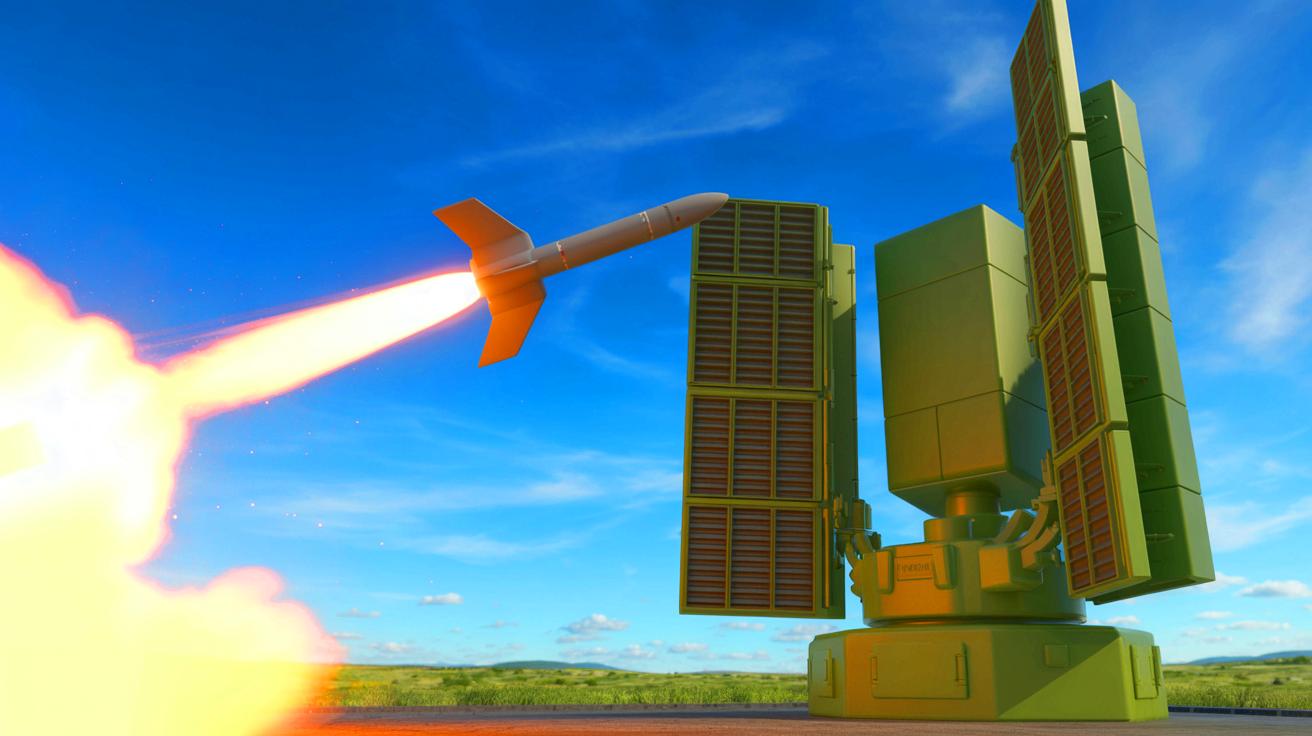
One of the standout features of the LTAMDS is its three radar arrays, which provide high capacity and full coverage. These arrays are crucial in countering a diverse range of threats, including drones, advanced aircraft, and various missile types such as ballistic, cruise, and hypersonic missiles. The system’s design enables it to detect and engage multiple threats simultaneously, offering unparalleled defense capabilities.
In 2025, the U.S. Army officially designated LTAMDS as a program of record, underscoring its strategic importance. Poland was the first international customer to integrate LTAMDS into its air and missile defense architecture, with several other countries expressing interest in acquiring the system. Raytheon’s commitment to expanding production capacity is a direct response to this growing global interest.
Production and Global Demand
Raytheon’s production strategy for LTAMDS is tailored to meet both domestic and international demands. The company is currently manufacturing eight additional radars per year, with plans to increase production to 12 units annually. This ramp-up is essential to fulfill contracts for the U.S. Army and Poland, with deliveries expected later this year.
The LTAMDS is designed to integrate seamlessly with the U.S. Army’s Integrated Air and Missile Defense system while preserving investments in the Patriot system. Its primary radar array, comparable in size to the Patriot system’s array, offers more than twice the power, ensuring robust defense capabilities. This innovative approach not only enhances the performance of existing systems but also provides a future-proof solution for modern military operations.
Revolutionary Two-Ton VTOL Drone Stuns World with First Successful Cargo Delivery in China
Enhancing Global Security
The LTAMDS’ development and deployment mark a significant step forward in global defense strategies. Its ability to counter advanced and next-generation threats, including hypersonic weapons, positions it as a critical component in modern air defense systems. The ongoing enhancements in radar technology are pivotal in addressing the evolving landscape of military threats.
Raytheon’s efforts to expand production and integrate cutting-edge technology into its systems reflect a broader commitment to enhancing security worldwide. By providing a reliable and powerful defense solution, the LTAMDS is set to become a cornerstone in national and international defense architectures, ensuring preparedness against emerging threats.
As Raytheon continues to innovate and expand its capabilities, the question remains: how will other nations adapt their defense strategies in response to these groundbreaking advancements in radar technology?