




| IN A NUTSHELL |
|
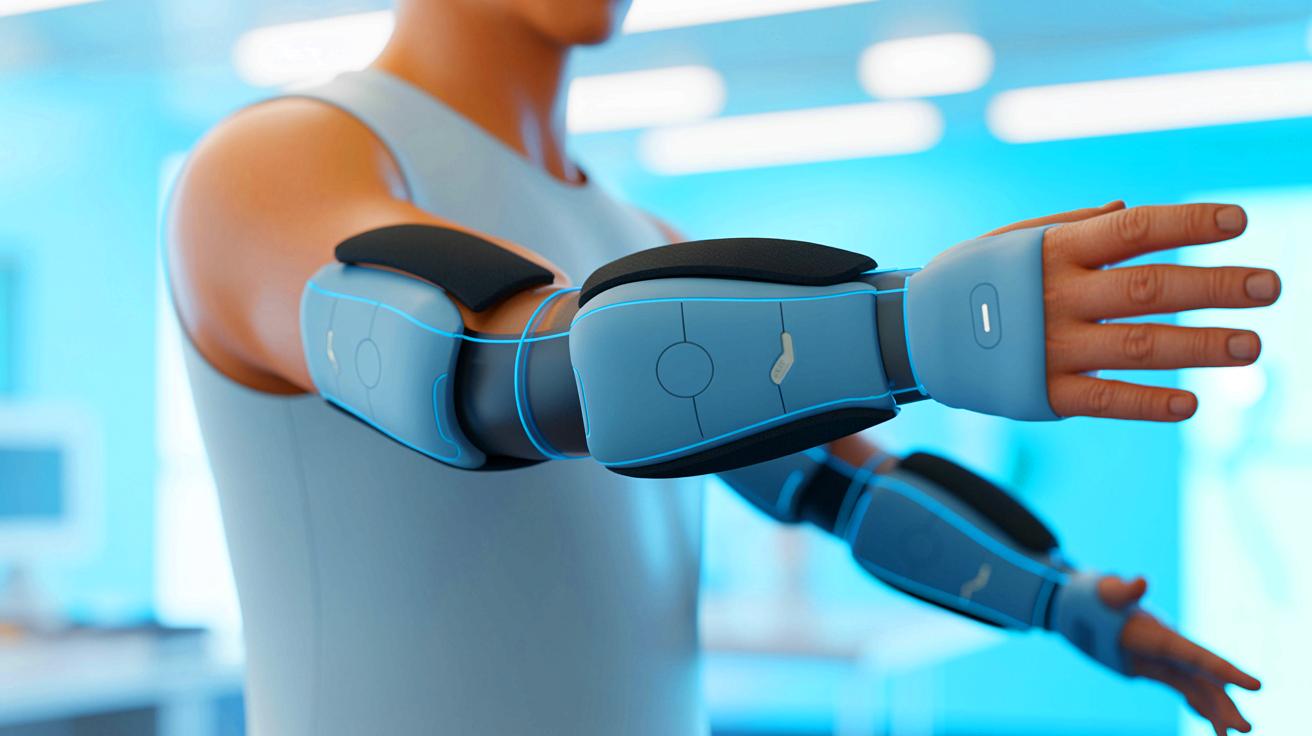
In a groundbreaking development, engineers at Harvard University have created a soft, wearable robotic device designed to assist those with upper-limb impairments. This innovative device harnesses the power of machine learning and advanced physics-based models to adapt to each user’s unique movements, offering personalized support. This breakthrough holds promise not only for improving the daily lives of individuals with conditions such as stroke and ALS but also for providing potential rehabilitative benefits. As the research continues, the implications for enhancing independence and quality of life for users are becoming increasingly evident.
Advancements in Personalized Robotic Assistance
The team of researchers, collaborating with physician-scientists at Massachusetts General Hospital and Harvard Medical School, has significantly advanced the capabilities of the wearable robot. They have developed a system that is exceptionally responsive to a user’s specific movements, thereby providing tailored assistance that enhances the control and efficacy of everyday tasks. This development is underpinned by the integration of a machine learning intention detection model and a physics-based hysteresis model. These models work in tandem to decode a user’s motion intentions through data from IMU and compression sensors. By employing a real-time controller, the assistance level can be dynamically adjusted based on the user’s intent and kinematic state.
Through rigorous testing, the researchers have demonstrated the effectiveness of this control strategy in improving arm function across multiple days of evaluation. This approach not only offers immediate functional assistance but also contributes to longer-term rehabilitative outcomes, potentially redefining the scope of wearable robotics in healthcare.
Enhancing Movement Quality
According to the study, the robotic device has shown remarkable improvements in movement quality for users. For instance, the device has achieved a 94.2% accuracy in identifying shoulder movements from minimal changes in shoulder angles. This is a significant enhancement compared to baseline controllers. Moreover, the device has reduced the force required to lower the arm by 31.9%, a substantial improvement that could greatly benefit users in their daily activities.
Additionally, the robot has facilitated increased ranges of motion across the shoulder, elbow, and wrist, while also reducing trunk compensation by up to 25.4%. Hand-path efficiency has been improved by as much as 53.8%, highlighting the robot’s capability to enhance movement precision and efficiency. These advancements collectively contribute to a more seamless and natural user experience, underscoring the robot’s potential as a transformative tool for individuals with mobility challenges.
Precision and Adaptability in Robotic Assistance
One of the standout features of the wearable robot is its ability to distinguish user-specific shoulder movements with an impressive 94% accuracy. This high level of precision is critical for ensuring that the assistance provided is both effective and intuitive. Dr. Sabrina Paganoni, an ALS specialist and co-director of the Massachusetts General Hospital Neurological Clinical Research Institute, emphasizes the importance of personalization in such devices.
She notes that for individuals living with ALS, comfort, ease of use, and adaptability to specific needs and movement patterns are paramount. The robot’s ability to meet these criteria positions it as a valuable tool in enhancing functional independence and quality of life. The reduction in the force needed for arm movement further illustrates the robot’s potential to alleviate physical strain and improve daily living activities for users.
Future Prospects for Wearable Robotics
As the research progresses, the potential applications of this wearable robotic device continue to expand. The current focus on personalizing assistance for users with upper-limb impairments could pave the way for broader applications in other areas of mobility and rehabilitation. The integration of machine learning and advanced modeling techniques sets a precedent for future innovations in wearable technology.
Moreover, the device’s capacity to deliver both assistive and rehabilitative benefits highlights its versatility. This dual functionality could prove invaluable in clinical settings, where personalized rehabilitation programs are essential for patient recovery. As the technology evolves, it will be crucial to explore how these advancements can be scaled and adapted for widespread use, ensuring that more individuals can benefit from these innovations.
The development of this wearable robotic device marks a significant milestone in the field of assistive technology. By combining cutting-edge machine learning with personalized, responsive support, the device offers new hope for individuals with upper-limb impairments. As researchers continue to refine and expand upon this technology, one key question remains: how can we ensure that such groundbreaking innovations are accessible and affordable for all who need them?