




| IN A NUTSHELL |
|
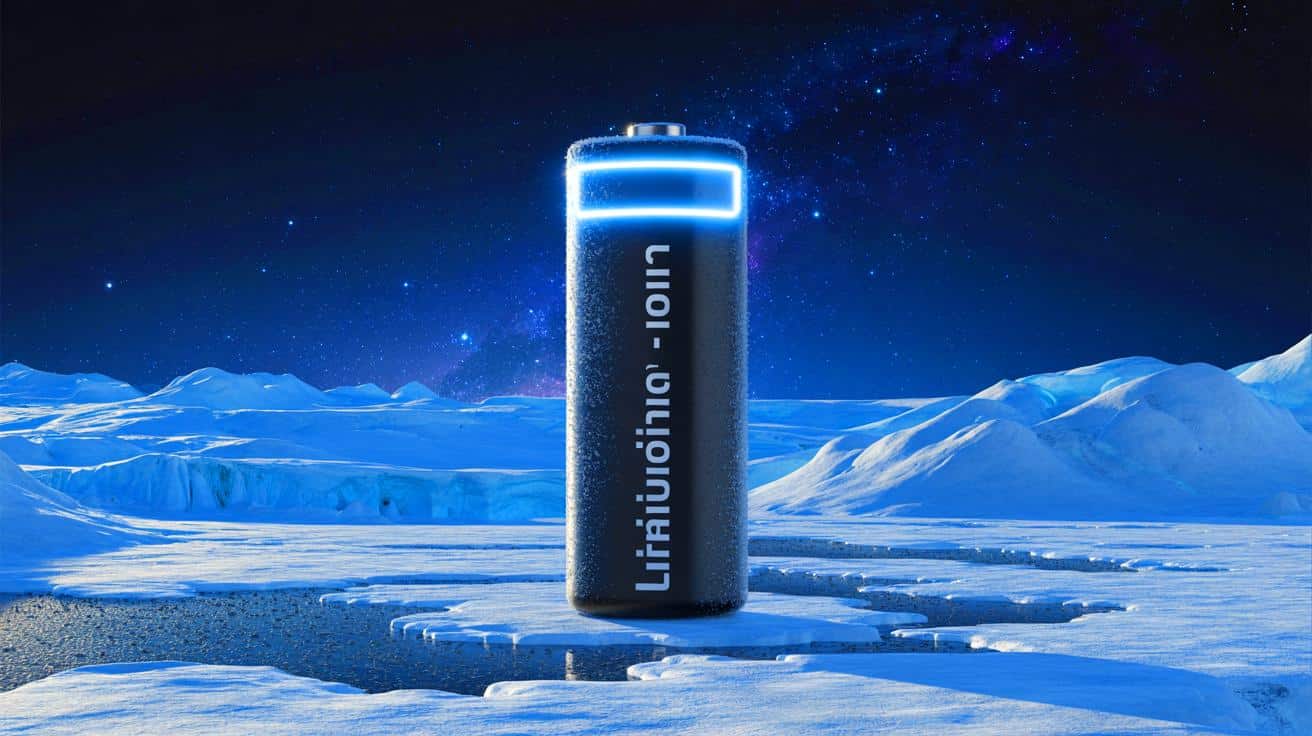
As the world increasingly relies on lithium-ion batteries (LIBs) for power, their performance in extreme conditions becomes a critical area of research. Recent studies have focused on enhancing the capability of these batteries in cold environments, which could significantly impact applications from Arctic exploration to space missions. Researchers have explored advanced low-temperature (LT) electrolytes to ensure that LIBs can function efficiently even in the harshest conditions. The development of these electrolytes marks a pivotal step in creating more robust and reliable energy storage systems capable of withstanding the rigors of extreme cold.
Innovations in Low-Temperature Electrolytes
Researchers from Chang’an University and Queensland University of Technology have made significant strides in the field of LT electrolytes. Led by Professors Limin Geng, Weijia Meng, and Dr. Jiaye Ye, their work was recently published in Springer Nature. The study delves into innovative optimization approaches, including the design of lithium salt molecules with tailored dissociation characteristics. By optimizing the solvent matrix through dielectric constant and viscosity regulation, the researchers aim to enhance the performance of LIBs in cold conditions.
Their review highlights various electrolyte systems, such as ester-based and ether-based systems, which are essential for maintaining the functionality of LIBs in freezing conditions. Machine-learning models played a crucial role in predicting key properties like melting point and viscosity, thus accelerating the discovery of new electrolytes. This approach reduces the time required for electrolyte discovery from months to mere hours, offering a promising future for energy storage solutions in extreme environments.
Machine Learning and Electrolyte Development
The integration of artificial intelligence in electrolyte development has introduced a new era of efficiency and precision. Machine learning-guided formulation strategies allow for high-throughput virtual screening of various combinations, enabling the prediction of structure-property relationships. Key descriptors such as dipole moment and molecular radius have been identified as critical factors in developing effective LT electrolytes.
This approach has led to the discovery of non-fluorinated ethers that can cycle 300 times at −22 degrees Fahrenheit while retaining 99% of their capacity. The development of LT gel-polymer electrolytes further expands the potential applications of LIBs in cold-weather computing and IoT sensors. The use of AI in this research demonstrates the potential for significant advancements in the creation of next-generation electrolytes, paving the way for more resilient energy storage solutions.
The Role of Standardized Testing Protocols
The need for standardized LT testing protocols is a recurring theme in the ongoing research of LIBs. Establishing these protocols is crucial for ensuring the reliability and consistency of battery performance in low-temperature environments. The research points to the importance of physics-informed neural networks that couple solvation structure to plating propensity, as well as automated robotic platforms that can translate AI predictions into large-scale synthesis.
Future research aims to bridge the gap between laboratory demonstrations and commercial applications. By focusing on high-entropy electrolytes and cryogenic in-situ NMR, researchers hope to advance the development of LIBs capable of operating under extreme conditions. The successful implementation of these strategies could revolutionize the use of LIBs in demanding scenarios, from Mars rovers to Arctic exploration vehicles.
Implications for Space and Cold-Climate Applications
The advancements in LT electrolytes have far-reaching implications for various applications where traditional LIBs fall short. From space exploration to Arctic missions, the ability of LIBs to function in extreme cold is essential for reliable power supply. The development of these electrolytes opens new possibilities for the use of LIBs in environments previously considered too harsh for effective operation.
By overcoming the limitations of traditional LIBs, these innovations could transform industries reliant on portable and efficient energy storage. The potential to power devices and vehicles in extreme conditions without compromising performance marks a significant milestone in energy storage technology. As research continues, the question remains: how will these advancements reshape our approach to energy storage in the most challenging environments?