



| IN A NUTSHELL |
|
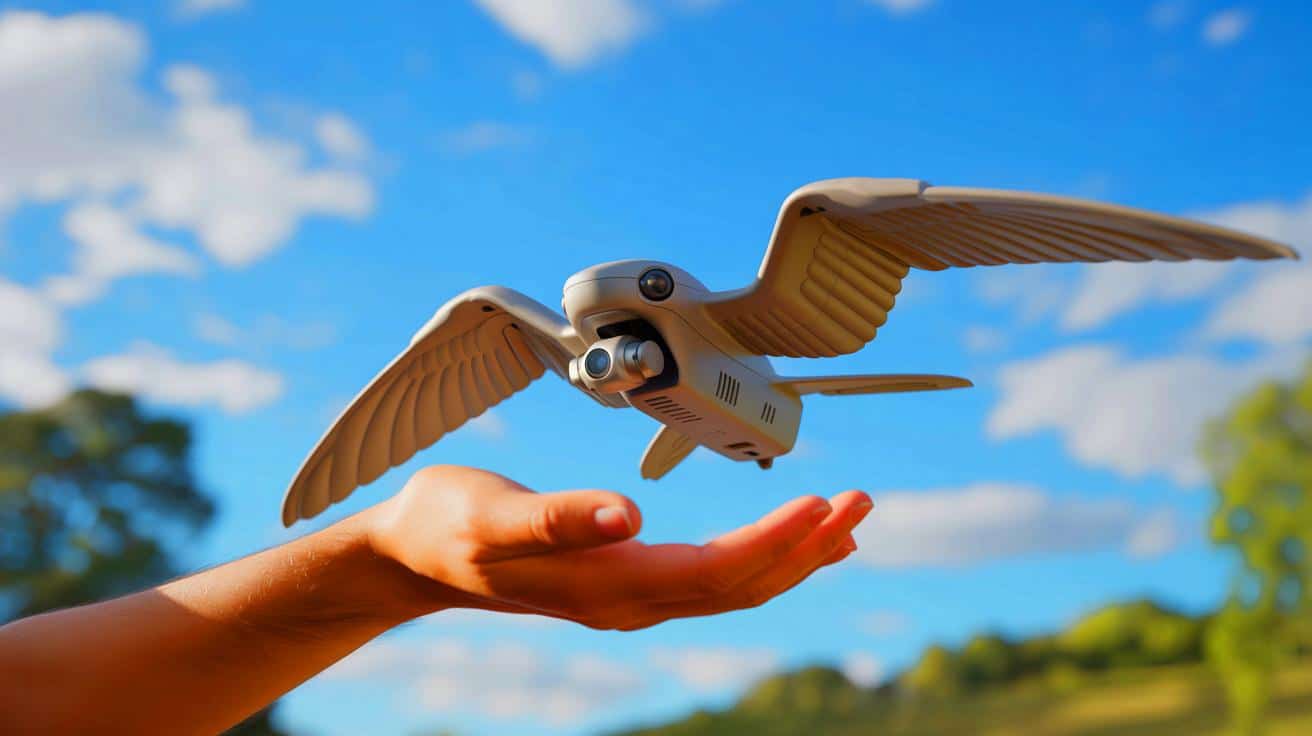
A groundbreaking development in drone technology is emerging from the University of Tokyo’s DRAGON Lab. Their latest innovation is a flapping-wing drone designed to land safely on a person’s hand, mimicking a falcon’s grace and precision. This advancement combines human gestures with sophisticated flight planning, providing a glimpse into the future of human-drone interaction. By incorporating soft, flexible wings, the drone operates quietly, offering a gentle and non-intimidating presence. This innovation opens new possibilities for drones in everyday life, emphasizing safety and ease of use.
Flapping-Wing Technology
The flapping-wing drone developed by the University of Tokyo’s DRAGON Lab is a significant leap forward in drone technology. Unlike traditional drones that rely on propellers, this drone uses soft, flexible wings that flap, mimicking the motion of birds. This design not only reduces noise but also enhances safety, making the drone suitable for close human interactions. The inspiration from falconry is evident in its ability to land on a person’s outstretched arm, offering a unique and personal interaction with technology.
The researchers at DRAGON Lab have emphasized the importance of creating a safe and intuitive interaction between humans and drones. The drone’s design ensures it is much quieter and less intimidating than conventional drones, creating a more approachable device for users. The team claims this is the “first-ever” successful contact-based interaction between a flapping-wing drone and a human, marking a significant milestone in drone technology.
Safe Flight Planning
Ensuring safety during drone operation is paramount, and the flapping-wing drone is equipped with advanced features to maintain a safe distance from users. It is designed to keep at least 1 foot away from a person’s chest while approaching. This distance helps maintain a sense of safety and predictability during interaction. Furthermore, the drone is programmed to approach from the front or side, staying within the user’s line of sight.
Hand gestures play a crucial role in controlling the drone. By bending the arm to keep the hand near the chest, users signal the drone to “stay” and hover. Extending the arm instructs the drone to “approach” and land. This intuitive control system is supported by a sophisticated motion capture system, utilizing Optitrack Prime 13 cameras to track markers on the user’s body. Real-time commands are relayed to the drone via a radio link, allowing for precise and responsive interaction.
Maintaining the Planned Path
Rigorous testing has demonstrated the drone’s ability to maintain its planned path with remarkable accuracy. While some minor issues like response time delays and speed oscillations were observed, the team is actively working on refinements. The drone’s soft wings and precise control system enable a gentle landing on a person’s palm, minimizing any jarring movements.
This technology holds promise for a variety of applications. In crowded urban areas, the drone could be used to deliver small packages, navigating through tight spaces with ease. It also offers potential benefits for individuals with limited mobility, providing a convenient and accessible means of technology interaction. The possibilities for this innovative drone are vast, paving the way for future advancements in personal and commercial drone use.
Will “Recycled EV Batteries” Save the Planet or Fuel This New Environmental Nightmare?
Future Implications
The introduction of flapping-wing drones could transform how we perceive and interact with drones. By focusing on safety and user-friendliness, these drones can bridge the gap between technology and everyday life. The researchers at DRAGON Lab have laid the groundwork for a new era of drone technology, emphasizing the importance of human-centric design.
As this technology evolves, it could redefine industries ranging from delivery services to personal assistance. The potential for flapping-wing drones to integrate seamlessly into daily routines is immense, offering a glimpse into a future where drones are a common and welcome presence in our lives. With ongoing research and development, the possibilities for these drones are only beginning to unfold.
The innovation of flapping-wing drones by DRAGON Lab is a testament to the potential for drones to become an integral part of our lives. By prioritizing safety and ease of use, these drones offer a promising glimpse into the future of technology. As we consider the implications of this advancement, one question remains: How will society adapt to and embrace the widespread use of drones in everyday life?