



| IN A NUTSHELL |
|
The journey of minerals used in electric vehicle (EV) batteries is long and complex, often spanning continents before reaching the final product. Lithium, a critical component, is primarily mined in Chile and Argentina, then shipped to China where most of the world’s EV batteries are manufactured. This global supply chain significantly contributes to carbon emissions, but transitioning the transportation sector from fossil fuels to electric power is crucial for achieving net-zero emissions by 2050. As the demand for EVs rises, so does the need for minerals like lithium, nickel, and cobalt. This raises an important question: How can we sustainably meet this demand?
The Growing Demand for Critical Minerals
The global demand for minerals essential to EV production is skyrocketing. According to the International Energy Agency, the need for lithium has tripled since 2020 and is expected to triple again by 2030. Similarly, the demand for other critical minerals is projected to grow sixfold by 2040. This surge is driven by the push to electrify transportation and integrate renewable energy into power grids.
Currently, the European Union imports the vast majority of its lithium, primarily from Australia and South America, with processing concentrated in China. As geopolitical tensions rise, nations are looking to diversify and localize their supply chains. The importance of minerals, not just for economic stability but for environmental goals, is becoming increasingly apparent.
Recycling: A Sustainable Solution
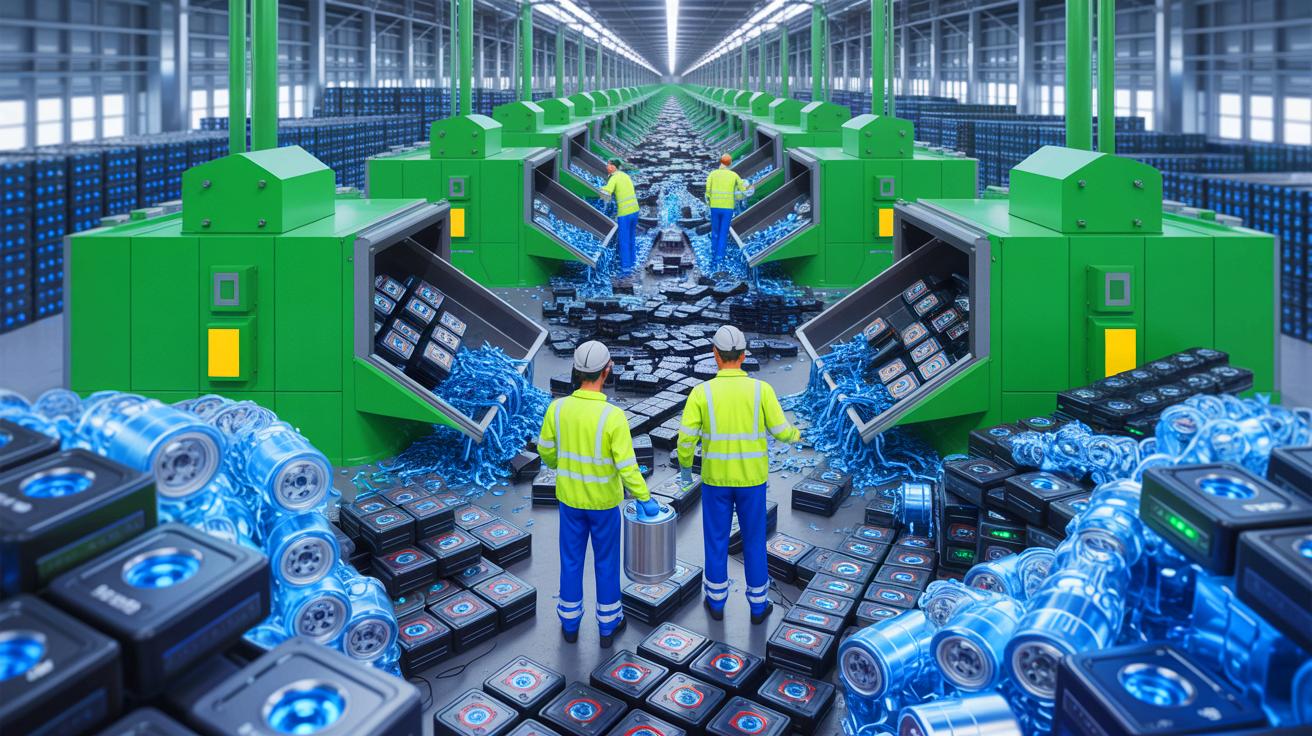
Recycling EV batteries emerges as a promising solution to the mineral demand dilemma. Alexis Georgeson of Redwood Materials argues that EV batteries offer a unique opportunity for a circular economy. Unlike other materials, metals like lithium and nickel can be recycled indefinitely without losing quality. This presents a sustainable alternative to constant mining.
“[EV] batteries really represent one of the first times that we can truly have a circular economy,” says Georgeson.
Recycling not only helps meet mineral demand but also reduces environmental impact. A Stanford-led study indicates that recycling uses less than half the greenhouse gases and a quarter of the water and energy compared to traditional mining. As EVs reach the end of their lifespan, recycling becomes a critical strategy for managing discarded batteries.
Challenges and Innovations in Battery Recycling
Despite its potential, battery recycling faces significant challenges. The process involves collecting, dismantling, and processing used batteries, which are highly flammable. Current methods, such as pyrometallurgy and hydrometallurgy, are still evolving. Experts like Xi Chen believe there is substantial room for improvement in refining these processes to enhance efficiency.
China leads in global battery-recycling capacity, accounting for 80% of the world’s facilities. In contrast, Europe and North America are still developing their recycling infrastructures, requiring significant investment and regulatory support. The European Union is stepping up with new regulations aimed at boosting recycling rates and setting minimum recycled content levels for new batteries.
Industry Efforts and Future Prospects
Companies are innovating to close the recycling loop. Redwood Materials, founded by Tesla co-founder JB Straubel, is advancing beyond basic recycling to produce cathode active materials, essential components of batteries. This approach ensures that recycled materials can directly re-enter the production cycle.
The automotive industry is also exploring recycling initiatives. Porsche, for instance, has launched a pilot project to recycle its lithium batteries, aiming to produce high-performance cells with recycled content. Jonathan Hoerz from Porsche emphasizes the necessity of recycling for sustainable electromobility in Europe.
As the world moves towards electrification, the balance between mineral demand and environmental sustainability remains delicate. Recycling offers a viable path forward, but challenges in technology, investment, and policy persist. How can global industries and governments collaborate effectively to build a truly sustainable circular economy for EV batteries?