



| IN A NUTSHELL |
|
In a groundbreaking development at Binghamton University, researchers have unveiled a new class of biobatteries that harness the power of bacteria combined with cutting-edge 3D printing technology. This fusion of metal and microbes is not just an academic curiosity; it represents a potential paradigm shift in how we think about sustainable energy solutions. By employing laser-printed anodes and innovative design techniques, this team has pushed the boundaries of what’s possible in the realm of energy generation, eliminating the need for traditional, often environmentally harmful materials.
The Role of Bacteria in Energy Generation
At the heart of this innovation is the use of bacteria to generate power. Unlike traditional batteries that rely on chemical reactions involving metals and acids, these biobatteries utilize the natural processes of bacteria. A biobattery typically consists of a cathode, an anode, and a membrane where ions exchange to create an electric current. The bacteria reside on the anode, and the more surface area the anode provides, the more energy the bacteria can produce.
Professor Seokheun “Sean” Choi, a pioneer in this field, has long recognized the potential of bacteria-based power cells. However, his previous efforts were hampered by material limitations. Traditional materials either lacked the necessary conductivity or required high temperatures that could kill the bacteria. This new approach, leveraging the expertise of Assistant Professor Dehao Liu, utilizes laser powder bed fusion (LPBF) to create highly precise, customizable 3D structures. This method ensures that the anode offers the optimal environment for bacterial colonization and energy generation.
3D Printing: A Game Changer
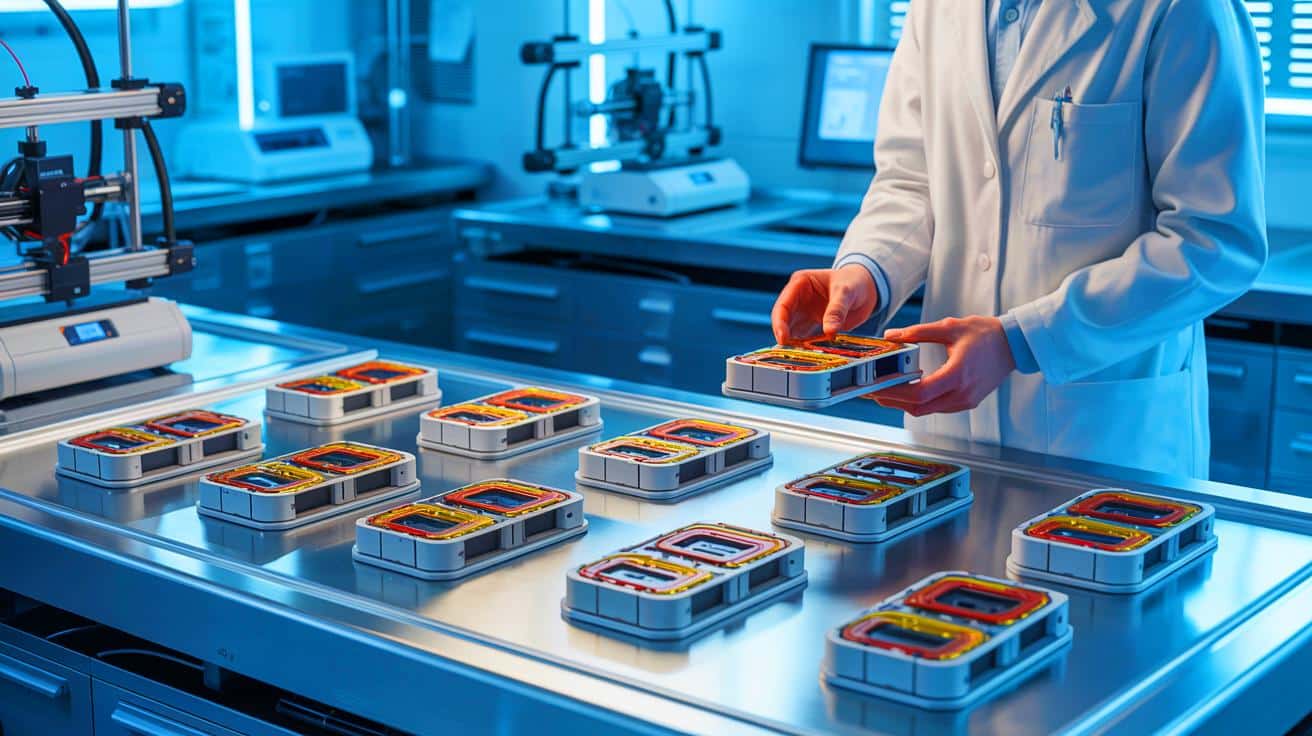
The introduction of 3D printing technology, specifically LPBF, has been a game-changer for the development of biobatteries. This method allows researchers to design and build battery components with nanoscale precision, something that was previously unattainable with standard fabrication techniques. The ability to fine-tune the shape and surface characteristics of stainless-steel anodes means that bacteria can thrive, leading to a higher output of electricity.
One of the most exciting aspects of this technology is its reusability. The stainless-steel components of the battery can be detached, cleaned, and reused without a loss in performance. This not only makes the biobatteries more sustainable but also more cost-effective in the long run. The modular nature of the design means that these biobatteries can be stacked and scaled to meet different energy needs, from small electronics to potentially larger applications in the future.
Bridging Academia and Real-World Application
This project isn’t just a theoretical exercise; it’s a testament to the practical applications of academic research. Assistant Professor Anwar Elhadad, whose doctoral work focused on bioelectronics, has played a significant role in advancing this technology. His insights into sustainable energy-harvesting systems have been instrumental in overcoming the challenges of scalability and efficiency.
The team’s collaborative approach has been crucial to their success. By bringing together experts from different fields, they’ve been able to innovate in ways that wouldn’t have been possible in isolation. Their work is not only a significant academic achievement but also a step forward in the quest for greener, more efficient energy solutions. The potential applications of this technology are vast, from portable electronics to remote sensing devices, and possibly even larger-scale energy solutions.
The Future of Biobatteries
Looking ahead, the team at Binghamton University is focused on refining and expanding their technology. One of their goals is to streamline the production process by integrating the printing of all battery components into a unified system. Additionally, they are exploring the development of a power management system that can efficiently regulate charging and discharging, akin to the systems used in solar power technology.
The implications of this work extend far beyond the university’s laboratories. As the world continues to grapple with the challenges of energy consumption and sustainability, innovations like this offer a glimmer of hope. By turning to nature and leveraging advanced technology, researchers are finding new ways to meet our energy needs without compromising the environment.
As we continue to explore the potential of biobatteries, one question remains: How will this innovative technology shape the future of energy production and consumption in our increasingly energy-dependent world?