



| IN A NUTSHELL |
|
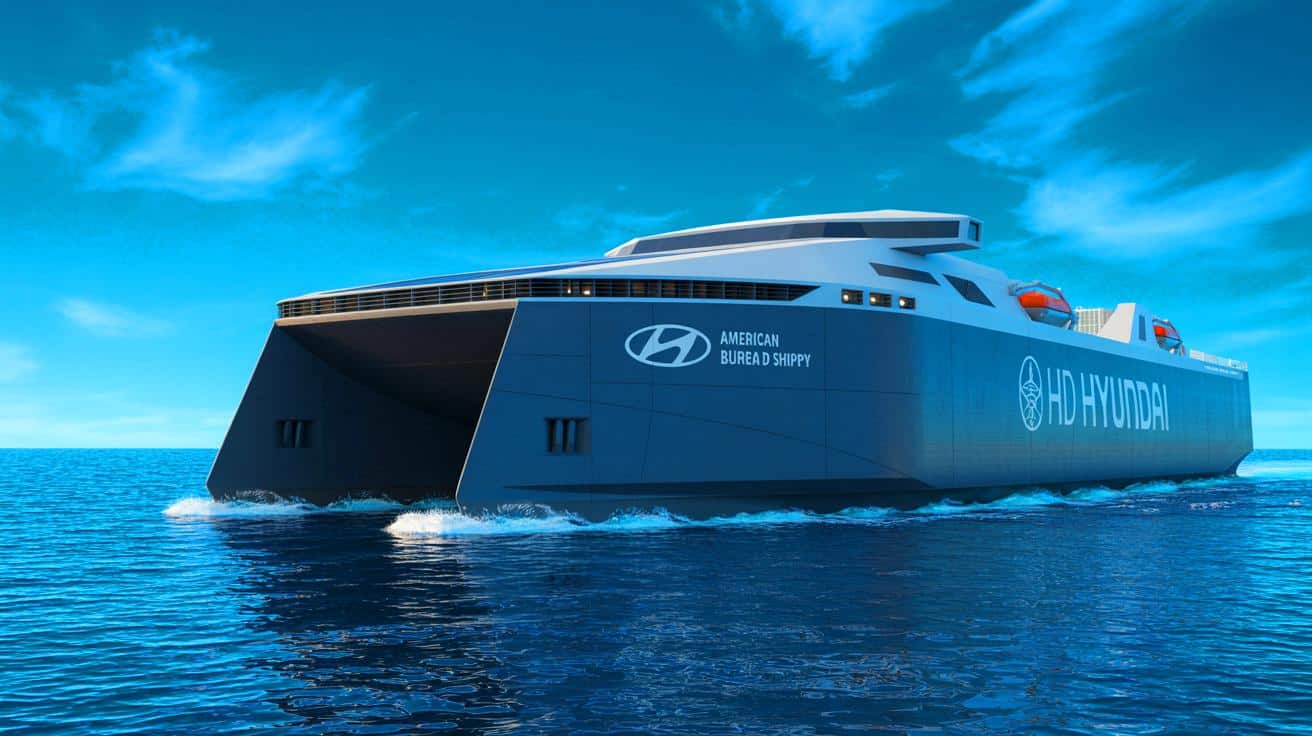
The maritime industry is on the brink of a technological revolution, driven by the need for cleaner and more efficient energy solutions. South Korean conglomerate HD Hyundai has made significant strides in this area, recently receiving the world’s first New Technology Qualification (NTQ) from the American Bureau of Shipping (ABS). This certification acknowledges the breakthrough development of an advanced electric propulsion system by HD Hyundai’s affiliates, HD Korea Shipbuilding & Offshore Engineering (HD KSOE) and HD Hyundai Heavy Industries (HD HHI). The system is designed to overcome existing technological barriers and advance marine electrification, marking a pivotal step in the evolution of ship propulsion technology.
The Development of a Groundbreaking Propulsion System
HD Hyundai’s newly certified propulsion system, known as the Breakerless-MVDC Power System, represents a significant advancement in marine technology. This innovative system utilizes medium-voltage direct current (MVDC) to enhance power distribution efficiency on ships, thus minimizing energy loss and optimizing overall performance. The technology’s feasibility and maturity were validated through a rigorous evaluation process by ABS, marking it as the first of its kind to receive such an accolade.
Patrick Ryan, the senior vice president and chief technology officer at ABS, highlighted the importance of collaboration in driving technological advancements in the maritime sector. Sanghyun Kim, HD KSOE’s senior vice president, emphasized the system’s certification for both commercial and naval vessels, showcasing the company’s capabilities in marine electrification. This development not only highlights HD Hyundai’s innovation but also sets a new benchmark for the industry, aiming to lead the commercialization of zero-carbon electric propulsion vessels.
Aligning with Clean Shipping Goals
The NTQ certification goes beyond technological recognition; it represents a commitment to cleaner shipping practices. The collaboration between ABS and HD Hyundai focuses on design assessment, new technology qualification, and rule guidance development, offering clear directives on technical requirements and safety standards. ABS’s partnership with HD KSOE and HHI underscores a shared dedication to maritime safety and a smooth transition to clean energy solutions.
In a statement, Ryan noted the urgent need for alternative energy options, such as electrification, to help the shipping industry achieve net zero emissions by 2050. Byoung-Hun Kwon, head of HD KSOE’s electrification center, stressed that marine MVDC technology is not just advantageous but essential for advancing electrification and automation in large vessels. HD Hyundai has already pioneered low-voltage direct current systems, including in South Korea’s first dual-fuel smart electric ship, the Ulsan Taehwa, setting the stage for their leadership in the large ship electric propulsion market.
Table of Technological Advancements
| Technology | Description | Impact |
|---|---|---|
| MVDC Power System | Medium-voltage direct current system for enhanced efficiency | Reduces energy loss, optimizes power distribution |
| LVDC System | Low-voltage direct current system used in smart ships | Demonstrates feasibility in dual-fuel smart electric ships |
| Zero-Carbon Propulsion | Commercialization of zero-carbon electric propulsion vessels | Aims for industry leadership in clean propulsion technology |
Future Prospects in Maritime Technology
The path forward for HD Hyundai and its partners involves tackling new challenges in high-voltage systems and ABS notation development, as indicated by the American Bureau of Shipping. The companies’ previous collaborations on ammonia-powered vessels, autonomous navigation technologies, and green hydrogen initiatives demonstrate their commitment to advancing maritime technology.
Byoung-Hun Kwon expressed confidence in leveraging their delivery experience to lead the large ship electric propulsion market. This forward-thinking approach is crucial as the industry navigates towards sustainable practices and innovative solutions. As HD Hyundai continues to push the envelope in marine technology, the implications for global shipping standards and environmental impact are profound, prompting the question: how will these technological advancements shape the future of the maritime industry?