



| IN A NUTSHELL |
|
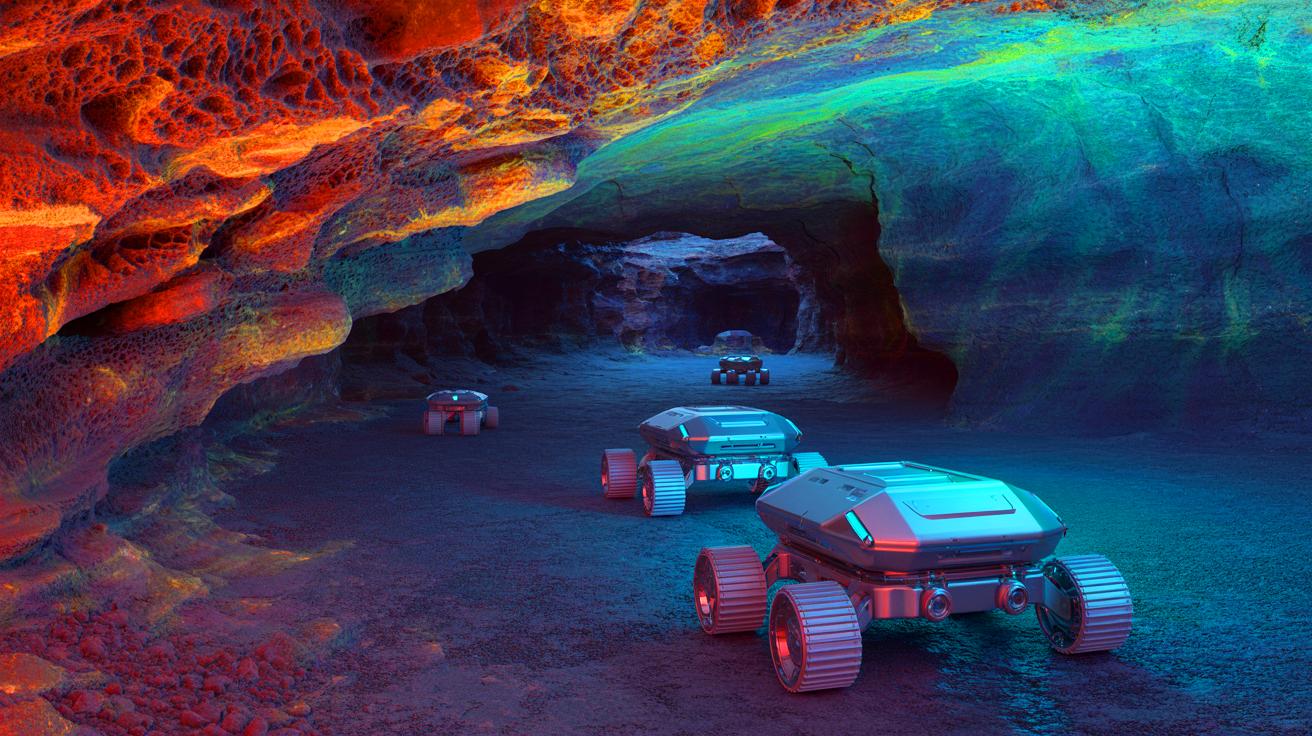
On the volcanic island of Lanzarote, autonomous robots are paving the way for future space explorations. Recent field trials have shown that these machines can successfully map deep volcanic caves, potentially revolutionizing missions to Mars and the moon. These extraterrestrial missions may soon involve exploring underground lava tubes, which could provide invaluable shelter for humans and possibly harbor signs of life. The trials conducted in Lanzarote offer a glimpse into the future of space exploration, where robots play a key role in overcoming the challenges of hostile environments.
Potential of Lava Tubes for Human Habitation
Lava tubes, formed by flowing lava that solidifies on the surface while molten rock continues to move below, are not just geological formations on Earth. They have been detected on both Mars and the moon as well. Scientists are particularly interested in these structures because they could offer significant protection for astronauts. The extreme temperatures, high radiation levels, and frequent meteorite strikes on these celestial bodies pose severe risks to human explorers. Lava tubes could serve as natural shelters against these harsh conditions.
Moreover, researchers believe these caves may host microbial life, offering a unique opportunity to study extraterrestrial life forms. However, the challenges of human exploration in such environments are significant. The cost and danger associated with sending humans into these caves make the use of robots a compelling alternative. As noted in a study published in Science Robotics, a team of heterogeneous cooperative robots could be the ideal solution for accessing and exploring these extraterrestrial caves.
Technological Feats in Cave Exploration
The field trials in Lanzarote spanned 21 days and involved several complex stages. Initially, two rovers were deployed to scan and map the terrain around the cave entrance. This data was crucial for the subsequent steps. A sensor-filled cube was then launched into the cave, capturing detailed 3D images of the entrance. The most challenging phase required the smaller rover to attach to the larger one and rappel down the cave wall.
Once safely inside, the smaller rover detached and navigated deeper into the tunnel, covering a distance of 770 feet while creating a comprehensive 3D map. These experiments demonstrated that robots could execute coordinated missions in intricate underground spaces. They also proved that it is possible to conduct 3D mapping in dark and confined environments, which is crucial for future space missions.
Technical Challenges and Solutions
The Lanzarote trials were not without obstacles. The presence of moisture in the cave affected the accuracy of the ground-penetrating radar, a critical tool for mapping. Some sensors experienced interference, and the absence of ground-truth data posed challenges for verification. These issues underscore the complexities of using autonomous robots in such settings.
One of the most significant hurdles is autonomous navigation. For missions on Mars or the moon, robots must operate independently, often without real-time human guidance. This requires the development of more advanced algorithms and reliable communication systems between robotic units. Despite these challenges, the trials indicate a promising future where robotic scouts can prepare sites for human bases beyond Earth.
Shocking CIA Move: “Reviving Giants” With $30M Tech Plan Raises Ethical Firestorm Across America
Future Implications and the Search for Life
The technological advancements showcased in the Lanzarote trials mark a significant step toward establishing a human presence on other planets. Robots could identify the safest and most viable locations for long-term stays, thus reducing risks for human explorers. Additionally, the same technology holds promise for the search for extraterrestrial life. If microbial life exists in the protected environments of lava tubes, these robots could play a pivotal role in discovering it.
These findings bring scientists closer to answering one of humanity’s oldest questions: Are we alone in the solar system? The study, published in Science Robotics, suggests that we may soon have the tools necessary to explore these questions in depth. As robotic technology continues to advance, what new possibilities will unfold in our quest to explore the cosmos?