




| IN A NUTSHELL |
|
The advent of the world’s first commercial octopus farm by Nueva Pescanova has ignited a heated debate that spans ethical, environmental, and scientific domains. As the demand for octopus meat rises and wild populations dwindle, aquaculture seems a viable alternative. Yet, the intellectual and sentient nature of octopuses makes this venture particularly controversial. The discussion encompasses not only the methods used in farming but also the broader implications for how humanity interacts with intelligent marine life. Within this context, the controversy surrounding octopus farming provides a lens through which we can examine deeper questions about conservation, ethics, and scientific responsibility.
The Intellectual Marvels of Octopuses
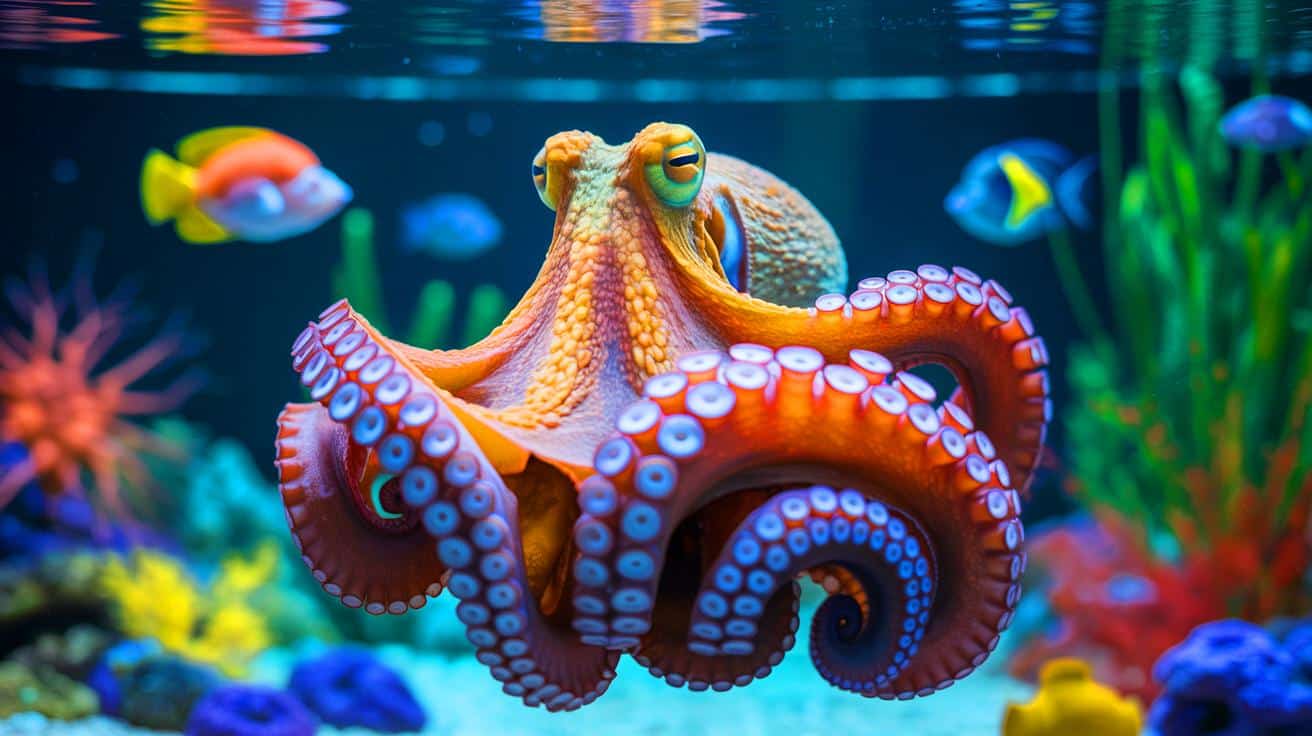
Octopuses are renowned for their extraordinary intelligence, often likened to “alien intelligence” due to their unique neurological structure. With approximately 500 million neurons, a count comparable to that of a dog, these creatures display complex behaviors and problem-solving abilities. Remarkably, only one-third of octopuses’ neurons are located in their brains; the majority are distributed across their eight arms. This allows each arm to operate with a degree of independence, enabling octopuses to perform tasks such as solving puzzles, using tools, and learning from observation.
One well-documented instance of octopus intelligence involved an octopus named Otto, who displayed problem-solving skills by squirting water at a spotlight to short-circuit an aquarium’s power. Such behaviors illustrate the sophisticated cognitive capabilities that make the idea of farming octopuses ethically contentious. As scientific understanding of these creatures evolves, it challenges preconceived notions about the moral implications of treating them as mere commodities.
Ethical Concerns and Animal Welfare
The ethical debate surrounding octopus farming is fueled by the creatures’ sentience, as recognized by recent scientific reviews. The London School of Economics concluded that octopuses can experience both pleasure and pain, leading to their inclusion in the UK’s Animal Welfare (Sentience) Act. This legal protection highlights the need for humane treatment and raises questions about the appropriate methods for farming such intelligent beings.
Nueva Pescanova’s proposed farming techniques have drawn significant criticism from animal welfare advocates. The use of densely packed tanks contradicts the solitary nature of octopuses, potentially inciting aggression and cannibalism. Additionally, the method of killing octopuses using ice slurry is criticized for causing prolonged suffering. Neuroscientists like Dr. Peter Tse argue that such practices are unacceptable for creatures with advanced cognitive abilities. These concerns have sparked global protests and calls for legislative action.
The Global Backlash and Legislative Actions
In response to the proposal for octopus farming, there has been a swift international backlash. Washington state has already enacted a ban on octopus farming, citing ethical and economic reasons. U.S. Senators have introduced federal legislation known as the OCTOPUS Act to prohibit such practices nationwide and prevent the importation of farmed octopus. This legislative move reflects a broader recognition of octopuses as sentient beings deserving of ethical consideration.
Internationally, the pressure is mounting on the European Union to intervene, especially given the public protests in Madrid. As awareness of octopus intelligence and welfare issues continues to spread, there is a growing demand for ethical treatment and conservation. This global movement signifies a shift in public consciousness towards more humane and sustainable interactions with marine life.
Scientific and Environmental Implications
The environmental impact of octopus farming is another critical concern. As carnivorous creatures, octopuses require substantial fish resources to produce their meat, raising questions about the sustainability of such practices. Critics argue that farming predatory species could exacerbate pressures on already depleted fish stocks, undermining conservation efforts.
Scientifically, the moral dilemma of farming intelligent beings like octopuses is profound. Documentaries like “My Octopus Teacher” have highlighted the emotional depth and intelligence of these creatures, challenging conventional perceptions. As we continue to explore the genetic and cognitive similarities between humans and octopuses, the question arises whether we should exploit this knowledge for industrial purposes or foster a deeper appreciation for these remarkable animals.
As the debate over octopus farming intensifies, it brings to light the complex intersection of ethics, science, and conservation. The intellectual capabilities of octopuses and their recognized sentience demand that we carefully consider the implications of industrial farming. With legislative actions and public sentiment evolving, the future of octopus farming remains uncertain. Will society prioritize ethical treatment and environmental sustainability, or will commercial interests take precedence? This question invites us to reflect on our relationship with the natural world and our responsibility toward intelligent marine life.