



| IN A NUTSHELL |
|
Georgia Tech researchers have made a groundbreaking discovery that could revolutionize the way recycled plastics are used, making them stronger, more reliable, and cost-effective. By mimicking the structure of seashells, they have developed a new material that addresses the inconsistencies that have plagued recycled plastics for years. Led by aerospace engineering assistant professor Christos Athanasiou, the team’s innovation could significantly reduce the cost of virgin packaging materials and keep more waste out of landfills. As less than 10 percent of the 350 million tons of plastic produced each year is effectively recycled, this breakthrough could have profound implications for both industry and the environment.
Nature’s Blueprint for Strength
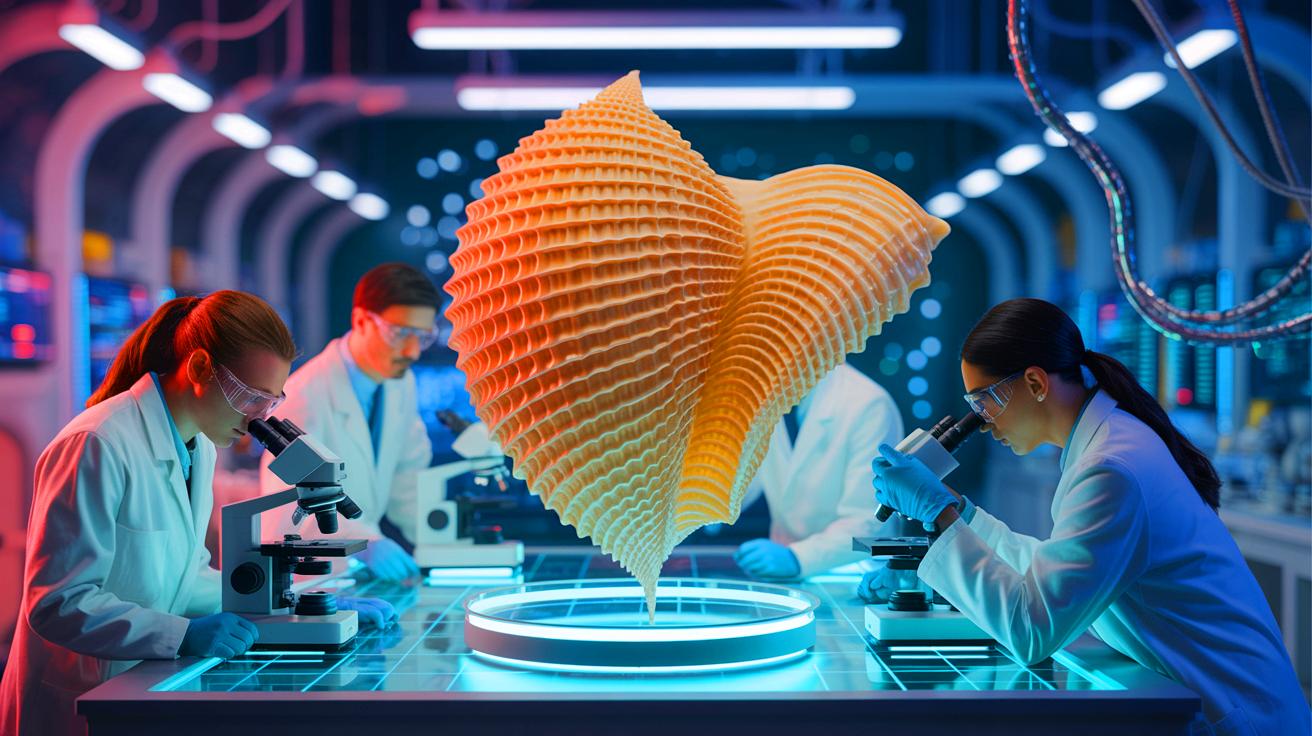
In traditional recycling processes, plastics are melted into a random amalgam, resulting in weaker and less reliable materials. This inconsistency renders the recycled plastic unsuitable for critical applications, such as car components or construction materials. However, nature offers an ingenious solution in the form of seashells. The structure of a seashell, known as nacre, consists of brittle mineral “bricks” bonded with soft protein “mortar.” This architectural design dissipates energy and prevents catastrophic failure, providing robustness without the need for purity.
Athanasiou’s team has ingeniously applied this natural strategy to create a synthetic composite material. By borrowing from the seashell’s design, they have developed a composite that maintains strength and reliability, offering a promising solution to the limitations of recycled plastics.
From Pallet Wrap to Performance
The researchers employed recycled high-density polyethylene (HDPE), commonly used in clear stretch films for pallet wrapping. These films were cut into sheets, forming the “bricks,” and were layered with a softer adhesive polymer “mortar” to mimic nacre’s architecture. When tested, this bio-inspired material not only preserved the original performance of virgin plastic but also reduced variability in maximum elongation by more than 68 percent.
The innovative approach restores the trustworthiness of recycled materials, opening the door to their use in high-performance applications. The team also developed an “uncertainty-aware” Tension Shear Chain model to quantify both the strength and reliability of the material’s performance, further solidifying its suitability for advanced uses.
Implications for Aerospace and Beyond
While the study is centered on plastics, its implications extend to aerospace applications. Space systems require materials that remain reliable in extreme conditions. The principles demonstrated in this research could one day contribute to projects like NASA’s Lunar Recycling Challenge, where waste materials might be repurposed into survival infrastructure. The team plans to expand their approach to other plastics and explore its potential for off-Earth construction, proving that nature’s perfection can address earthly and extraterrestrial waste problems.
By striving to build reliable structures from unreliable materials, the researchers aim to tackle a fundamental mechanics problem. Their work suggests that the seashell-inspired approach could become a cornerstone for future material designs, particularly in space exploration.
Shocking CIA Move: “Reviving Giants” With $30M Tech Plan Raises Ethical Firestorm Across America
Future Developments and Sustainability
The team is now scaling their approach to other recycled plastics and experimenting with bio-based adhesives for greater sustainability. “Nature doesn’t purify, it organizes,” Athanasiou observed. This philosophy is guiding their efforts to apply natural principles to complex problems affecting both Earth and the future of space exploration.
As the findings are published in the journal Proceedings of the National Academy of Sciences, they highlight a promising direction for sustainable material development. The potential to transform recycled plastics into high-performance materials could significantly impact industries and environmental efforts worldwide.
The innovative work at Georgia Tech opens new frontiers for recycled materials, demonstrating the potential of biomimicry in solving modern challenges. As scientists continue to explore the possibilities of seashell-inspired designs, one might wonder: How will these advancements shape the future of sustainable materials on Earth and beyond?