




| IN A NUTSHELL |
|
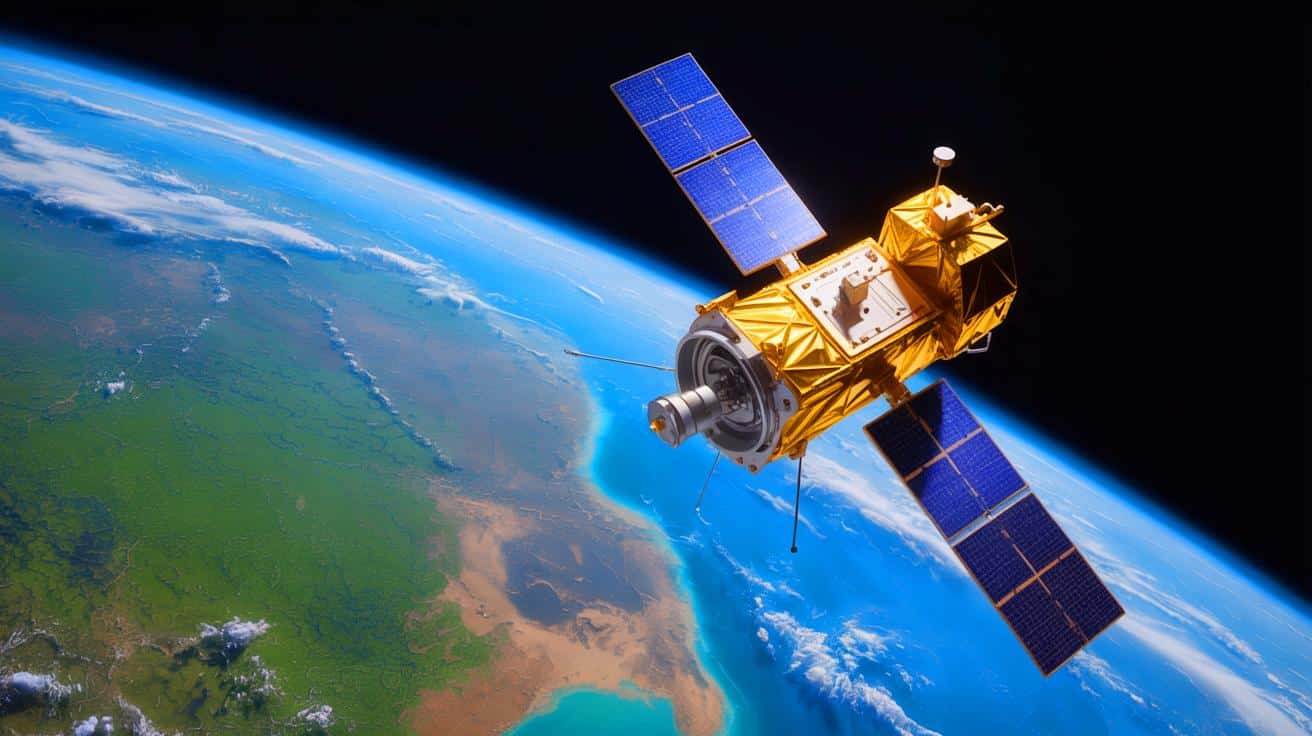
The rapid advancement of artificial intelligence is reshaping the way we explore and understand our world, and beyond. In a recent groundbreaking development, NASA has successfully tested an AI-driven satellite that can independently think, tilt, and capture images in just 90 seconds, without any human intervention. This revolutionary technology, known as Dynamic Targeting, could dramatically enhance our capabilities in Earth observation and open new frontiers in space exploration.
Revolutionizing Earth Observation
Dynamic Targeting represents a significant leap forward in satellite technology. Developed over a decade at NASA’s Jet Propulsion Laboratory, this system enables satellites to autonomously analyze their surroundings and make real-time decisions about where to focus their instruments. Unlike traditional methods, which often capture whatever lies beneath regardless of conditions, Dynamic Targeting allows satellites to intelligently select clear areas, avoiding obstacles such as cloud cover.
Clouds have long been a major hindrance to Earth-observing satellites, which typically waste resources capturing unusable images. With Dynamic Targeting, satellites can detect cloud cover up to 300 miles in advance, choosing to capture only clear, valuable data. This not only conserves resources but also increases the quality of the data collected, providing sharper insights into our planet’s changing conditions. As Steve Chien, AI technical fellow at JPL, explains, “Instead of just seeing data, it’s thinking about what the data shows and how to respond.”
Harnessing Speed and Precision
The technology was put through its paces aboard CogniSAT-6, a CubeSat launched in March 2024 by UK-based Open Cosmos. During tests, the satellite demonstrated its ability to physically tilt 40 to 50 degrees to look ahead along its orbit, capturing preview images and processing them to locate cloud-free areas. It then reoriented to capture only clear, precise images, all while traveling at speeds approaching 17,000 mph.
Dynamic Targeting’s ability to make rapid decisions is particularly valuable for observing transient weather phenomena and thermal anomalies like wildfires or volcanic eruptions. These events often unfold quickly, leaving a narrow window for observation. The system’s swift, autonomous decision-making allows it to capture critical data in real-time, a capability that could be crucial for timely disaster response and climate research.
Expanding Horizons Beyond Earth
The potential applications of Dynamic Targeting extend far beyond our home planet. NASA envisions using this technology for planetary science missions, such as identifying geysers on icy moons, detecting plumes on comets, or monitoring dust storms on Mars. The concept draws inspiration from previous missions like ESA’s Rosetta orbiter, where AI methods were used to detect plumes on Comet 67P.
Looking to the future, NASA plans to integrate this technology across satellite constellations through a project called Federated Autonomous Measurement. This would enable a leading satellite to detect an event and instantly relay data to trailing satellites, fostering a coordinated response in orbit. Such advancements could pave the way for more comprehensive and dynamic monitoring of both Earth and other celestial bodies.
Challenges and Opportunities
While the promise of AI-driven satellite technology is immense, it also presents unique challenges. Training algorithms to identify specific patterns or anomalies requires significant expertise and adaptation to diverse environments. However, the success of Dynamic Targeting demonstrates that these challenges are surmountable, opening new avenues for innovation and exploration.
As the field continues to evolve, there is potential for collaboration between international space agencies and private companies to further refine and deploy these technologies. By expanding the capabilities of autonomous satellites, we can enhance our understanding of Earth’s complex systems and unlock new possibilities for interplanetary research.
As we stand on the brink of a new era in space exploration, the question remains: How will the integration of AI in satellite technology shape our understanding of the universe and our place within it?