




| IN A NUTSHELL |
|
In a groundbreaking development that challenges our understanding of life, scientists have engineered the first artificial cell capable of autonomous movement, driven solely by chemical reactions. This innovation, pioneered at the Institute for Bioengineering of Catalonia (IBEC), represents a quantum leap in synthetic biology. By distilling life to its most fundamental components, just a membrane, an enzyme, and a pore, researchers have redefined the boundaries of cellular behavior. This achievement not only offers a window into the primordial mechanisms of life but also opens vistas for future applications in medicine, nanotechnology, and beyond.
Chemistry Becomes a Compass
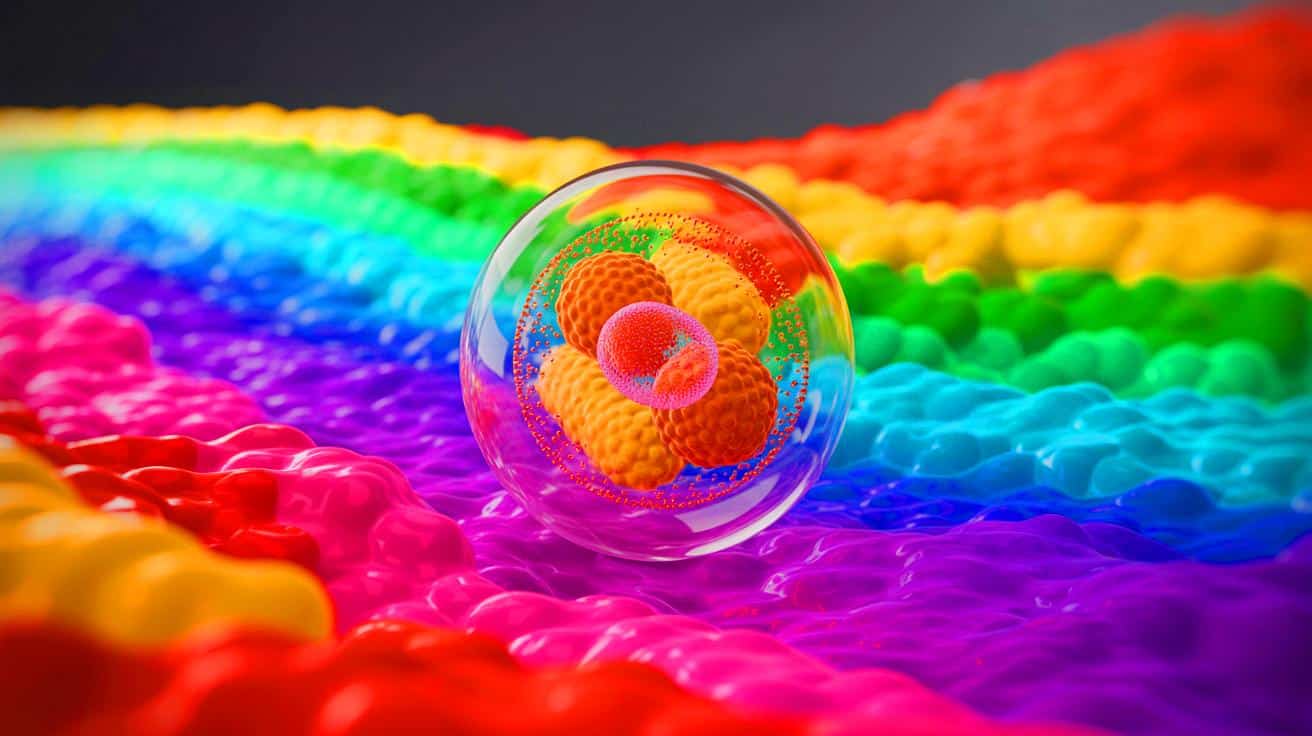
The secret to this artificial cell’s movement lies in a process known as chemotaxis, which is the ability to navigate along chemical gradients. In biological systems, chemotaxis guides sperm to eggs and white blood cells to inflammation sites. However, unlike natural cells that use complex structures like flagella or receptors, this synthetic cell relies on a minimalist design: a lipid membrane, an enzyme, and a pore. The liposome, a lipid-based bubble mimicking real cell membranes, forms the cell’s shell. When exposed to a gradient of substances like glucose or urea, the enzyme within the liposome triggers a reaction, creating a concentration imbalance. This imbalance generates a flow of fluid across the vesicle’s surface, propelling it toward areas of higher concentration.
The pore functions as a controlled gateway, essential for producing the asymmetry needed for movement. This innovative mechanism is akin to a boat navigating self-propelled by molecular currents. To validate their creation, researchers tested over 10,000 vesicles in microfluidic channels under precisely controlled chemical gradients. The results were remarkable: vesicles with more pores exhibited pronounced chemotactic behavior, while those lacking pores drifted passively, likely due to basic diffusion processes.
Nature’s Rulebook, Rewritten Minimally
Chemotaxis is a vital survival strategy in nature, enabling cells to hunt for nutrients, evade threats, and coordinate development. By replicating this behavior using minimal components, scientists have crafted a model that might mirror the earliest evolutionary movements of life. The implications of this research are vast, paving the way for the development of synthetic cells tailored for targeted drug delivery, environmental monitoring, and potentially, programmable self-assembling systems. Given the biological commonplace of these components, scaling or modifying the system could one day lead to responsive micro-robots composed entirely of soft materials.
The collaborative research involved experts from IBEC, the University of Barcelona, University College London, the University of Liverpool, the Biofisika Institute, and the Ikerbasque Foundation for Science. Theoretical insights were provided by José Miguel Rubí’s team at the University of Barcelona, who accurately predicted the chemotactic behavior of the vesicles. As Professor Giuseppe Battaglia aptly puts it, “Watch a vesicle move. Really watch it. That tiny bubble holds secrets: how cells whisper to each other, how they ship life’s cargo. But biology’s machinery is noisy, too many parts! So, we cheat.”
Potential Applications and Future Directions
Beyond its theoretical significance, this innovation harbors immense potential for practical applications. In the realm of medicine, artificial cells could revolutionize drug delivery systems, allowing for precise targeting of diseased cells while minimizing side effects. Additionally, these synthetic cells could serve as environmental sensors, detecting and responding to pollutants or other chemical signals autonomously. The minimalist design also suggests the feasibility of creating self-assembling systems that could construct complex structures from simple materials, offering exciting possibilities in nanotechnology.
The scalability and adaptability of this technology mean that it could eventually lead to the development of intelligent micro-robots. These robots, built entirely from soft materials, could perform tasks in environments deemed hazardous for humans. The collaborative nature of this research, bringing together diverse expertise from multiple institutions, underscores the interdisciplinary effort required to push the boundaries of synthetic biology and engineering.
Reflecting on the Future of Synthetic Biology
The creation of a self-moving artificial cell marks a milestone in synthetic biology, underscoring the power of minimalism in understanding and harnessing life’s processes. This breakthrough not only redefines our grasp of cellular behavior but also sets the stage for a future where synthetic biology could address some of humanity’s most pressing challenges. As we continue to unravel the complexities of life with simple components, the possibilities for innovation seem boundless.
As we ponder the implications of this work, one must wonder: how will these artificial cells shape the landscape of future technologies, and what ethical considerations will arise as we delve deeper into the realm of synthetic life?