



| IN A NUTSHELL |
|
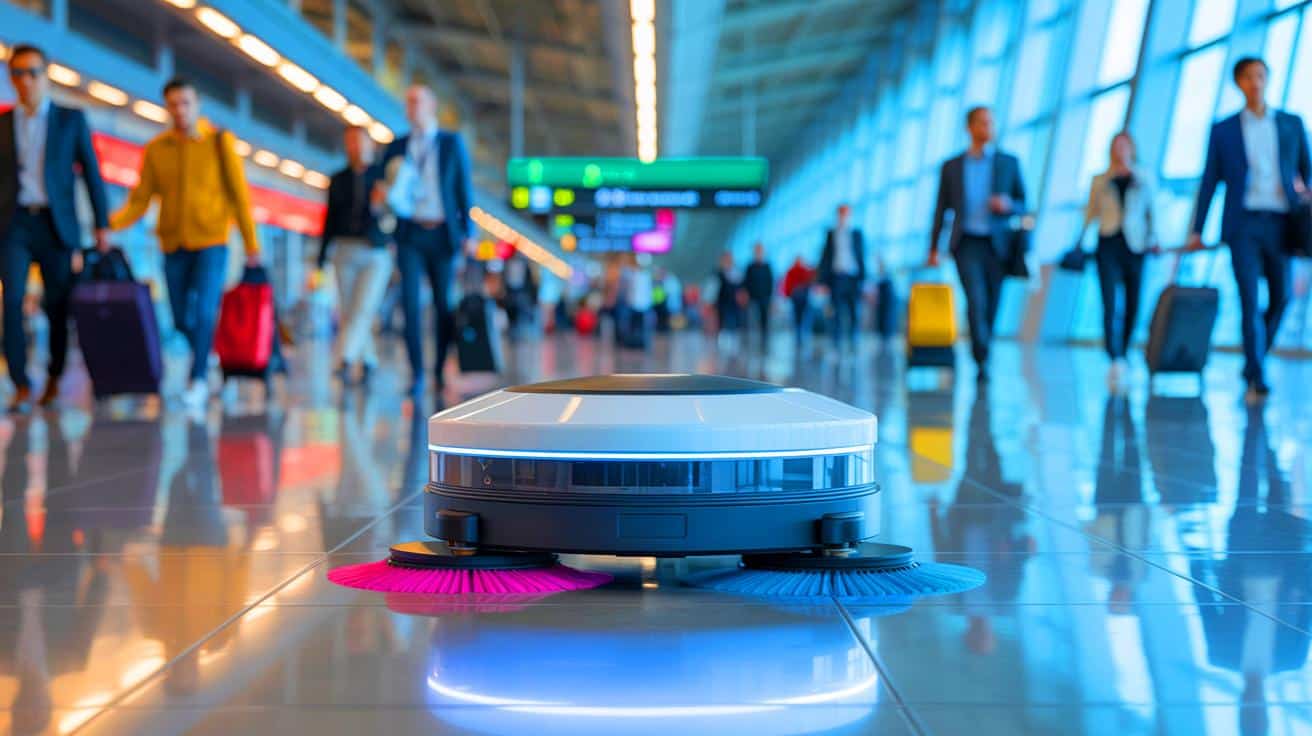
In the rapidly evolving world of technology, automation is revolutionizing traditional tasks, and cleaning is no exception. Pudu Robotics has introduced the MT1 Vac, an advanced AI-powered sweeping and vacuuming robot designed for large commercial spaces such as airports, hotels, and metro stations. This innovation signifies a shift in commercial infrastructure, where automation is not merely a novelty but a necessity for scalability, data integration, and autonomy. As the MT1 Vac hits the market, it raises important questions about the future of autonomous maintenance and its impact on commercial environments.
Innovative Features of the MT1 Vac
The MT1 Vac is not your average cleaning robot; it is a sophisticated machine that redefines what autonomous cleaning can achieve. It combines sweeping, vacuuming, and dust mopping into one unit, making it a versatile solution for large-scale cleaning needs. The robot boasts a dual fan system that delivers up to 200 percent more suction power compared to traditional models, and it features HEPA-grade filtration for superior air quality maintenance. Furthermore, its AI-driven surface recognition technology allows it to adapt to different floor types and cleaning requirements, ensuring thorough and efficient cleaning.
With a 20-gallon trash capacity and an intelligent navigation system, the MT1 Vac can operate continuously for several days, depending on usage conditions. This capacity for extended operation reduces the need for human intervention, allowing facilities to maintain cleanliness with minimal oversight. These features make the MT1 Vac a formidable contender in the realm of commercial cleaning robots, setting a new standard for autonomous maintenance.
Competition in the Smart Cleaning Sector
The MT1 Vac enters a crowded and competitive market of smart cleaning robots, each vying for dominance in different sectors. In the last 18 months alone, numerous models have emerged, each targeting specific niches such as hospitality and retail. For instance, LG’s Hotel Corridor robot, launched in April 2025, prioritizes quiet operation and safe navigation in narrow spaces, yet it falls short in industrial power compared to the MT1 Vac.
In the consumer market, innovation is also thriving, with Roborock’s Saros Z70, introduced at CES 2025, bringing AI-driven features like real-time clutter detection to households. However, the MT1 Vac’s application of similar technologies to larger environments showcases its unique value proposition. As manufacturers strive to address the universal challenge of achieving efficient, round-the-clock cleanliness, the MT1 Vac’s robust design and capabilities position it as a leader in the field.
The Rise of Smarter Autonomous Cleaners
The MT1 Vac represents a bold step towards fully autonomous cleaning in high-traffic environments. While technological advancements have accelerated, many current deployments still require human oversight for tasks such as relocation and maintenance. However, Pudu Robotics aims for full integration with its MT1 Vac, offering compatibility with Pudu Link, an IoT-based multi-floor management system.
This system provides remote updates, adaptive AI routines, and a runtime of 4-8 hours per charge, emphasizing the importance of uptime and independence in commercial settings. By reducing the need for human intervention, the MT1 Vac not only enhances operational efficiency but also raises critical questions about the balance between automation, smart technology, and human trust in the future of cleaning.
The Future of Cleaning: Trust and Technology
As cleaning robots evolve, the competition extends beyond physical capabilities to include data intelligence and scalability. The real challenge lies in creating a robot that facility managers can trust to perform reliably, cost-effectively, and safely on a daily basis. The MT1 Vac offers more than just advanced features; it prompts a reflective consideration of the right mix of automation and human oversight in the cleaning industry.
With the MT1 Vac, Pudu Robotics not only introduces a powerful cleaning tool but also pushes the boundaries of what autonomous cleaning can achieve. As we embrace this new era of smart cleaning technology, we must ask ourselves: How will the integration of advanced robotics and AI reshape our expectations and trust in automated systems?