




| IN A NUTSHELL |
|
The recent discovery of a trilobite fossil in a Roman-era dump in Spain has sent ripples through the archaeological community. This groundbreaking find at A Cibdá de Armea marks the first time a trilobite fossil has been unearthed in a Roman archaeological context. Not only does this reveal fascinating insights into ancient Roman beliefs, but it also adds a new dimension to our understanding of how ancient cultures used and revered fossils. As we delve deeper into this remarkable discovery, we uncover a story that stretches back 450 million years, shedding light on how the Romans perceived and utilized these ancient natural artifacts.
A 450-Million-Year-Old Piece of Roman Jewelry
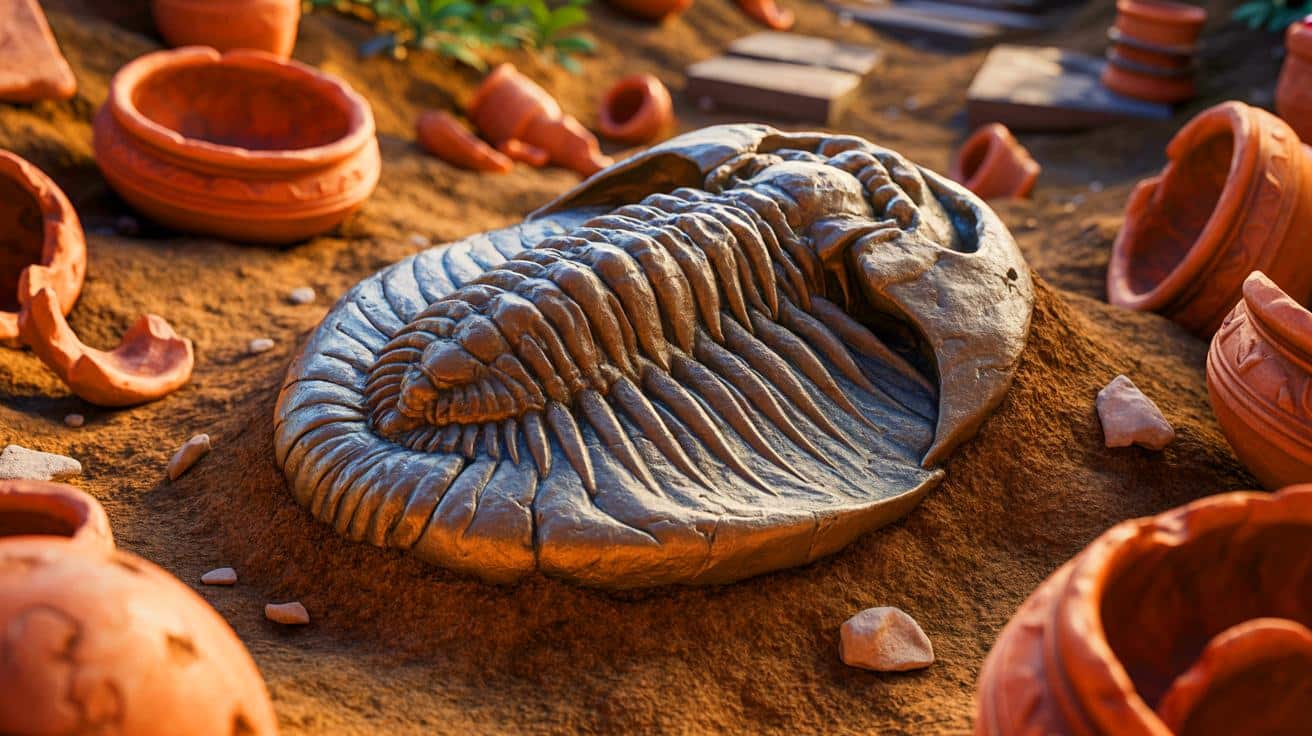
The trilobite fossil, discovered in 2021 at the Roman site of A Cibdá of Armea in Spain, was a serendipitous find during an excavation of Roman courtyard houses. In a room speculated to have been used for communal livestock, archaeologists stumbled upon this ancient fossil turned amulet in a refuse dump. Among the 4,000 objects recovered, including ceramic remains and cooking wares, none matched the significance of this fossil amulet.
What made this discovery extraordinary was not just the fossil itself but its deliberate modification. Researchers identified seven “artificially worn facets” on the fossil’s underside, indicating it was intentionally worn, possibly as a piece of jewelry or a protective amulet. Throughout history, fossils have been revered as ritual objects, ornaments, and even imbued with magical properties. In Greek and Roman times, vertebrate fossils like large bones and teeth were often considered remnants of mythical creatures. However, this is the first time such a practice has been confirmed in a Roman archaeological context.
What Was It Used For?
The trilobite fossil, belonging to the genus Colpocoryphe from the Ordovician age, clearly traveled significant distances along Roman trade routes, highlighting its value and rarity. Although researchers could not definitively determine its use, they propose that it might have served as jewelry, possibly mounted on leather or worn as an amulet.
The fossil’s location in courtyard houses, close to an inscription “MAXSIMVS,” suggests it might have also been part of a household shrine or used in a ritual context in a high-status Roman residence. This context underscores the fossil’s potential role in ancient rituals, reflecting the Roman belief in its protective or supernatural powers. Despite the eventual disposal of the amulet, its rediscovery allows us to appreciate its historical significance once more.
Cultural Significance and Historical Context
The discovery of this trilobite fossil in a Roman setting underscores the cultural significance of fossils in ancient societies. Throughout history, fossils have been imbued with various meanings, often seen as relics of mythical creatures, and were used as talismans or symbols of power. The Romans, much like other ancient cultures, attributed supernatural qualities to such objects, believing they offered protection against unknown forces.
This find also provides valuable insights into Roman trade routes and cultural exchanges, as the fossil likely traveled considerable distances before reaching Spain. The belief in the supernatural properties of fossils reflects a broader cultural phenomenon where natural objects were integrated into daily life, serving both practical and mystical purposes. This intersection of natural history and human culture opens new avenues for understanding how ancient societies viewed their world.
Impact on Modern Archaeology
The discovery of the trilobite fossil in a Roman archaeological context is a significant milestone in modern archaeology. It not only challenges existing notions about the use of natural objects in ancient cultures but also highlights the importance of interdisciplinary research. By combining archaeology, paleontology, and anthropology, researchers can gain a more comprehensive understanding of how ancient civilizations interacted with their environment.
This find encourages further exploration into the use of fossils and other natural objects in ancient societies, prompting questions about their symbolic meanings and roles in rituals. It also emphasizes the need for careful excavation and analysis, as seemingly mundane objects can reveal profound insights into past cultures. As the study of this fossil continues, it serves as a reminder of the ever-evolving nature of archaeological research and the new discoveries that await us.
The trilobite fossil discovery at A Cibdá de Armea offers a unique glimpse into the past, bridging the gap between natural history and human culture. As we uncover more about this remarkable find, it invites us to ponder the broader implications of how ancient societies perceived their world. What other secrets might be hidden in the layers of history, waiting to be unearthed and reinterpreted in the light of modern science?