



| IN A NUTSHELL |
|
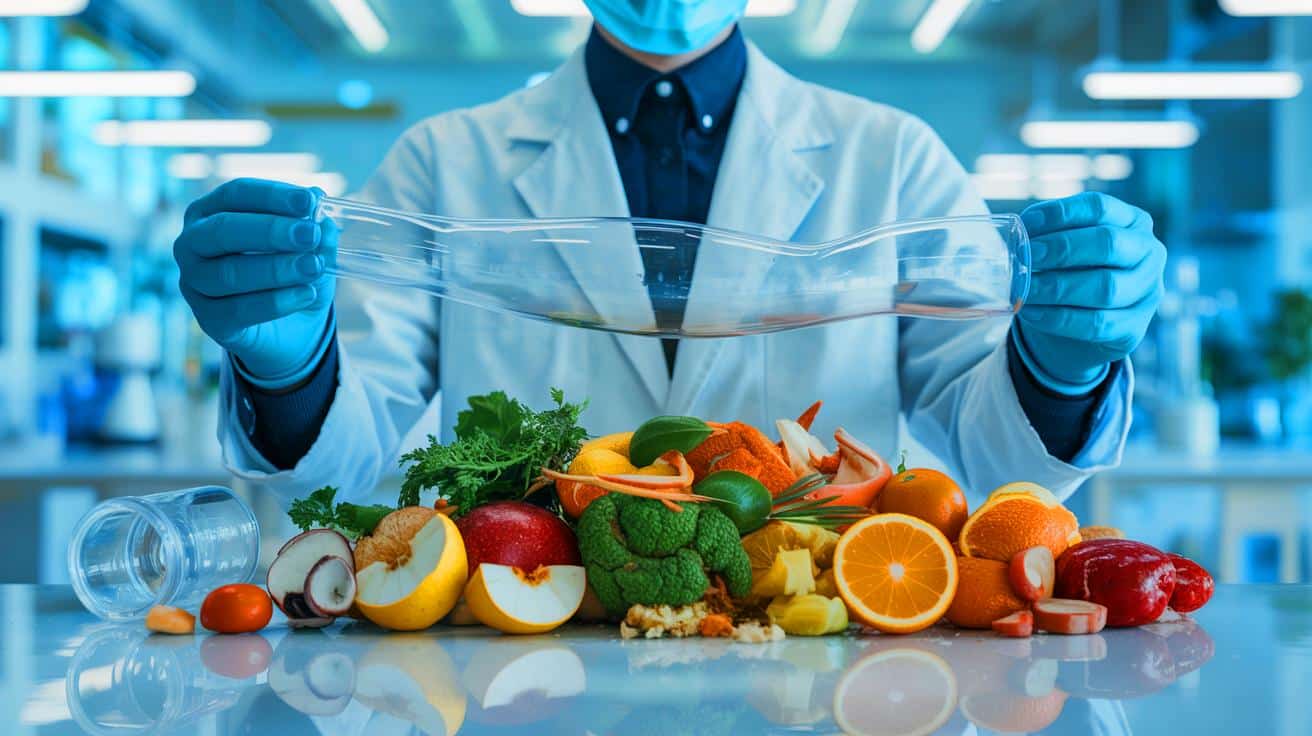
In a groundbreaking development, researchers at Binghamton University, State University of New York, have unveiled a novel microbial process that transforms food waste into biodegradable plastic. This innovative method not only targets the burgeoning issue of plastic pollution but also addresses the significant challenge of food waste in the United States. With Americans discarding between 30% and 40% of the nation’s food supply annually, this discovery holds the potential to revolutionize waste management and environmental sustainability. The team’s work, which combines food waste with specific bacteria, could dramatically reduce landfill contributions and greenhouse gas emissions while offering an eco-friendly alternative to traditional plastics.
Understanding the Bioplastic Breakthrough
The heart of this innovation lies in the use of Cupriavidus necator bacteria, which play a crucial role in converting food waste into biodegradable plastic. By feeding these bacteria fermented food waste, which contains lactic acid as a carbon source and ammonium sulfate as a nitrogen source, the team was able to produce a bioplastic known as polyhydroxyalkanoate (PHA). This biodegradable material can be harvested and used to create environmentally friendly packaging and other plastic products. The process is not only efficient, with about 90% of the PHA being usable, but also promises to reduce the manufacturing costs of these eco-friendly polymers.
According to Professor Sha Jin, one of the project’s leads, the goal is to valorize food waste by converting it into various industrial products, thus not only addressing waste management but also contributing to sustainable manufacturing practices. The collaboration with SUNY Distinguished Professor Kaiming Ye further emphasizes the multidisciplinary approach needed to tackle such complex environmental challenges.
Bacteria Brew Eco-Friendly Plastic
The journey to this breakthrough was not without its challenges. PhD student Tianzheng Liu, who spearheaded the research, initially faced hurdles due to his background in stem cell research rather than bacterial fermentation. Despite these obstacles, the team’s persistence paid off. Liu described the bioconversion of food waste into organic acids as relatively straightforward, whereas cultivating the plastic-producing bacteria required trial and error. The idea to leverage food waste for creating biodegradable plastics emerged in 2022, following a New York state grant aimed at exploring food sustainability.
Significantly, the project received support from Sodexo and Binghamton University Dining Services, which supplied the necessary food waste. The study also tackled industrial-scale challenges such as storage and food variability, discovering that the waste could be stored for a week without impacting results. Furthermore, the type of food waste used proved inconsequential as long as mixture ratios remained consistent, underscoring the robustness of the process. Beyond plastic production, the team is also investigating the use of fermentation residue as an organic fertilizer, offering a sustainable alternative to chemical fertilizers.
Scaling Up the Breakthrough
With promising results, the next phase involves scaling the process with potential industry partners or further grant support. Professor Jin expressed confidence in the project’s impact, citing the rapid publication of their study in the prestigious journal Bioresource Technology as a testament to its significance. This step is crucial in transitioning the technology from a laboratory setting to real-world applications, where it could significantly reduce the ecological footprint of both food and plastic waste.
The research not only highlights the importance of interdisciplinary collaboration but also showcases the potential for academic institutions to spearhead environmental innovation. As the team seeks to expand their work, they are setting a precedent for how scientific research can drive sustainable solutions in response to global environmental challenges.
The Road Ahead for Sustainable Plastics
This pioneering approach to converting food waste into biodegradable plastic could serve as a model for future innovations in sustainability. The successful implementation of such technologies on a global scale could dramatically reduce our reliance on conventional plastics and mitigate the environmental impact of food waste. As the team continues to refine and expand their work, they are paving the way for a more sustainable future.
As we look toward a world increasingly focused on environmental responsibility, how can such groundbreaking innovations be integrated into mainstream waste management practices to maximize their impact?