



| IN A NUTSHELL |
|
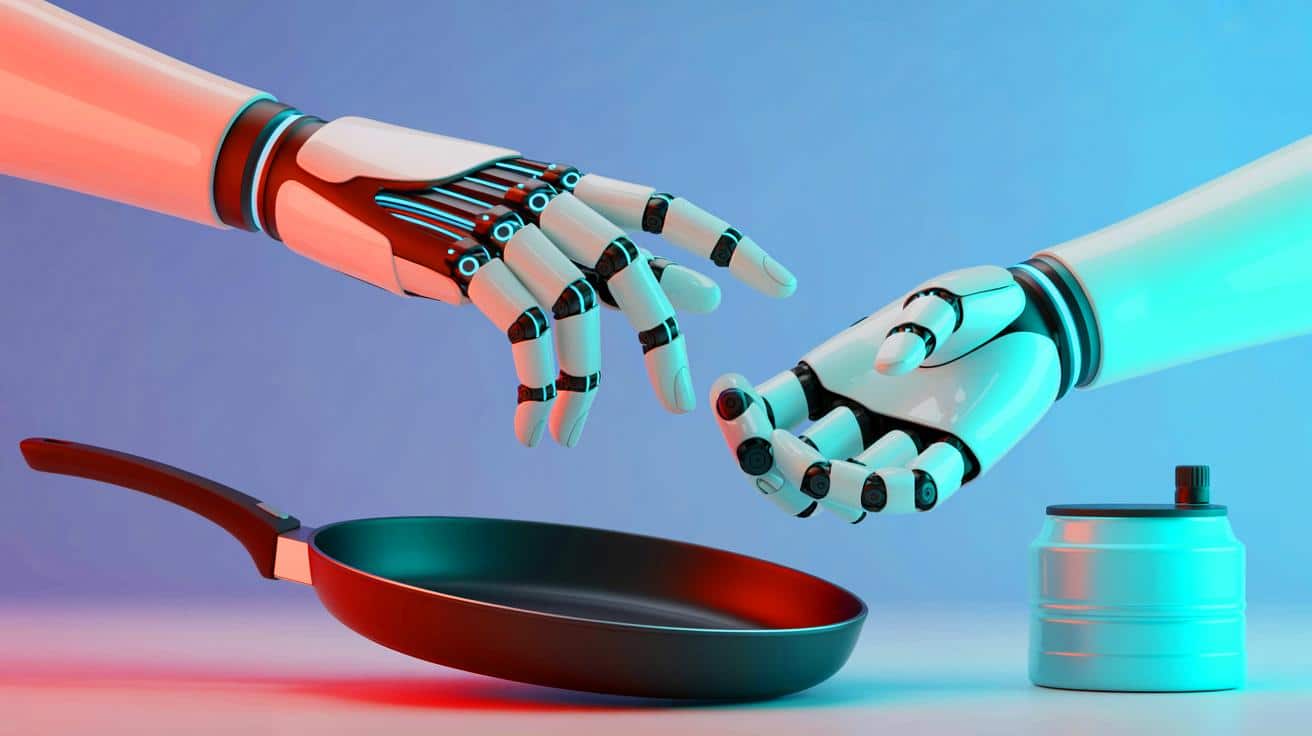
The development of robotic technology has taken a significant leap forward with the creation of the MOTIF Hand by a student team at the University of Southern California’s Viterbi School of Engineering. This innovative robotic hand is designed to mimic human interaction with objects, a breakthrough that could have far-reaching implications for various industries. Led by Assistant Professor Daniel Seita, the team has equipped the MOTIF Hand with sensors that allow it to sense force, temperature, and motion, making robots more intuitive than ever before.
Multimodal Sensing: A New Frontier
The MOTIF Hand stands out from traditional robotic grippers due to its multimodal capabilities. Unlike conventional designs, it can gather and respond to multiple sensory inputs simultaneously, including pressure, temperature, and motion. These capabilities enable the hand to react naturally to tasks that have been challenging to automate. For instance, understanding how much force to apply when gripping an object or detecting a hot surface without direct contact are tasks that the MOTIF Hand can handle with ease.
Central to this innovation is the hand’s ability to detect temperature without physical touch. Much like humans who gauge heat by placing their hands near a hot object, the MOTIF Hand uses a thermal camera embedded in its palm to read temperature. This contact-free thermal detection is achieved through infrared technology, providing the hand with a form of “heat vision.”
The ability to sense force is equally impressive. Sensors built into the fingers of the MOTIF Hand allow it to apply just the right amount of pressure, a feature particularly useful in precision-driven environments like manufacturing. The team’s vision was to replicate the intuitive actions humans perform instinctively, such as assessing whether a pot is too hot to touch.
Human-Like Intuition in Robotics
One of the standout features of the MOTIF Hand is its ability to gauge an object’s weight through tactile interaction. By flicking or shaking an object, the hand can assess its contents, similar to how a person might shake a bottle to determine if it’s full. This approach is rooted in the understanding that some forms of information, like weight, are better perceived through touch rather than vision.
“We as humans cannot distinguish force as a vision. You have to feel it,” remarked Hanyang Zhou, a co-author of the research and a recent graduate of USC’s computer science program. This insight guided the development of the hand’s sensory capabilities, ensuring that it can perform tasks with a level of sophistication akin to human touch.
Zhou and his team emphasize that the MOTIF Hand is not an isolated project but a stepping stone for future advancements in robotics. By open-sourcing their research, they aim to foster collaboration within the robotics community, encouraging other researchers to build upon their platform.
Will “Recycled EV Batteries” Save the Planet or Fuel This New Environmental Nightmare?
Open-Source Innovation: A Collaborative Future
The MOTIF Hand builds on the foundational work of the LEAP Hand, a 2023 project from Carnegie Mellon University. Like its predecessor, the MOTIF Hand’s design will be open-source, a decision that reflects Seita and his team’s commitment to advancing the field of robotics through collective effort. “Open-sourcing research advancement is really important to advance the community,” Seita stated. “The more people that use our hand, the better it is for research.”
This open-access approach is seen as crucial for driving innovation. By making the design accessible to other researchers, the team hopes to lower barriers to entry and inspire a wave of new projects that build on their work. Zhou envisions a future where research teams worldwide can easily adapt and enhance the technology, leading to a proliferation of applications in diverse fields.
The publication of their findings on Arxiv underscores the team’s dedication to transparency and knowledge sharing. This platform allows researchers globally to engage with their work, fostering an environment of shared learning and advancement.
Implications for Industry and Beyond
The implications of the MOTIF Hand extend beyond academic research. In industries where precision and adaptability are crucial, such as manufacturing, healthcare, and logistics, the introduction of such intuitive robotic systems could revolutionize operations. The ability to handle objects with human-like sensitivity opens the door to automating tasks that were previously considered too complex for machines.
Furthermore, the integration of multimodal sensing technology into robotics could lead to significant advancements in fields like prosthetics and assistive devices. By replicating the nuanced touch and feel of a human hand, these systems could provide users with greater control and responsiveness, improving quality of life.
As the technology continues to evolve, questions remain about how it will be implemented across various sectors. How will industries adapt to the introduction of robots with human-like intuition, and what new opportunities will this create for innovation and efficiency?
The MOTIF Hand represents a remarkable convergence of technology and human intuition, offering a glimpse into a future where robots can interact with the world as naturally as humans do. As this technology becomes more widely adopted, the potential for transformative change across industries is immense. What new frontiers will this innovation open, and how might it redefine our relationship with technology in the years to come?