




| IN A NUTSHELL |
|
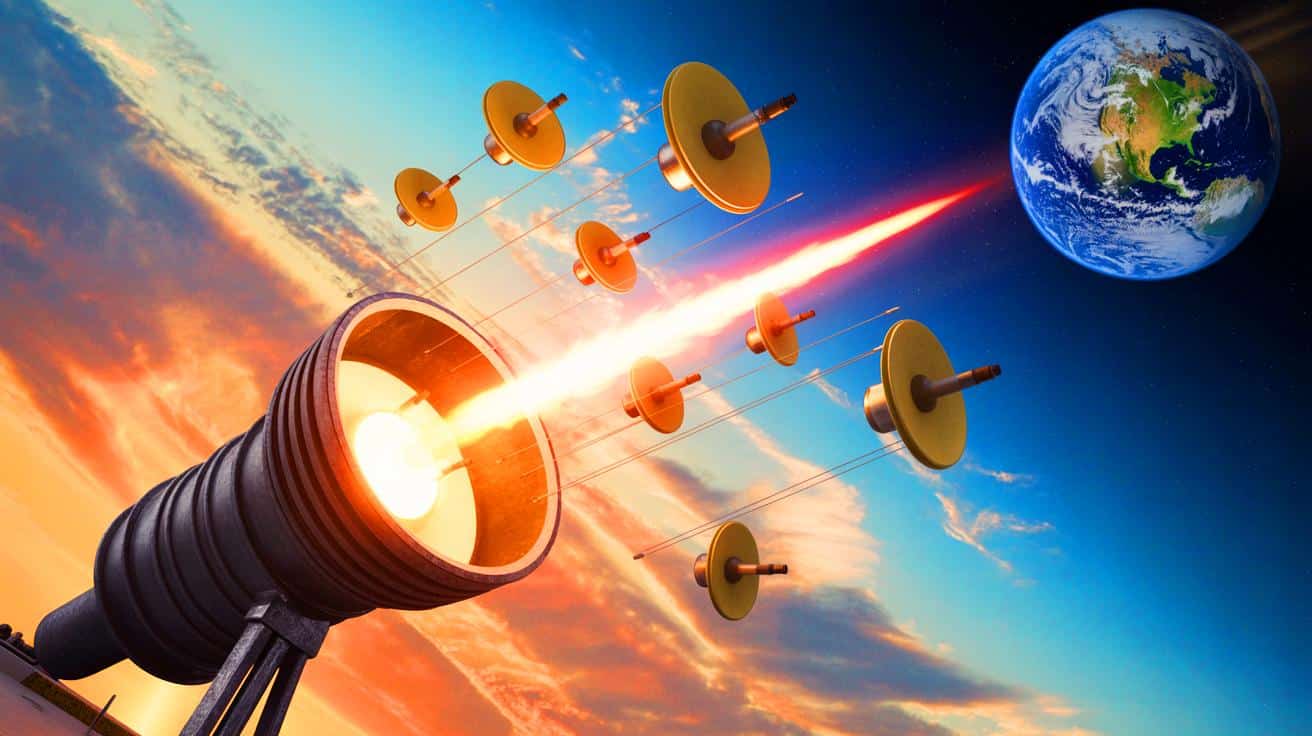
In a groundbreaking development, SpinLaunch, a California-based startup, is poised to redefine the satellite launch industry by utilizing an innovative centrifugal cannon. This technology promises to launch hundreds of pancake-like microsatellites into low-Earth orbit (LEO), offering a cost-effective and environmentally friendly alternative to traditional rocket launches. With nearly $150 million in funding and plans to challenge giants like SpaceX, SpinLaunch is set to make a significant impact. As this technology takes shape, it raises important questions about the future of satellite deployment and the implications for the broader space industry.
A New Era of Satellite Launches
SpinLaunch is pioneering a new method of deploying satellites using a centrifugal cannon, a radical departure from traditional rocket launches. The company’s flagship project, the Meridian Space constellation, involves launching satellites designed to be more efficient. These pancake-like microsatellites, each about 7.5 feet wide and weighing around 154 pounds, are lighter than many existing models. This unique design enables them to be stacked compactly, allowing for unprecedented numbers of simultaneous launches.
With substantial investment backing, SpinLaunch is well-positioned to transform the industry. The recent $12 million funding from Kongsberg Defence and Aerospace (KDA) brings their total financial support close to $150 million. This level of backing, alongside KDA’s NanoAvionics’ involvement in satellite construction, underscores the confidence stakeholders have in this innovative approach. Set to launch in 2026, this venture could redefine the benchmarks for satellite deployment efficiency and cost.
The Revolutionary Launch System
At the core of SpinLaunch’s approach is a novel launch system involving a vacuum-sealed chamber and spinning arms. This system, known as the Suborbital Accelerator, has already demonstrated its capabilities with multiple successful test launches in New Mexico. By spinning payloads to speeds reaching 5,000 mph and subjecting them to forces of up to 10,000 Gs, this system propels them into the upper atmosphere, ready for orbital deployment.
This method is not only groundbreaking but also cost-effective. SpinLaunch estimates future launch costs could range from $1,250 to $2,500 per kilogram, significantly cheaper than current methods. Furthermore, the environmental benefits are notable, with launches producing no greenhouse gas emissions and eliminating the need for traditional booster rockets. This approach could represent a sustainable future for space travel, minimizing environmental impact and reducing space debris.
Implications for the Satellite Industry
The introduction of SpinLaunch’s technology is poised to have transformative effects on the satellite industry. By offering more affordable and eco-friendly launch options, SpinLaunch is set to challenge established players and alter the competitive dynamics of the industry. The Meridian Space constellation aims to deliver high-speed communications services at lower costs, potentially democratizing access to space-based services.
The company’s ambitious plans extend to the development of a larger Orbital Accelerator, which could facilitate up to five commercial payload launches daily. This increase in launch frequency could revolutionize access to satellite technology, benefiting industries reliant on such services. However, this surge in activity also raises concerns about potential collisions, light pollution, and interference with astronomical research, necessitating careful management and regulation.
Looking Ahead: Challenges and Opportunities
SpinLaunch’s advancements present both opportunities and challenges as the company moves forward. Increased satellite activity in LEO could exacerbate existing issues like space debris and atmospheric pollution from re-entering spacecraft. Addressing these challenges will be crucial as the company continues to develop its technology and expand its capabilities.
The success of SpinLaunch’s upcoming launches could set new industry standards, paving the way for a more accessible and sustainable space environment. However, key questions remain: how will the industry adapt to these changes, and what measures will be implemented to mitigate potential risks associated with increased LEO activity?
As SpinLaunch prepares to revolutionize satellite launches, the broader implications for the space industry and the environment are profound. What strategies will be necessary to balance innovation with sustainability in this new era of space exploration?


Is SpinLaunch’s method actually safer for the environment, or are there hidden drawbacks? 🤔
Wow, a giant spinning cannon! Sounds like something straight out of a sci-fi movie! 🚀
Doesn’t launching satellites with a cannon risk damaging them with such high G-forces?
This is revolutionary! Can’t wait to see how it changes the industry. 😊
How will SpinLaunch address the potential increase in space debris?
What happens to satellites that don’t reach orbit? Do they just fall back to Earth?
Seems like a modern-day slingshot. Hope it doesn’t backfire! 😅
How does SpinLaunch’s cost compare to SpaceX’s smaller payload launches?
This is an exciting development, but what about the noise pollution from these launches? 🛸