



| IN A NUTSHELL |
|
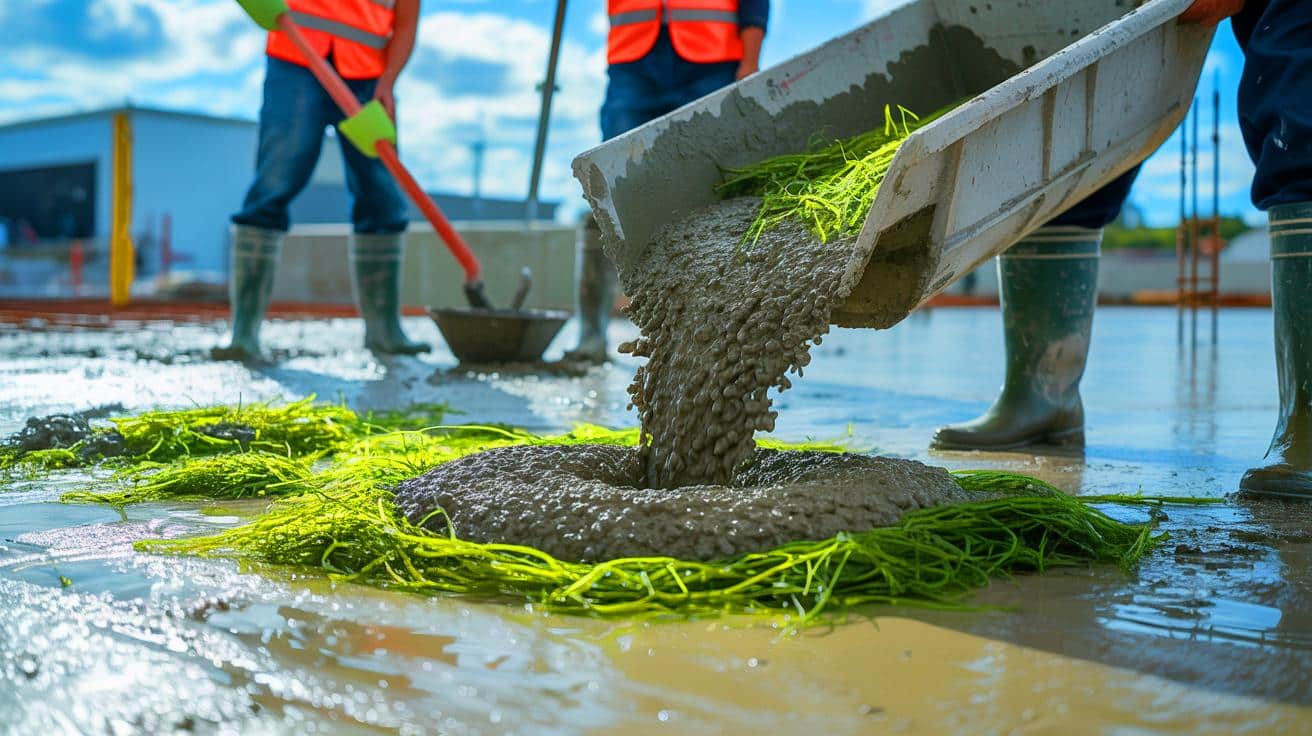
In a transformative leap for sustainable construction, researchers are pioneering a new method to significantly reduce the carbon footprint of concrete by utilizing an unexpected source: seaweed. By integrating powdered seaweed into cement, a team from the University of Washington and Microsoft has developed a concrete formulation that slashes emissions while maintaining strength. Their innovative approach combines natural materials with machine learning, heralding a potential breakthrough in sustainable building solutions. This compelling intersection of marine biology and advanced technology could redefine the future of infrastructure development.
Seaweed Meets Cement Science
Cement is a ubiquitous component of modern infrastructure, yet its production is a major contributor to global CO₂ emissions, accounting for up to 10% worldwide. This environmental burden is due mainly to the energy-intensive processes involved, including a carbon-heavy chemical reaction known as calcination. Each pound of cement produced emits nearly an equivalent amount of CO₂. In stark contrast, seaweed acts as a natural carbon sink during its growth, presenting a promising alternative additive for cement.
Eleftheria Roumeli, a senior author and assistant professor at the University of Washington, highlights the significance of this research: “Cement is everywhere, it’s the backbone of modern infrastructure, but it comes with a huge climate cost.” The integration of seaweed into cement not only reduces emissions but also bypasses the need for expensive processing. Ordinarily, optimizing cement formulations involves years of testing and modification. However, by leveraging machine learning models, researchers have rapidly identified optimal seaweed-cement blends in just 28 days, a task that would typically span five years.
Low-Carbon Concrete
Unlike other additives that require elaborate preparation, green seaweed is used in its powdered form, eliminating additional processing costs. This simplicity makes it a viable option for scaling up low-carbon concrete production on a global scale. The integration of machine learning allows for the swift development of customized cement blends, tailored to local resources and environmental conditions. This flexibility could involve different algae species or other bio-based additives, such as food waste.
Researchers are now investigating how various seaweed compositions affect cement performance, aiming to extend this method to encompass a wider range of algae varieties and potentially even food waste. The overarching goal is to empower global producers to create sustainable, local cement alternatives. By coupling natural materials with advanced data tools, the potential for localizing production, reducing emissions, and accelerating sustainable infrastructure development becomes a tangible reality.
The Role of Machine Learning
The integration of machine learning has been pivotal in this research, allowing for rapid iteration and optimization of cement formulations. By feeding experimental data back into the model, researchers can refine the mixture efficiently, overcoming traditional bottlenecks in materials development. This approach not only accelerates the process but also ensures that the introduction of new materials, such as seaweed, does not compromise cement’s structural integrity.
Roumeli emphasizes the transformative potential of this technology: “By combining natural materials like algae with modern data tools, we can localize production, reduce emissions, and move faster toward greener infrastructure.” This innovative approach represents a significant step forward in developing sustainable building materials, potentially revolutionizing the construction industry.
Future Implications and Opportunities
The implications of this breakthrough extend far beyond individual projects. By reducing dependence on traditional cement production, the construction industry can significantly lower its carbon footprint, contributing to global efforts to combat climate change. Moreover, this research opens the door to exploring other natural materials and bio-based additives, broadening the scope of sustainable construction practices.
As researchers continue to refine these technologies and methods, the potential for widespread adoption grows. This approach not only addresses environmental concerns but also offers economic advantages by reducing energy costs and utilizing readily available natural resources. The collaboration between academia and industry exemplifies how innovative partnerships can drive meaningful change in addressing global challenges.
As the world grapples with the urgent need for sustainable development, the integration of seaweed into concrete production is a promising stride forward. With advancements in machine learning and material science, could this be the beginning of a new era in green construction?