




| IN A NUTSHELL |
|
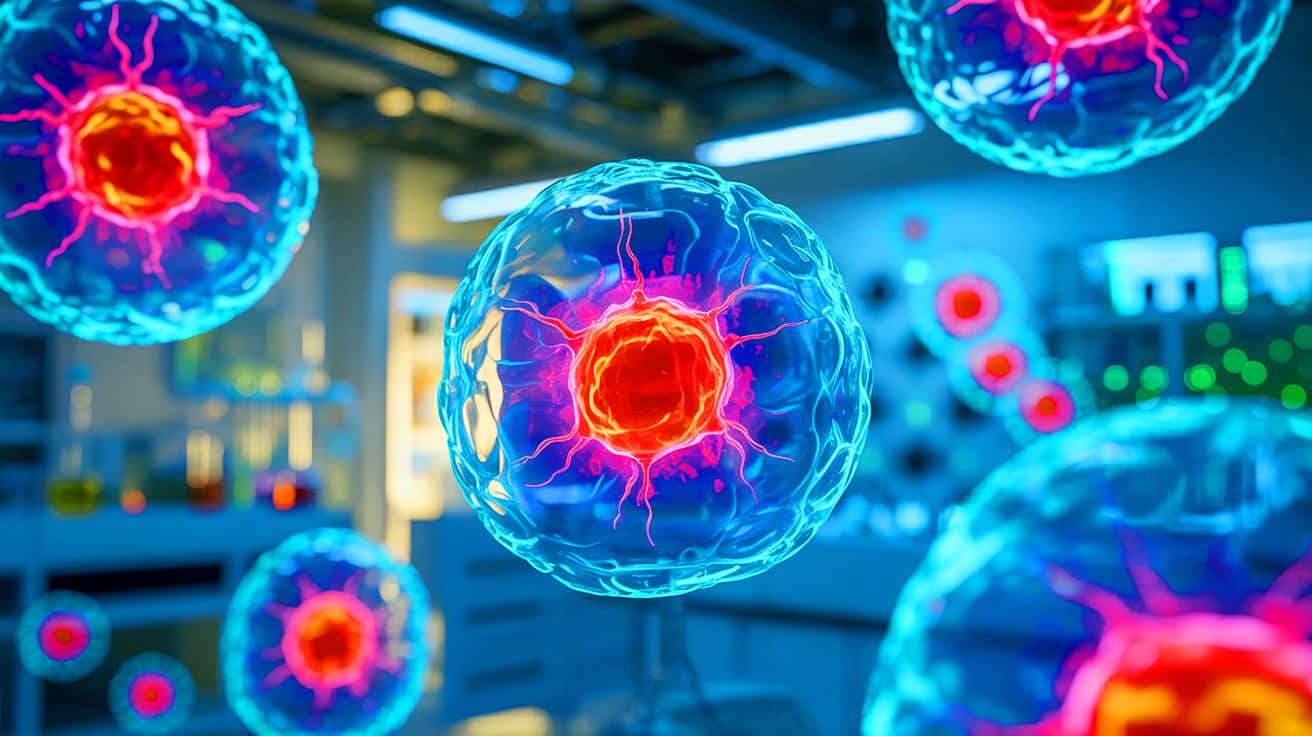
In a pioneering development at UC Merced, scientists have engineered artificial cells capable of mimicking natural circadian rhythms. This breakthrough combines the worlds of biology and engineering, offering new insights into how biological clocks function with such precision. By constructing synthetic vesicles that pulse with a 24-hour rhythm, researchers have taken a significant step in understanding the internal clockwork that governs essential processes in living organisms. This innovative study sheds light on the stability of biological clocks, even amidst the chaotic environment within cells, contributing valuable knowledge to both scientific communities and potential future applications.
Tiny Cells, Giant Rhythm
To delve into the intricacies of biological clocks, the research team reconstituted the clock machinery of cyanobacteria within simplified, cell-like vesicles. These vesicles were enhanced with a fluorescent marker, causing them to glow in sync with a daily rhythm. The persistent glow lasted for at least four days, provided specific conditions were met. Notably, altering the size of the vesicles or reducing the number of clock proteins disrupted the rhythm. This disruption followed a reproducible pattern, offering insights into the mechanisms that maintain circadian timing systems.
To further explore these findings, the researchers developed a computational model simulating the behavior of artificial clocks under varying conditions. The model highlighted that clock stability improves with a higher concentration of proteins, suggesting why organisms accumulate these molecules. As Professor Anand Bala Subramaniam remarked, “This study shows that we can dissect and understand the core principles of biological timekeeping using simplified, synthetic systems.”
Clocked, Cracked, and Coded
The computational model also illuminated the role of synchronization. It revealed that while certain genetic components are unnecessary for timekeeping in a single cell, they are crucial for synchronizing clocks across cell populations. Mingxu Fang, a microbiology professor at Ohio State University, noted, “The cyanobacterial circadian clock relies on slow biochemical reactions that are inherently noisy, and it has been proposed that high clock protein numbers are needed to buffer this noise.”
This study introduces a novel method to observe reconstituted clock reactions in size-adjustable vesicles, mimicking cellular dimensions. Such tools allow for direct testing of how organisms with varying cell sizes adopt different timing strategies. These insights deepen our understanding of biological timekeeping mechanisms across life forms, opening doors to advancements in synthetic biology.
Implications for Synthetic Biology and Beyond
The ability to engineer artificial systems with robust internal clocks presents numerous potential applications. From designing self-regulating therapeutics that release drugs on a timed schedule to constructing biological machines that operate in sync with environmental cues, the possibilities are extensive. The research, supported by various grants, underscores the transformative potential of synthetic biology. “This powerful tool enables direct testing of how and why organisms with different cell sizes may adopt distinct timing strategies,” Fang emphasized.
Beyond advancing scientific understanding, this research positions UC Merced at the forefront of exploring synthetic biology’s practical applications. The findings could lead to innovative solutions in medicine, environmental management, and more, showcasing the profound impact of blending biology with engineering.
Future Directions and Challenges
While the study offers groundbreaking insights, it also raises questions about the future of synthetic biology. How can these engineered systems be integrated into real-world applications? What ethical considerations should guide their development and deployment? These questions highlight the need for ongoing research and dialogue within the scientific community and society at large.
The potential of artificial cells to revolutionize fields ranging from healthcare to environmental science is immense. However, it requires careful navigation of the ethical and practical challenges that accompany such innovations. The research at UC Merced serves as a stepping stone toward a future where synthetic biology plays a pivotal role in addressing complex global issues.
As we continue to explore the frontiers of synthetic biology, the question remains: How will these advancements shape our understanding of life and our ability to manipulate it for the betterment of society and the environment?

This is absolutely fascinating! The possibilities for medicine are endless. 🔬💡
I’m a bit skeptical. How do we ensure these fake cells don’t get out of control? 🤔
Thank you for the article! It’s nice to read something that isn’t just about doom and gloom.
Isn’t this just another step towards playing God? Where do we draw the line? ⏰
Can these artificial cells be used to help regulate human sleep disorders?
Ugh, more human interference with nature. What could possibly go wrong? 😒🧪
Nice! Can I set these cells to wake me up in the morning instead of my alarm clock? 😂
What ethical frameworks are being considered in this research?
Are there any risks of these artificial cells mutating or evolving? 🦠