



| IN A NUTSHELL |
|
The international defense landscape is witnessing a significant transformation as a new generation of unmanned combat aircraft is set to bolster Europe’s military capabilities. This initiative, spearheaded by the San Diego-based General Atomics, aims to enhance NATO’s efforts in adopting cutting-edge unmanned-manned teaming strategies. As tensions rise globally, this move could not be more timely or critical. With a focus on collaboration and innovation, these advancements promise to redefine how air superiority is achieved and maintained across the continent.
Unmanned Aircraft to Bolster Europe’s Defense
The introduction of the Collaborative Combat Aircraft (CCA) is a groundbreaking step towards strengthening Europe’s defense posture. This ambitious project is a result of a transatlantic partnership between General Atomics Aeronautical Systems (GA-ASI) in the United States and its German affiliate, General Atomics Aerotec Systems GmbH (GA-ATS). The collaboration signifies a blend of American technological prowess with European defense expertise, creating a robust framework for future military operations. According to GA-ASI CEO Linden Blue, the combination of uncrewed aircraft systems expertise with European airborne sensor and weapons system capabilities will be pivotal. This initiative is not just about enhancing military strength; it is about creating a sustainable and affordable model for defense, ensuring that NATO’s fighter forces are equipped to handle emerging threats efficiently.
First in a New Generation of Unmanned Fighter Aircraft
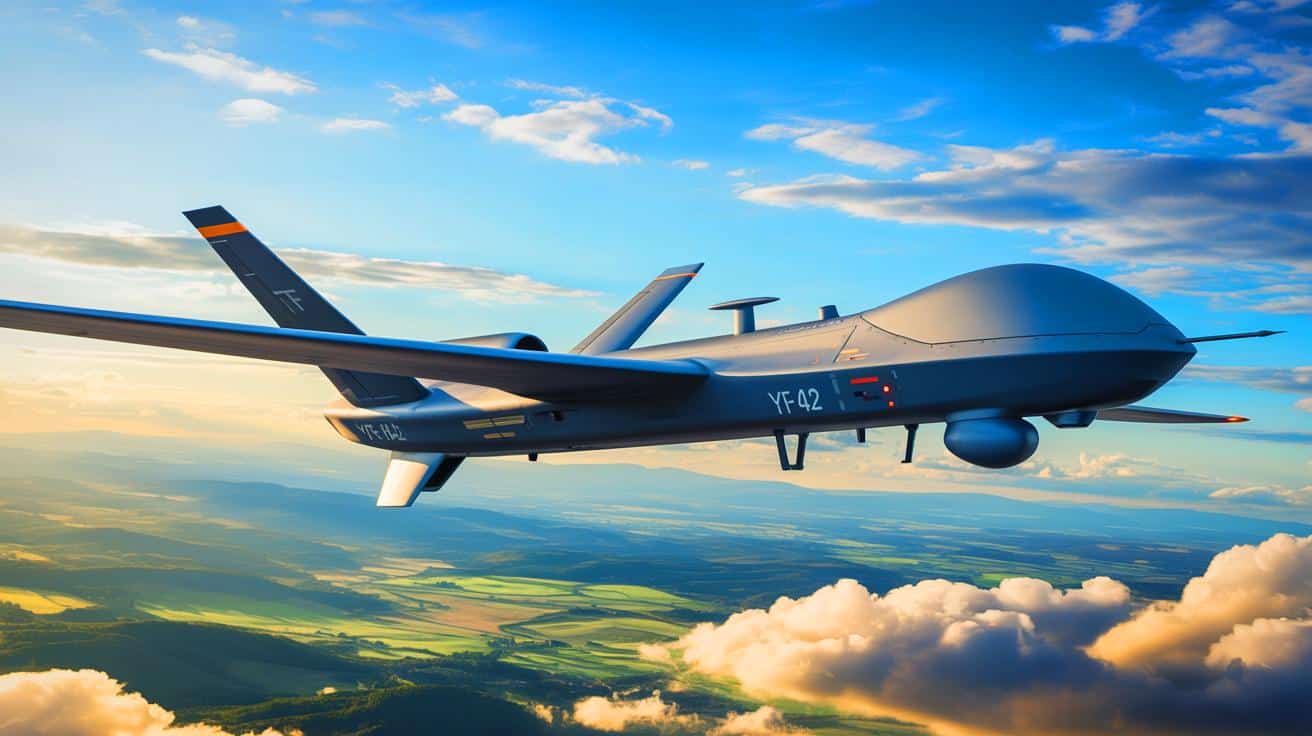
The selection of the YFQ-42A as the Mission Design Series (MDS) by the U.S. Air Force marks the dawn of a new era in unmanned combat aviation. As the first of its kind, the YFQ-42A prototype is set to revolutionize aerial warfare by integrating autonomous capabilities with crewed-uncrewed teaming. This innovative approach is designed to secure air dominance in future conflicts, particularly in contested environments where traditional methods may fall short. By leveraging advanced technologies, the YFQ-42A aims to defeat enemy threats with precision and efficiency, ensuring that the Joint Force maintains its strategic advantage on the battlefield. The development of such aircraft underscores the importance of innovation in modern warfare, where speed, agility, and adaptability are key to success.
Autonomous Collaborative Platforms
The U.S. Air Force’s move towards Autonomous Collaborative Platforms highlights a strategic shift in maintaining air superiority. Semi-autonomous aircraft like the YFQ-42A are set to redefine how military operations are conducted by offering greater flexibility, affordability, and mission effectiveness. These platforms are designed to integrate seamlessly with both current and next-generation crewed aircraft, expanding mission capabilities and ensuring continued air dominance. The YFQ-42A, in particular, offers a cost-effective solution to maintaining a formidable air force, providing an affordable mass that aligns with threat-relevant timelines. As defense budgets are scrutinized and resources become more constrained, such innovations are essential for maintaining a competitive edge.
Leveraging the YFQ-42A Baseline
The European Collaborative Combat Aircraft initiative, leveraging the YFQ-42A baseline, is positioned to become a cornerstone of NATO’s future aerial combat force. According to General Atomics, the mature aircraft baseline, coupled with flexible payload design, will facilitate rapid integration into European and NATO air forces. This initiative is not only about technological advancement but also about reinforcing defense-industrial cooperation between the United States and key European allies. As the continent seeks to enhance its defense capabilities, the partnership promises to deliver a timely operational capability that addresses ongoing NATO priorities. By fostering transatlantic industry participation, the project supports distributed air operations and the development of affordable mass, ensuring that Europe remains prepared for any potential threats.
As the defense sector evolves, the integration of unmanned systems into military operations represents a significant leap forward. The YFQ-42A and its derivatives are poised to play a crucial role in shaping the future of air combat, offering unparalleled capabilities and strategic advantages. With these advancements, a critical question emerges: how will these innovations reshape the balance of power and influence global military strategies in the coming years?