




| IN A NUTSHELL |
|
In an era where digital communication often replaces face-to-face interactions, the tactile connection of human touch is becoming increasingly rare. Engineers at the USC Viterbi School of Engineering are pioneering a solution to this issue with a new haptic feedback system that integrates physical sensations into virtual reality. This innovative technology promises to transform how we connect with each other in digital spaces by enabling users to feel gestures such as handshakes and pats, despite being miles apart. This breakthrough aims to make digital communication more emotionally resonant and realistic, potentially bridging the gap between virtual and physical interactions.
Feelings through Vibration Feedback
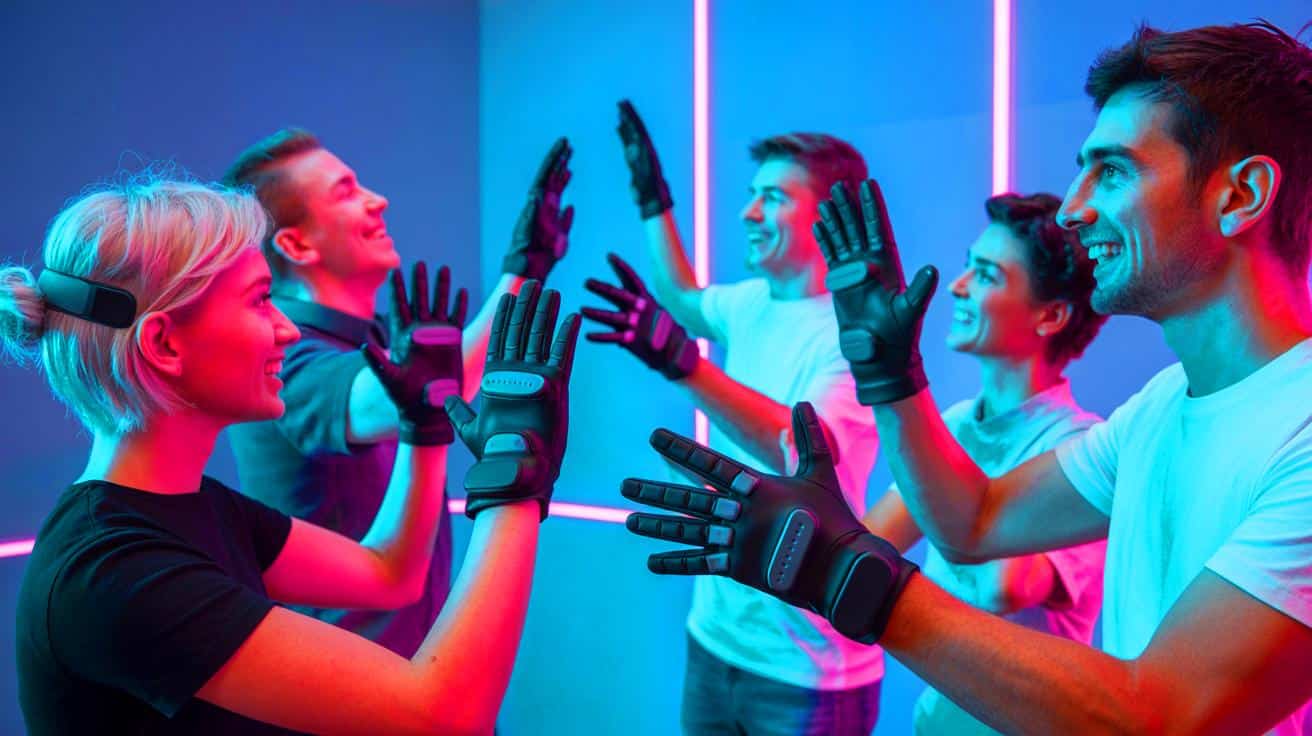
The new wearable system allows up to 16 users to engage within a shared virtual environment, each represented by full-body avatars that mimic real-world movements. This innovation permits users to perform gestures, interact with virtual objects, and complete group tasks, all while receiving tactile sensations through small motors embedded in the gloves and sleeves. This technology simulates pressure and motion, making virtual gestures feel more authentic.
A study presented at the IEEE World Haptics Conference revealed that users felt more emotionally connected when tactile feedback was included in virtual interactions. The study also explored how different gesture speeds and vibration types influenced emotional responses, offering valuable insights for future designs.
“Even though people are spending just as much, if not more, time socializing online, we’re seeing rising levels of depression, anxiety and what’s often described as ‘touch starvation,’” said Heather Culbertson, associate professor at USC Viterbi.
Culbertson highlights the importance of enhancing virtual interactions to better replicate the social benefits of real-world experiences. As virtual communication becomes a staple of modern life, integrating touch may prove essential for maintaining emotional well-being.
Deeply Personal Project
The development of this haptic system stemmed from a personal need to bridge the gap left by long periods of separation from loved ones. Lead researcher Premankur Banerjee, a doctoral student at USC, emphasized the project’s personal significance, stating that it was driven by a desire to feel closer to those who are missed.
“Having spent over five years away from my own loved ones, this research was more than academic, it was personal,” Banerjee shared. The implications of this technology extend beyond casual conversations. It holds potential for enabling hospital patients to connect with family, enhancing hybrid meetings, and offering comfort to those separated by military deployment or travel.
“While platforms like Zoom and FaceTime have allowed families, friends and colleagues to maintain visual and verbal contact, these modes lack the physicality that humans naturally crave,” added Culbertson.
Integrating touch into virtual spaces could be crucial for fulfilling the human need for physical connection, especially as more people rely on virtual interactions for daily communication.
The Science of Touch Starvation
Touch starvation, a phenomenon exacerbated by increased digital communication, is becoming a significant concern. As people spend more time socializing online, the absence of physical touch can lead to feelings of isolation and anxiety. The human brain is wired to respond positively to touch, which is why its absence can affect mental health.
The USC Viterbi haptic system addresses this gap by providing a semblance of physical connection through digital means. By simulating the feeling of touch, the technology seeks to fulfill the innate human need for contact, potentially reducing the negative impacts of touch deprivation.
Researchers are optimistic that as the technology evolves, it will become an integral part of how we interact virtually. This could lead to more emotionally fulfilling digital interactions, offering a remedy for the growing issue of touch starvation.
Future Implications and Considerations
While the haptic system marks a significant advancement in virtual communication, it also raises questions about the future of human interaction. As technology becomes increasingly capable of simulating physical presence, it is essential to consider the implications for social dynamics and personal relationships.
Will reliance on digital touch alter how we perceive physical interactions? Could it lead to an over-reliance on technology for emotional fulfillment? These are questions researchers must consider as they continue to refine haptic technology.
Nonetheless, the potential benefits are promising. For those who are geographically separated from loved ones or those who cannot engage in physical interactions, this technology offers a new way to foster connection. As we move forward, the challenge will be to balance the use of technology with the inherent value of genuine human contact.
As virtual reality and haptic feedback technologies continue to develop, they promise to revolutionize the way we connect in digital spaces. However, as we embrace these innovations, it is crucial to consider their broader societal impacts. How will the integration of touch into virtual communication reshape our understanding of relationships and connection in an increasingly digital world?