



“They Monitor Blood Pressure Like It’s Life or Death”: Revolutionary Patch Promises Unprecedented Accuracy, Rivals Hospital Standards for Millions
 By
Farah Choudhury
| IN A NUTSHELL |
|
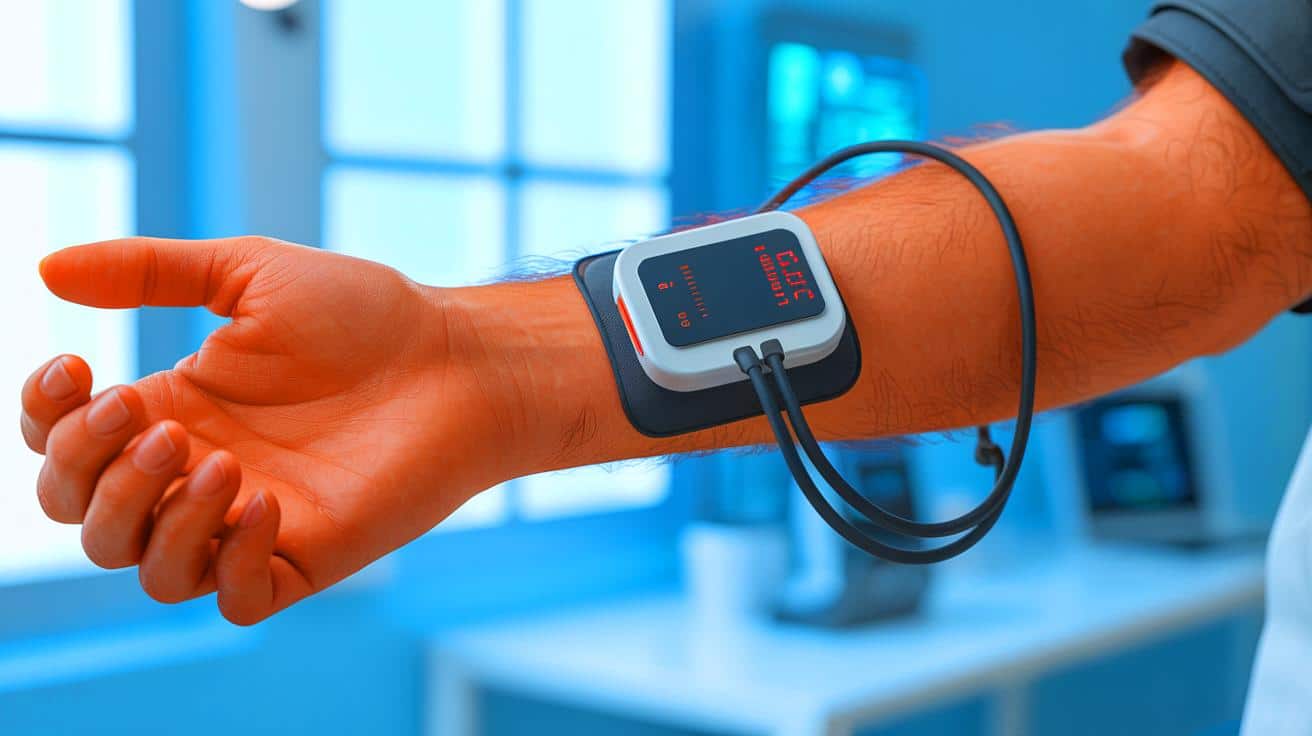
In an era where technology continually reshapes our understanding of health, a promising innovation emerges from Seoul National University (SNU). Researchers have developed a skin-mounted electronic patch designed to monitor blood pressure in real time. With high blood pressure affecting over 1.3 billion people worldwide, according to the World Health Organization, the potential impact of this device is significant. The patch promises to revolutionize how hypertension is tracked, offering a more comfortable and accurate alternative to traditional cuff-based monitors. This advancement represents a step forward in the quest for more accessible and effective health monitoring solutions.
The Silent Killer: High Blood Pressure
High blood pressure, often referred to as a “silent killer,” is a prevalent condition that significantly increases the risk of heart disease, stroke, and other serious health problems. Despite its dangers, only about one in five individuals effectively manage this condition, highlighting the urgent need for better monitoring tools. Conventional cuff-based monitors, while widely used, come with limitations. They are often bulky, require inflation, and provide only single-time readings. These devices can be uncomfortable for daily wear and may yield inaccurate results if positioned incorrectly or used under stress. Such drawbacks hinder continuous monitoring during everyday activities, exercise, or sleep, critical for managing hypertension.
The new wearable patch developed by SNU researchers offers a potential solution to these challenges. By delivering real-time readings, it enables continuous blood pressure tracking without the discomfort and constraints associated with traditional methods. This advancement could transform the way individuals monitor their health, providing a new level of convenience and accuracy.
Innovative Technology: Beyond the Cuff
The patch distinguishes itself from traditional cuff-based monitoring by utilizing a novel approach to measuring blood pressure. It operates by detecting the slight delay between electrical signals from the heart, which are transmitted to the wrist almost immediately, and the mechanical pulse that arrives shortly after as blood flows through the arteries. This delay shortens with rising blood pressure and lengthens when it falls, offering a continuous measure of the wearer’s cardiovascular state.
To achieve this sensitivity, the research team employed liquid metal, which remains fluid at room temperature and has skin-like elasticity. However, crafting this material into precise circuits posed a challenge due to its high surface tension. The solution came in the form of laser sintering, a process that uses a laser beam to fuse liquid metal particles, allowing for the creation of fine, flexible circuits without additional chemicals. This technological breakthrough is crucial in capturing the subtle skin movements necessary for accurate blood pressure readings.
Durability and Practical Applications
The finished patch exhibits remarkable durability, capable of stretching up to seven times its original length and withstanding over 10,000 stretching cycles without performance loss. Testing demonstrated its ability to accurately track rapid blood pressure changes before and after exercise, outperforming standard cuffs. Professor Seung Hwan Ko, leading the research team, suggests that this technology challenges the traditional notion of measuring blood pressure only once daily in a clinical setting. The patch offers potential applications in intensive care monitoring, workplace safety, and personal health management.
For patients with hypertension, the patch provides a tool for continuous monitoring, empowering them to track their condition anytime, anywhere. Additionally, athletes and fitness enthusiasts could benefit from insights into how their blood pressure responds to training. The integration of new materials, wireless communication, and AI-driven analysis is underway, aiming to enhance the patch’s practicality and accessibility. Such advancements are expected to accelerate the shift toward smart healthcare, where disease prevention and health management occur within everyday life rather than solely through hospital visits.
Looking Ahead: The Future of Health Monitoring
The development of this wearable patch marks a significant step toward more personalized and effective health monitoring. As the research team continues to refine the technology, its potential to transform healthcare becomes increasingly apparent. By offering a comfortable and precise alternative to traditional blood pressure monitoring methods, the patch could lead to better health outcomes for millions of individuals worldwide.
The study published in the journal Advanced Materials highlights the promise of this innovation. It reflects a growing trend toward integrating advanced technology into everyday health practices. As these developments continue to unfold, they raise important questions about the future of healthcare. How will such innovations redefine our approach to managing health and preventing disease, and what new possibilities will emerge as we embrace these cutting-edge tools?