




| IN A NUTSHELL |
|
In the ever-evolving landscape of military technology, innovation often blurs the line between science fiction and reality. One such groundbreaking development is the transformation of live cockroaches into bio-robotic swarms for covert spy missions. This audacious venture, spearheaded by a German company, SWARM Biotactics, marks a significant leap in tactical capabilities. The company, headquartered in Kassel, is at the forefront of creating robots from living organisms, equipping them with tools for surveillance in environments where traditional machines falter. By harnessing the natural agility of cockroaches, this innovation promises to redefine strategic operations.
Cockroaches Equipped with a Custom-Built Backpack
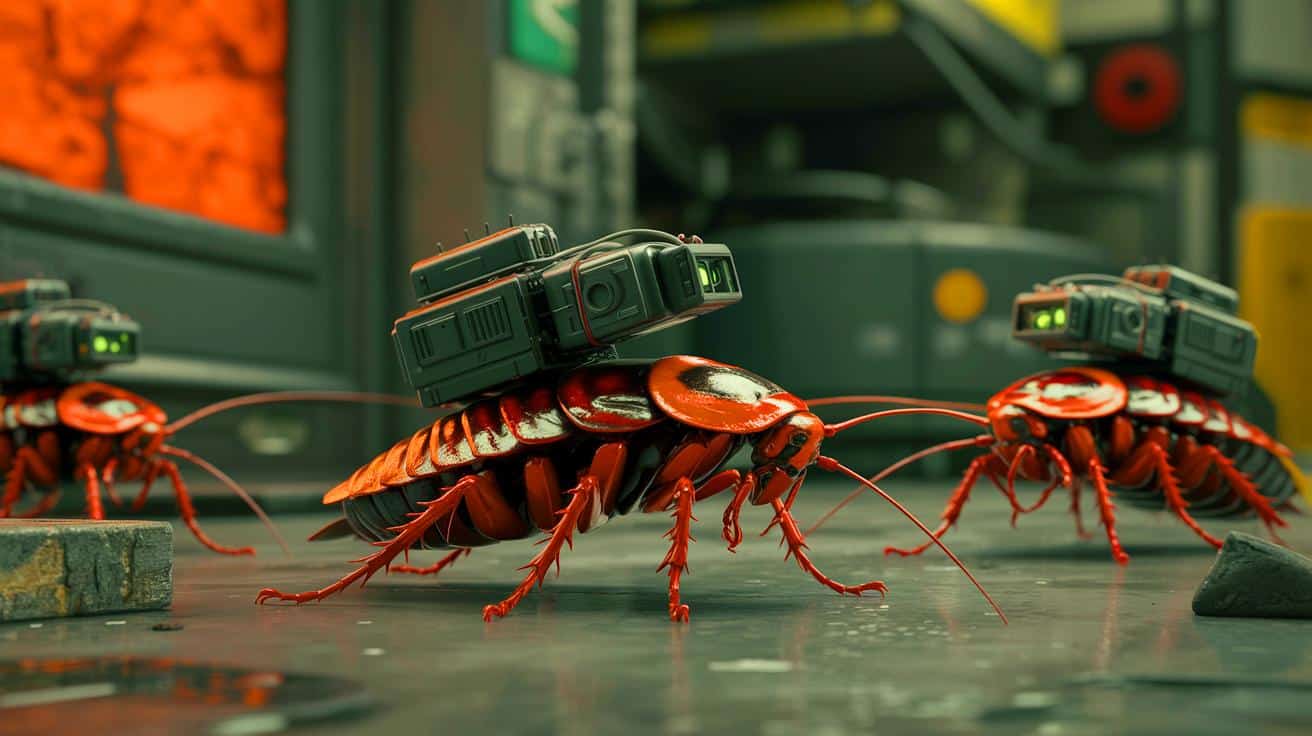
The crux of this technological marvel lies in the bio-robotic swarms, where cockroaches are outfitted with a custom-built backpack. This setup facilitates control, sensing, and secure communication, allowing these tiny creatures to navigate and gather data in the most challenging terrains. According to SWARM Biotactics, these systems are designed to be highly scalable, making them suitable for defense, security, and disaster response applications. Stefan Wilhelm, CEO of SWARM Biotactics, highlights the geopolitical significance of such technology, emphasizing its ability to operate in denied zones and politically complex environments where conventional systems fail.
SWARM Biotactics is pioneering a new category of robotics that is biologically integrated, AI-enabled, and capable of mass deployment. These cyborg insects are a testament to the company’s commitment to providing persistent intelligence in regions beyond the reach of drones or ground robots. The integration of AI and advanced sensors within these bio-robots underscores their potential to revolutionize intelligence, surveillance, and reconnaissance (ISR) operations.
New Layer of Tactical Advantage
The introduction of bio-robotic swarms offers a new layer of tactical advantage, characterized by their biological, scalable, and nearly invisible nature. This innovation is set to revolutionize operations in an era defined by shifting geopolitical and security paradigms. The technology’s low detectability is a key feature, offering a stealth advantage over conventional systems. Moreover, the cost-effectiveness of these bio-robots makes them viable for mass deployment, providing real-time data collection capabilities essential for modern spying operations.
By augmenting the natural mobility of cockroaches with AI, advanced sensors, and swarm intelligence, these bio-robots enable silent access, close-range ISR, and real-time data collection in areas that no other system can penetrate. This modular approach not only enhances the capabilities of individual insects but also leverages the collective intelligence of the swarm, paving the way for innovative military strategies.
Compact Payload Plays a Crucial Role
The compact payload carried by these bio-robots is the cornerstone of their functionality. This payload facilitates guided movement, real-time data collection, and encrypted short-range communication, effectively transforming each cockroach into a bio-robotic scout. In June, SWARM Biotactics secured significant seed funding, totaling €13 million, to advance this technology. This funding round, supported by international investors from Europe, the United States, and Australia, underscores the global interest in this innovative field.
Stefan Wilhelm emphasizes the strategic importance of this development, stating that the funding will transition the technology from deep tech to deployment. This shift aims to provide democracies with the infrastructure needed for smarter, safer operations with enhanced tactical awareness. The ability to steer these bio-robots individually or autonomously in swarms adds a layer of flexibility and precision to their deployment.
Future Implications and Ethical Considerations
The deployment of bio-robotic swarms opens up a realm of possibilities for military and civilian applications. However, it also raises ethical considerations about the use of living organisms in warfare and surveillance. As this technology progresses, it will be crucial to address these concerns and establish guidelines for its responsible use. The potential for misuse or unintended consequences necessitates a balanced approach that weighs the benefits against the ethical implications.
As SWARM Biotactics continues to push the boundaries of innovation, the world watches with a mix of curiosity and apprehension. This technology not only challenges traditional military paradigms but also prompts us to reconsider the role of nature in technological advancement. How will these bio-robotic swarms shape the future of surveillance and security, and what ethical frameworks will emerge to guide their use?