



| IN A NUTSHELL |
|
In the ever-evolving field of space exploration and defense, innovative minds persistently seek out new methods to protect our planet. One such visionary, John Sandusky from Sandia National Laboratories, has embarked on a groundbreaking venture to repurpose solar heliostats for asteroid detection. These mirrors, traditionally utilized for harnessing sunlight, hold the potential to transform into powerful tools for nighttime surveillance, offering a fresh perspective on how we might detect and prepare for near-Earth threats.
Repurposing Mirrors for the Dark
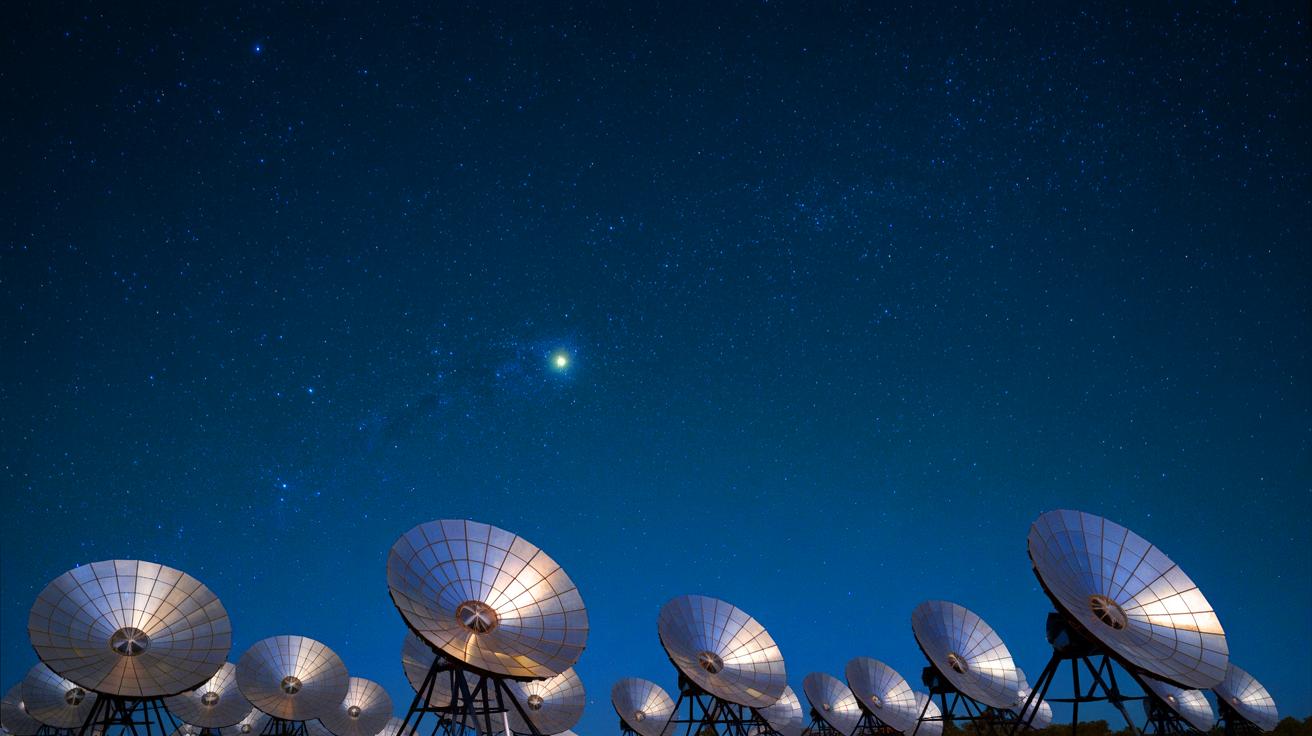
Heliostats, which typically lie dormant after sunset, have found a new purpose under the guidance of Sandusky. With a field of 212 heliostats at the National Solar Thermal Test Facility, he embarked on nocturnal experiments to explore their untapped potential. By redirecting these mirrors to detect femtowatts of light, an incredibly minuscule amount, Sandusky aims to spot asteroids that reflect this faint light back to Earth.
Unlike traditional telescopes, which rely on long-exposure images to capture asteroid trails, Sandusky’s approach measures the speed of asteroids relative to stars. This innovative method not only promises to be more efficient but could also significantly reduce costs. Each night, Sandusky ascended the 200-foot solar tower to monitor the setup, patiently collecting data until dawn. Though the initial tests did not aim to detect asteroids, they confirmed the heliostat’s ability to track stars, marking a crucial step forward.
Low-cost Potential and Future Use
Sandusky envisions a broader application for this technology beyond asteroid detection. He foresees its potential utility in defense, particularly for the U.S. Space Force, which faces challenges in tracking spacecraft in cislunar space, a region near the Moon. By presenting his results at a conference hosted by the International Society for Optics and Photonics and publishing a research paper, Sandusky seeks feedback to refine his method further.
The next phase could involve utilizing the system to track a known planet, testing its precision, and eventually scaling the technology across multiple heliostats. Such advancements might enable the detection of even smaller asteroids. Sandusky remains hopeful about expanding the system’s capabilities, contributing to the ongoing quest to secure our planet from extraterrestrial threats.
Table of Key Concepts in Sandusky’s Research
| Concept | Description |
|---|---|
| Femtowatt Detection | Utilizing heliostats to detect a millionth of a billionth of a watt of light reflected from asteroids. |
| Cislunar Space Tracking | Potential application in monitoring spacecraft near the Moon, an area difficult to track from Earth. |
| Scaling Technology | Expanding the system to involve multiple heliostats for enhanced asteroid detection capabilities. |
Community Engagement and Next Steps
Sandusky is actively seeking feedback from his peers in optics and the asteroid hunting community. This collaboration is crucial for refining the technology and understanding potential concerns. By engaging with experts, Sandusky hopes to enhance the system’s accuracy and reliability. The long-term objective is to scale the system, demonstrating its capability to detect near-Earth objects and even smaller asteroids.
His research represents a promising intersection of existing technologies and innovative thinking. As Sandusky continues to refine his approach, the potential applications of heliostat technology could expand, offering new avenues for space surveillance and planetary defense.
The quest to safeguard Earth from cosmic threats is ongoing, and Sandusky’s work highlights a novel approach to this enduring challenge. As we look to the future, the question remains: how will we continue to adapt and innovate to protect our planet from the unknown perils of space?