



| IN A NUTSHELL |
|
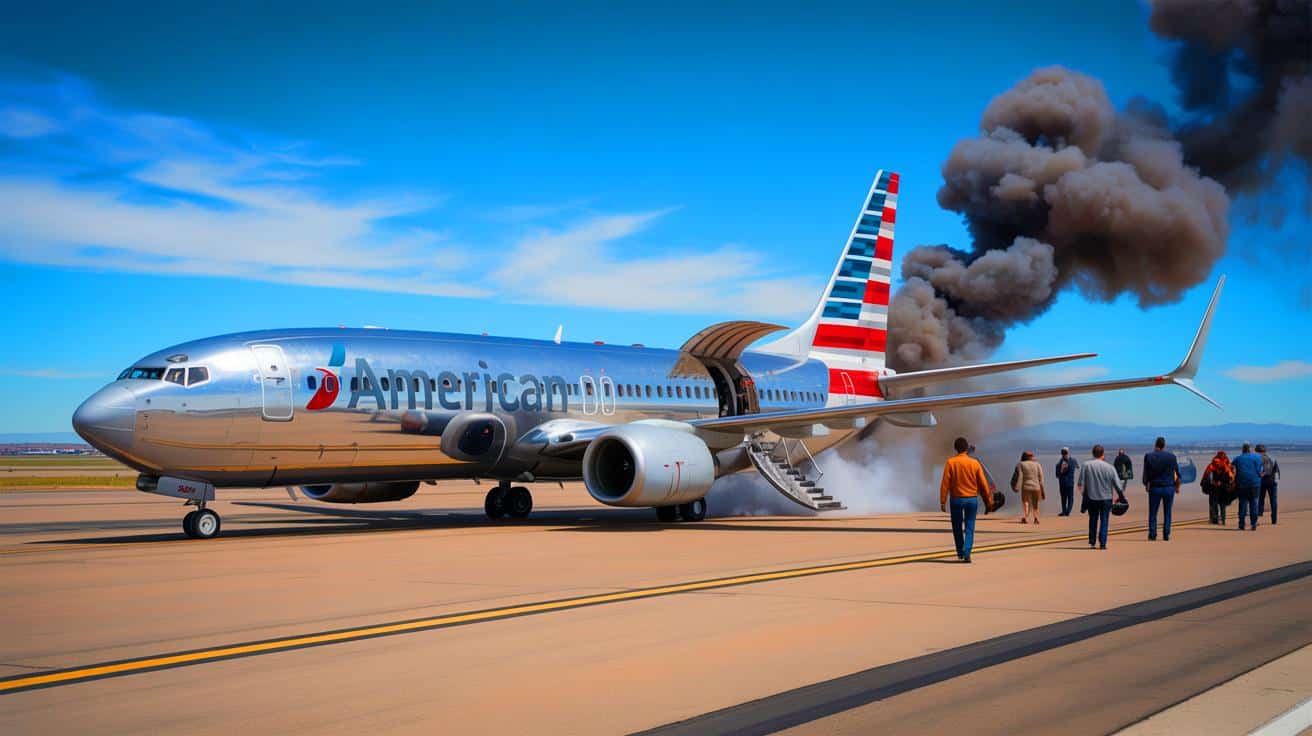
A recent incident involving American Airlines flight AA3023 at Denver International Airport has reignited concerns over aviation safety. The Boeing 737-8 MAX, poised for takeoff, was forced to abort the mission after a sudden mechanical failure led to smoke and flames emanating from the aircraft. This dramatic scene unfolded right on the runway, capturing the attention of passengers and aviation enthusiasts alike. Despite the chaos, all passengers and crew were evacuated safely, thanks to the quick response from the flight crew and the Denver Fire Department. This incident underscores the critical importance of safety protocols in aviation.
Loud Boom Heard Moments Before Denver Runway Evacuation
The chaos began with a loud boom that echoed across the runway, marking the start of a tense sequence of events that would lead to the evacuation of American Airlines flight AA3023. As the aircraft raced down the runway, passengers, including frequent flyer Mark Tsurkis, sensed something was amiss. Just seconds before takeoff, the pilots were forced to halt the aircraft’s momentum, bringing it to an abrupt stop. In the ensuing moments, passengers reported seeing smoke rising from the rear of the plane, a clear indication that something had gone wrong.
The air traffic control tower, upon being informed by the pilot of the emergency, quickly observed visible smoke and flames. The rapid response of the pilots and crew, combined with the structured evacuation procedures, ensured that all 173 passengers and six crew members exited the aircraft safely. This incident highlights the critical importance of vigilance and preparedness in aviation, where every second counts in averting disaster.
One Injured, Five Evaluated After Plane Incident
Despite the successful evacuation, the incident was not without its consequences. One passenger was taken to the hospital for further medical attention, while five others were evaluated on-site. Fortunately, these individuals did not require additional treatment, a testament to the effective emergency response. American Airlines attributed the incident to a maintenance issue involving one of the aircraft’s tires, which has since been removed from service for a thorough inspection.
The ripple effects of the emergency extended beyond the immediate situation. Denver International Airport experienced significant disruptions, with over 300 flights delayed due to a ground stop implemented from 2 p.m. to just after 3 p.m. This major disruption underscores the interconnected nature of air travel and the potential for widespread impact when things go awry. Normal operations have since resumed, and a replacement aircraft was arranged to transport the affected passengers to Miami later that day.
Impact on Denver International Airport Operations
Denver International Airport, a critical hub in the U.S. air transportation network, faced immediate operational challenges following the incident. The ground stop, a necessary measure to ensure safety, meant that flights scheduled to depart for Denver had to remain at their origin airports, leading to cascading delays throughout the network. The airport’s response was swift, yet the incident served as a reminder of the vulnerabilities inherent in complex transportation systems.
For passengers caught in the disruption, the day was marked by frustration and uncertainty. However, the airport and airline staff worked diligently to manage the situation, providing updates and assistance to those affected. This incident, while disruptive, showcased the resilience and adaptability of the aviation industry in handling unexpected crises. It also highlighted the importance of effective communication and coordination during emergencies.
Aviation Safety: Continuous Vigilance Required
The incident involving American Airlines flight AA3023 serves as a stark reminder of the continuous vigilance required to maintain aviation safety. With the Boeing 737-8 MAX already under scrutiny from past incidents, this latest event adds to the narrative of reliability and safety concerns surrounding the model. For airlines and regulatory bodies, it reaffirms the need for rigorous maintenance checks and proactive measures to prevent such occurrences.
As the investigation into the incident unfolds, it will likely provide valuable insights into potential areas for improvement in safety protocols. The aviation industry, while generally safe, cannot afford complacency. Each incident is an opportunity to learn and enhance the systems in place to protect passengers and crew. As air travel continues to evolve, the industry’s commitment to safety must remain unwavering.
The successful evacuation of flight AA3023 underscores the effectiveness of emergency protocols and the importance of preparedness. However, it also raises questions about the underlying causes of such incidents and what more can be done to prevent them. As we look to the future, how can the aviation industry further innovate to enhance safety and build trust among travelers?