




| IN A NUTSHELL |
|
The realm of military technology is constantly evolving, and recent developments highlight the need for innovation and adaptation. A recent study from China has proposed a novel approach to countering the United States Air Force’s GBU-57 Massive Ordnance Penetrators (MOP), a type of bunker buster bomb known for its formidable power and precision. This study, which delves into the potential vulnerabilities of these bombs, has sparked significant interest and discussion in military circles worldwide.
Understanding the GBU-57’s Alleged Weakness
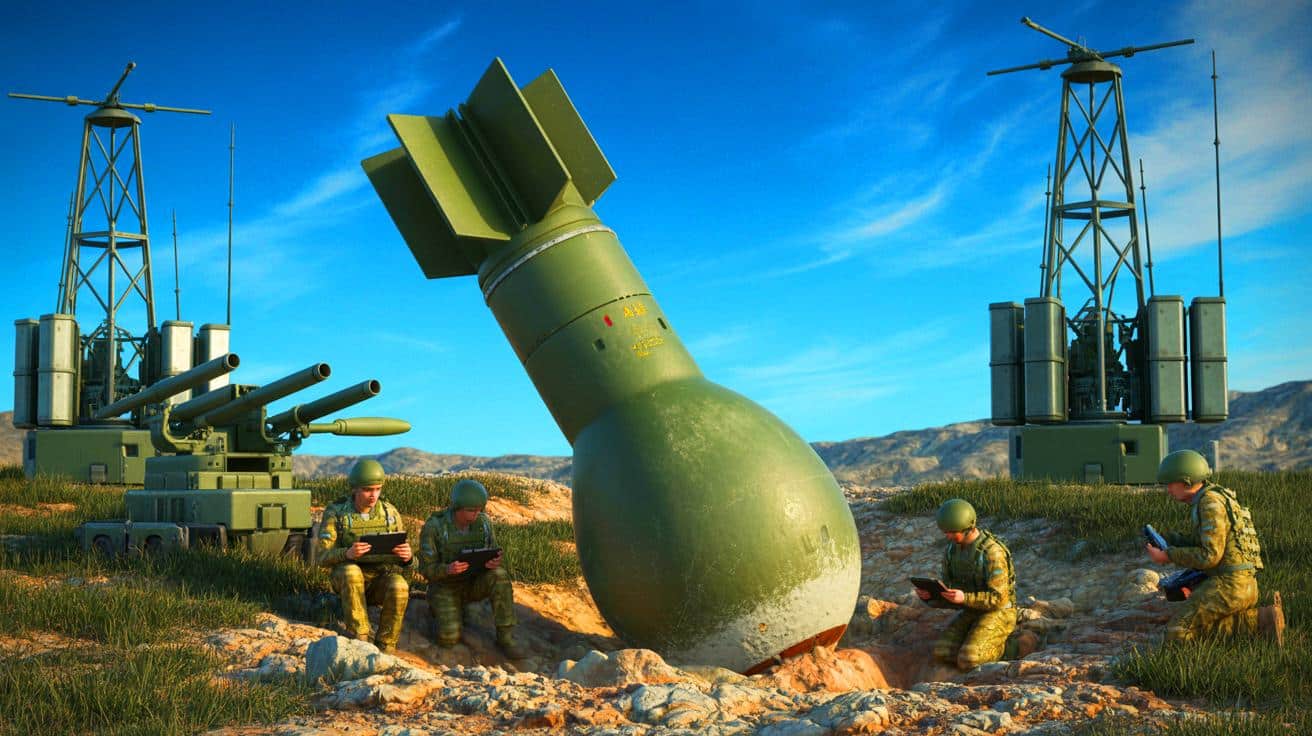
The GBU-57, or Massive Ordnance Penetrator, is renowned for its ability to destroy deeply buried targets, making it a critical asset in the U.S. military arsenal. However, a Chinese study published in the Journal of Gun Launch and Control reveals an alleged design flaw. The research, led by Cui Xingyi, suggests that while the bomb’s nose is heavily fortified, its sides comprise steel only a few inches thick. This characteristic may render the weapon susceptible to anti-aircraft shells.
Using computer simulations, the research team explored the efficacy of Swiss Oerlikon GDF guns, which are prevalent in regions like the Middle East. These guns can unleash 36 shells in a mere two seconds, with a compelling 42% kill probability within 1,200 yards. The study proposes engaging the bomb from the side at an angle under 68 degrees and within 3,900 feet, leveraging a tactic reminiscent of World War II armor-piercing strategies. This method, however, necessitates precise radar tracking and robust electronic warfare capabilities.
Challenges of Implementing the Strategy
While the proposed interception strategy holds potential, it is not without significant challenges. One of the primary hurdles is the need for extraordinary precision. The interception requires pre-aiming at a precise point along the bomb’s trajectory, a technique the researchers refer to as the ‘sniper fire control’ tactic. This strategy reduces the demands on mechanical systems and significantly shortens the response time to a mere millisecond.
Nevertheless, the unpredictable nature of combat introduces complexities. Air forces could preemptively target anti-aircraft systems, diminishing their effectiveness before any engagement. Additionally, the bombs themselves may execute evasive maneuvers as they close in on their targets, complicating the interception efforts. Furthermore, the limited effective range of 3,900 feet offers only a brief window for action, challenging the operators’ timing and accuracy.
Technological and Tactical Considerations
The feasibility of the Chinese strategy hinges on the existing technology and the tactical environment. While the study outlines a theoretically sound approach, the practical implementation on the battlefield may differ. The ability to utilize this strategy effectively is contingent on several factors, including the availability of advanced radar systems and efficient electronic warfare measures.
Moreover, the terrain and the specific threat environment of the region play crucial roles in determining the strategy’s success. While the approach may be tailored for China’s defense systems, its applicability in other regions remains uncertain. The variability in geographical and technological landscapes necessitates a customizable approach to interception tactics, further complicating the strategy’s deployment.
Implications for Future Military Strategies
The insights gleaned from the Chinese study offer valuable lessons for military strategists worldwide. The potential vulnerability of the GBU-57 underscores the importance of continuous innovation in defense technologies. As adversaries develop new methods to counter existing weapon systems, military forces must prioritize research and development to maintain a strategic advantage.
This revelation also emphasizes the need for comprehensive defense strategies that account for potential weaknesses. By understanding the limitations of their arsenals, military forces can devise more effective countermeasures and improve the resilience of their operations. The ongoing evolution of military technology demands a proactive approach to both offense and defense, ensuring preparedness for emerging threats.
As military technology continues to advance, the dynamics of warfare are poised to change dramatically. The insights from this study raise critical questions about the future of military strategy: How will nations adapt to counter newly discovered vulnerabilities, and what innovations will shape the next generation of defense systems?