



| IN A NUTSHELL |
|
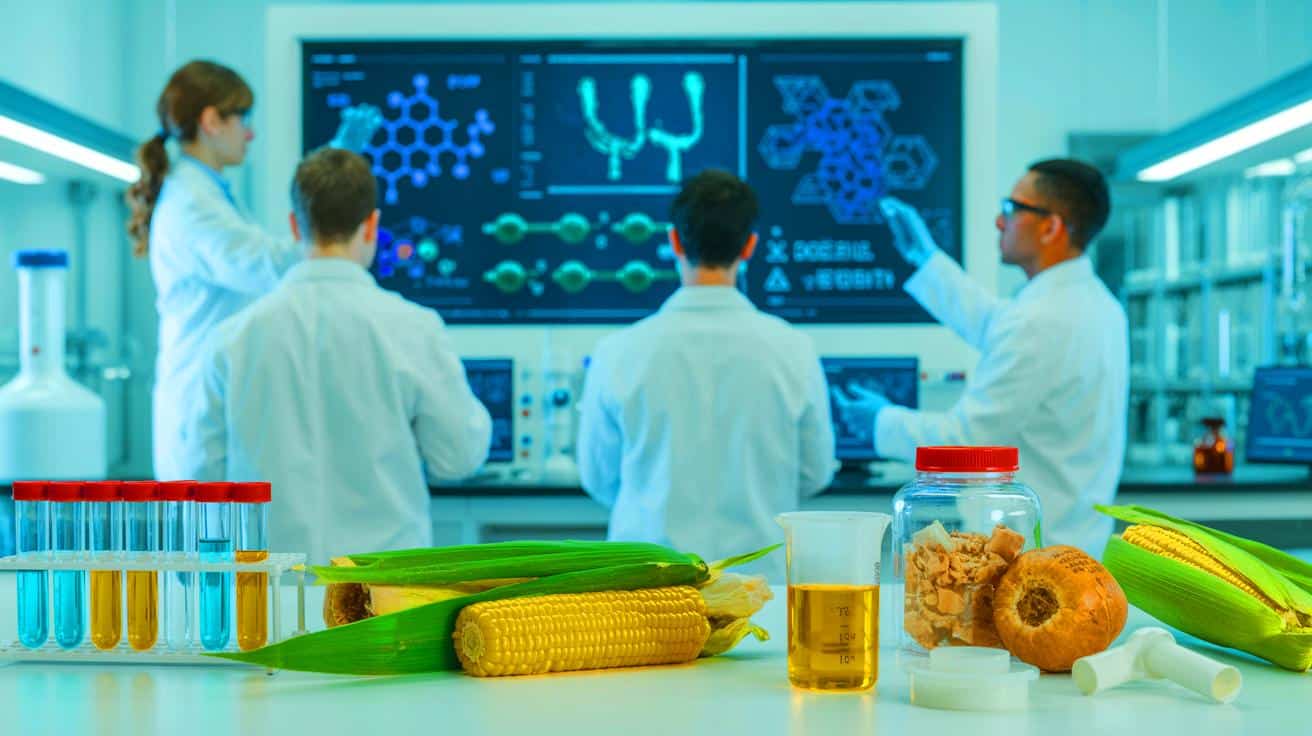
In recent years, the global demand for sustainable and eco-friendly alternatives to traditional plastics has surged. This demand has spurred researchers at Purdue University and their partners to innovate in the field of bioplastics. By engineering enzymes to convert corn, sugar, and agricultural waste into recyclable bioplastics, they offer a promising solution to the mounting environmental challenges posed by conventional plastic waste. Funded by the U.S. National Science Foundation (NSF), this groundbreaking research not only aims to reduce plastic pollution but also seeks to strengthen domestic supply chains by utilizing local raw materials. The implications of this research could reshape the nearly $1 trillion plastic industry.
Advancing Bioplastic Engineering
The team at Purdue University, led by Assistant Professor Karthik Sankaranarayanan, is at the forefront of bioplastic innovation. Their work aims to develop polyhydroxyalkanoates (PHAs), a type of bioplastic derived from domestically sourced feedstocks like corn and sugar. Unlike traditional plastics that rely heavily on imported petrochemicals, PHAs offer a sustainable alternative that can be recycled repeatedly. Sankaranarayanan highlights the potential of these materials, stating that they can be broken down into their individual units and reused, thus offering a truly circular solution.
However, the path to widespread adoption of PHAs is not without challenges. Despite being discovered nearly a century ago, PHAs have struggled with issues of fragility and instability at high temperatures. The current project seeks to overcome these hurdles by tuning the chemical structure of PHAs to enhance their mechanical strength and thermal stability. This could broaden the applications of PHAs, making them suitable for a variety of uses, from packaging to medical devices.
Enzyme Engineering Challenges
Central to the success of this initiative is the engineering of enzymes capable of catalyzing the production of bioplastics. The team is working with complex enzymes known as polyketide synthases (PKSs). These enzymes have traditionally been used in the production of antibiotics, but adapting them for bioplastic production presents unique challenges. Not only do these enzymes need to be re-engineered to facilitate new chemical reactions, but they also require enhanced stability for industrial-scale manufacturing.
The DNA makeup of PKSs, rich in guanine and cytosine, adds another layer of complexity. Fortunately, Twist Bioscience, a project partner, has developed technology to address this bottleneck. According to Emily Leproust, CEO of Twist Bioscience, collaborating with Purdue has enabled them to apply their expertise in manufacturing difficult sequences at scale. This collaboration could pave the way for advancements not only in bioplastics but also in pharmaceuticals, agrochemicals, and biomaterials.
Chaos Erupts as Massive Discovery Sparks Global Race Beneath the Waves
Collaborative Efforts and Educational Impact
This ambitious project is a collaborative effort involving several prestigious institutions, including Purdue University, the University of California, San Francisco, Stanford University, and the University of California, Berkeley. Together, these institutions are pushing the boundaries of enzyme engineering and bioplastic production. The collaboration leverages their combined expertise in biocatalysis, deep learning, and microbial engineering to address the challenges of bioplastic production.
Beyond research, the project has significant educational and training components. It provides valuable learning opportunities for students and researchers across disciplines. By offering open-source access to tools and workflows, the project aims to democratize knowledge and empower future scientists and engineers. Workshops and modules, such as UCSF’s protein design workshop and Purdue’s enzyme process design modules, are integral parts of this educational outreach.
Engineers Unleash a Fiery Discovery: New Tech Could Propel US Radar Systems to Unprecedented Heights
Potential Impact on U.S. Manufacturing
The implications of this research extend beyond environmental benefits. By utilizing locally sourced raw materials, the project has the potential to bolster U.S. manufacturing and supply chains. The NSF’s $7 million investment in this initiative underscores the strategic importance of developing sustainable technologies that reduce reliance on imported resources.
The success of this project could serve as a catalyst for broader adoption of bioplastics in various industries. As the global community continues to grapple with the environmental impact of plastic waste, the work being done at Purdue and its partner institutions offers a glimpse of a future where sustainable materials play a pivotal role. The project’s success could inspire further innovations and investments in the bioplastic sector, positioning the U.S. as a leader in sustainable manufacturing.
As researchers continue to advance the field of bioplastics, questions remain about the scalability and economic viability of these new materials. Will the innovations in enzyme engineering and bioplastic production be enough to challenge the dominance of traditional plastics in the global market? The answers to these questions will shape the future of sustainable manufacturing and environmental stewardship.