



| IN A NUTSHELL |
|
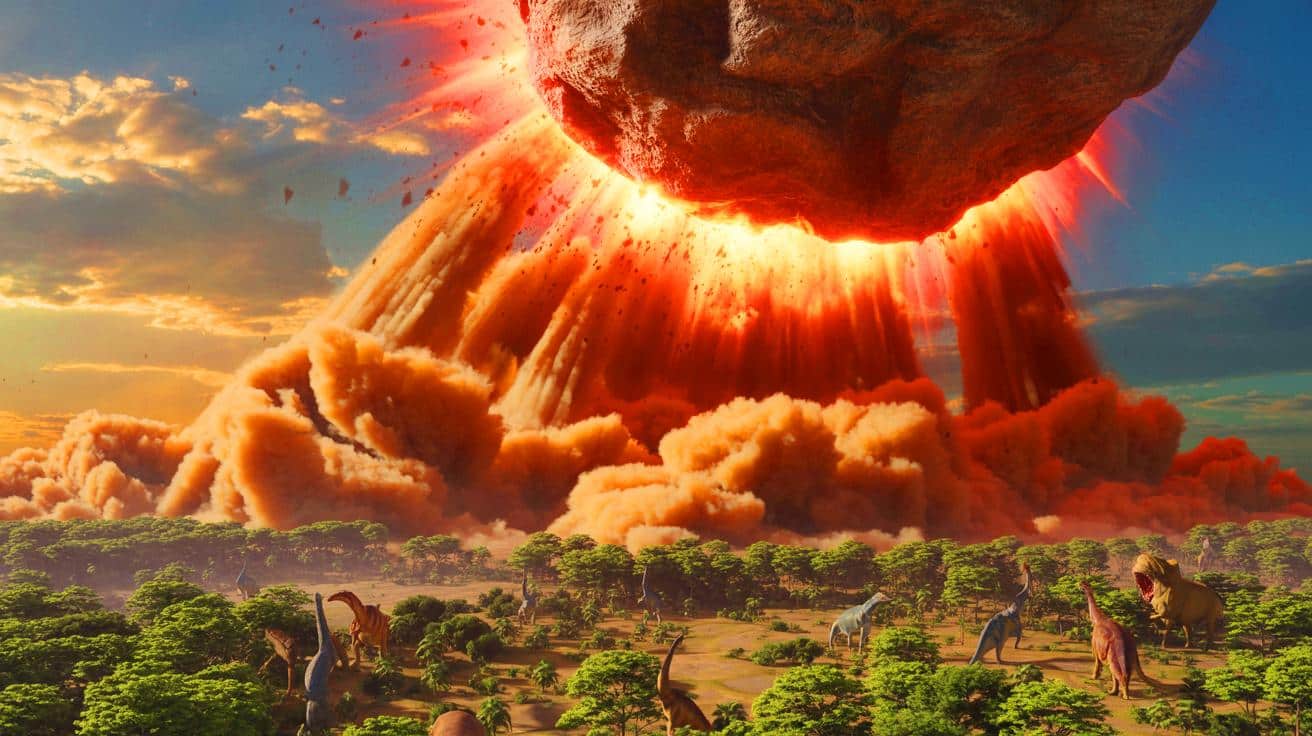
Sixty-six million years ago, a six-mile-wide asteroid collided with Earth, leading to the extinction of the dinosaurs. However, new research suggests that the impact did more than just eradicate these ancient creatures. It also triggered a colossal earthquake that may have shaken the planet for weeks or even months. This seismic event released energy estimated to be 50,000 times greater than the catastrophic 2004 Sumatra earthquake. Researchers have now begun to piece together this story, revealing just how profound the asteroid’s impact was on Earth’s geological history.
Uncovering Clues from Ancient Sediments
Geologist Hermann Bermúdez from Montclair State University has been at the forefront of this groundbreaking research. His work involved meticulous analysis of rock formations in Colombia, Mexico, and several U.S. states, all dating back to the time of the asteroid collision. One of the most significant discoveries was made on Colombia’s Gorgonilla Island, where Bermúdez found tiny glass beads known as “tektites.” These particles were formed when the intense heat from the impact melted Earth’s surface, propelling molten material into the atmosphere before it settled back down as glassy beads.
Gorgonilla Island’s sediments provide a rare snapshot of the K-Pg boundary, a geological marker of the mass extinction event. According to Bermúdez, this site remains one of the best-preserved due to its deep ocean location, which shielded it from tsunamis. Layers of mud and sandstone beneath the ancient seafloor were severely deformed, suggesting prolonged seismic activity. The persistence of this shaking is further evidenced by the layering of fine sediments over the disturbed seabed, indicating a long recovery period.
In these same sediments, the presence of fern spores marks the beginning of ecological recovery. These spores represent some of the first plant life to reemerge after the catastrophic event, offering clues into how life rebounded in the aftermath of the asteroid impact.
Evidence Across Countries and Continents
The effects of this massive earthquake were not limited to Colombia. Similar geological formations appear across Mexico and the southeastern United States. In El Papalote, Mexico, sediment layers had liquefied due to the intense shaking, a process known as liquefaction. This phenomenon underscores the earthquake’s immense power, as it transformed solid ground into a liquid-like state.
In the southeastern U.S., particularly in states like Alabama, Mississippi, and Texas, Bermúdez documented deep geological cracks and faults resembling those found after modern-day major earthquakes. Additionally, tsunami deposits discovered in these areas provide further evidence of the colossal waves generated by the asteroid’s impact. This combination of seismic and oceanic forces wreaked havoc across vast regions far from the initial collision site.
The discovery of these geological features across multiple continents highlights the global impact of the asteroid collision, offering a new perspective on how interconnected Earth’s systems are during such events.
https://www.sterlingtimes.co.uk/ancient-beast-ate-plants-this-astonishing-dinosaur-era-flying-reptile-fossil-unveils-first-evidence-of-unbelievable-plant-based-diet/155/
Measuring the Unimaginable
The scale of this ancient earthquake can be difficult to comprehend. The energy released by the asteroid impact was about 10²³ joules, sufficient to generate a seismic event of magnitude 10 or greater. This was powerful enough to create a crater 112 to 124 miles in diameter in the Yucatan Peninsula. In contrast, even the most powerful modern earthquakes, such as the magnitude 9 event off Sumatra in 2004, pale in comparison.
Bermúdez’s research provides a detailed timeline of how these seismic forces reshaped Earth’s surface. The evidence gathered from his fieldwork paints a vivid picture of a world undergoing violent change. His discoveries illustrate a seismic event so powerful that it deformed sediments thousands of miles from the impact site, leaving a lasting mark on the planet’s geological record.
The deformed layers rich in spherules on Gorgonilla Island serve as a testament to the prolonged seismic activity that followed the impact, offering a tangible connection to this ancient global catastrophe.
Why This Research Matters
This research is more than a historical curiosity. It provides valuable insights into how Earth responds to extreme cosmic events, offering lessons for future preparedness. By understanding the past, scientists can better predict the potential impacts of another massive asteroid collision. Bermúdez’s work, supported by prestigious grants, has received acclaim for its thoroughness and the light it sheds on this ancient seismic event.
Colleagues like Ying Cui at Montclair State University have praised Bermúdez for his contributions to the field, noting the importance of his findings in understanding the K-Pg boundary’s seismic history. This research not only enhances our knowledge of Earth’s past but also opens doors for further investigations into ancient catastrophes.
By reconstructing the events of 66 million years ago, Bermúdez provides a clearer picture of how a single cosmic event reshaped the planet, offering a poignant reminder of Earth’s vulnerability to external forces.
Bermúdez’s discoveries have fundamentally altered our understanding of the asteroid impact that led to the dinosaurs’ extinction. The research underscores the power of natural events to change the course of life on Earth. As we grapple with contemporary challenges, the question remains: how can we use these insights to better prepare for potential future cosmic threats to our planet?