



| IN A NUTSHELL |
|
Recent scientific explorations have revealed groundbreaking insights into the intricate workings of our biological clocks, or circadian rhythms. These natural processes orchestrate our sleep-wake cycles, aligning them with Earth’s 24-hour rotation. Researchers at the University of California Merced have delved into the cellular foundations of this mechanism, achieving a significant breakthrough. By crafting synthetic cell-like structures, or vesicles, and loading them with clock proteins, these scientists have taken a profound step toward understanding how our bodies keep time. Their findings, published in the journal Nature Communications, could pave the way for novel approaches to health and disease management.
The Intricacies of Circadian Rhythm
Our circadian rhythm is a remarkable biological phenomenon that governs our daily cycles of sleep and wakefulness. It is finely tuned to the Earth’s 24-hour rotation, ensuring that our internal clocks remain synchronized with the natural world. This rhythm influences a wide range of physiological processes, from hormone regulation to metabolism.
Researchers have long been fascinated by the intricacies of circadian rhythm and its impact on health. Disruptions to this biological clock can lead to various health issues, including cardiovascular disorders and cancer. Understanding the mechanisms underlying circadian rhythm is crucial for developing strategies to mitigate its disruption and optimize treatments for related diseases.
Scientists at the University of California Merced have embarked on a journey to unravel the mysteries of circadian rhythm at the cellular level. They have focused their efforts on studying the behavior of cyanobacteria, organisms known for their precise biological clocks. By replicating the clockwork system within these organisms, researchers hope to gain valuable insights into the fundamental principles of timekeeping in living organisms.
Reconstructing Timekeeping in Synthetic Cells
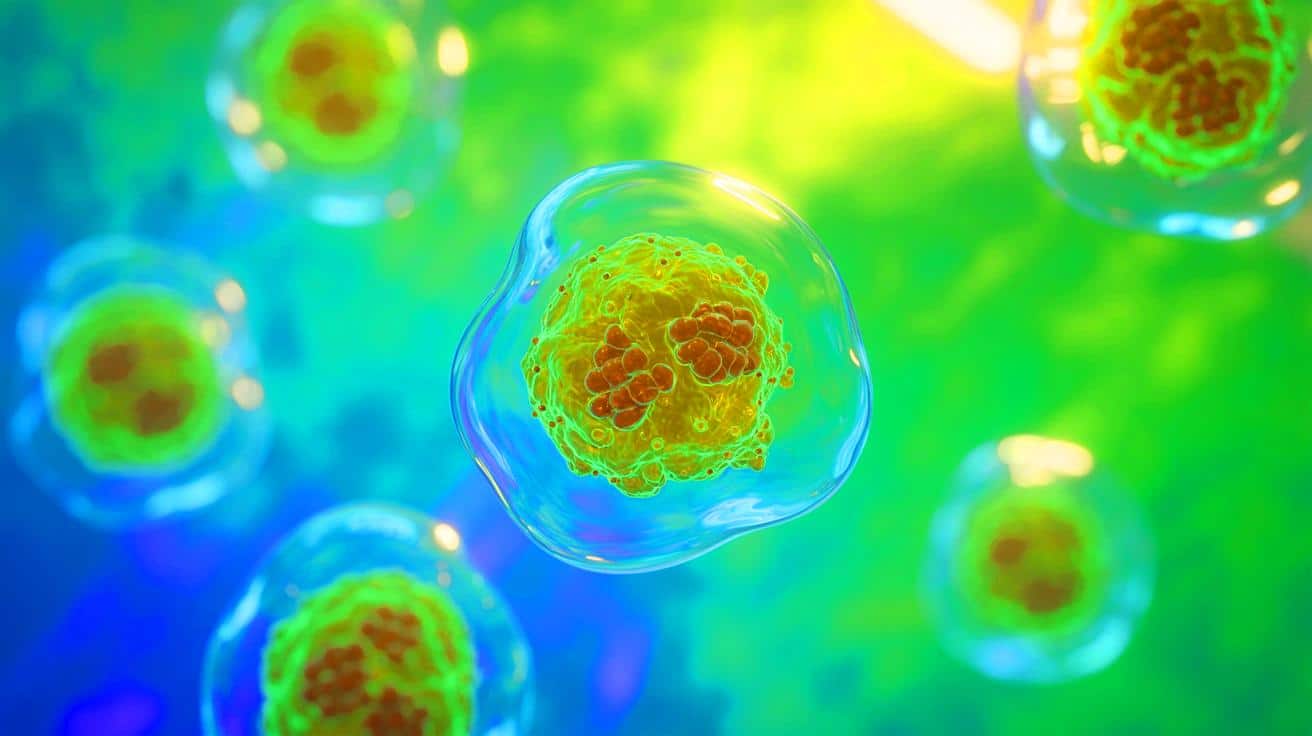
The team at UC Merced has pioneered a novel approach to studying circadian rhythm by creating synthetic vesicles that mimic cellular structures. These vesicles, ranging from 2 to 10 micrometers in diameter, serve as platforms for testing the effects of clock proteins on timekeeping accuracy. The researchers loaded these vesicles with key proteins, including KaiA, KaiB, and KaiC, which play pivotal roles in regulating circadian rhythms.
In their study, the scientists observed that the accuracy of the clock within these vesicles was proportional to the concentration of clock proteins and the vesicle size. This finding highlights the importance of both protein levels and cellular dimensions in maintaining precise timekeeping.
By incorporating a fluorescent tag into the vesicle lipid, the researchers were able to visualize the circadian rhythm in action. The steady glow of the tag provided a real-time view of the intricate processes occurring within the vesicles, shedding light on how clock proteins orchestrate the passage of time.
Key Discoveries and Implications
The study’s findings revealed that when the concentration of clock proteins was reduced, the vesicles’ timekeeping accuracy diminished. This observation underscores the critical role of protein levels in maintaining a precise circadian rhythm. The researchers were able to reproduce this gradual loss of timekeeping in their experiments, highlighting the robustness of their model.
Furthermore, the team’s computational models provided valuable insights into the additional role of the circadian rhythm in turning genes on and off to control physiological and behavioral processes. While this function did not interfere with timekeeping on an individual level, it proved essential for synchronizing clocks across a population.
These discoveries open up new avenues for understanding how organisms with different cell sizes may adopt distinct timing strategies. As microbiologist Mingxu Fang noted, the study introduces a powerful tool for investigating the mechanisms of biological timekeeping across diverse life forms.
Potential Applications in Health and Medicine
The implications of this research extend beyond the realm of basic science. Understanding circadian rhythm is immensely important for human health, as disruptions to this natural process can lead to a variety of illnesses. Cardiovascular disorders, cancer, and other diseases have been linked to circadian rhythm disruptions, highlighting the need for innovative approaches to treatment.
One promising concept emerging from this research is “chronochemotherapy,” which involves timing drug doses to align with the body’s natural rhythms. By doing so, scientists aim to increase the efficacy of treatments while minimizing their toxicity. This approach could revolutionize the way we treat diseases by tailoring therapies to the body’s internal clock.
The 24-hour clocks within our cells may be the smallest on Earth, but they hold immense potential for improving health and well-being. As researchers continue to explore the intricacies of circadian rhythm, new opportunities for enhancing medical treatments and interventions may emerge.
The study of circadian rhythms at the cellular level offers a glimpse into the remarkable precision of our biological clocks. By unraveling the secrets of timekeeping within synthetic vesicles, scientists are paving the way for innovative approaches to health and medicine. As we continue to explore the complexities of these rhythms, one question remains: how can we harness this knowledge to enhance our understanding of health and improve our quality of life?