




| IN A NUTSHELL |
|
Firefly Aerospace has been awarded a significant $176.7 million contract by NASA to deliver five payloads to the Moon’s south pole in 2029. This mission is part of NASA’s Commercial Lunar Payload Services (CLPS) initiative, which seeks to utilize commercial partners for lunar exploration. Firefly will employ its Elytra orbital vehicle and Blue Ghost lunar lander to achieve the mission’s objectives. The payload includes two rovers and three scientific instruments designed to analyze the Moon’s surface composition and assess environmental hazards. This initiative is a crucial part of NASA’s efforts to explore and potentially utilize lunar resources.
Payloads to Explore Lunar Surface
The upcoming mission, dubbed Blue Ghost Mission 4, will be a testament to Firefly’s dedication and capability. CEO Jason Kim expressed pride in his team’s achievements, highlighting their successful completion of all scientific objectives during the first Blue Ghost mission. The new mission will deliver and operate several key instruments, including the MoonRanger rover, a Canadian Space Agency rover, and a suite of scientific tools such as the Laser Ablation Ionization Mass Spectrometer (LIMS) and the Stereo Cameras for Lunar Plume Surface Studies (SCALPSS).
These instruments will play a critical role in evaluating potential lunar resources like water and hydrogen, which are essential for future lunar missions. Additionally, they will examine the chemical composition of lunar regolith and study the interaction between lander engines and the Moon’s surface. The payloads will operate on the Moon’s surface for over 12 days, providing valuable data for NASA and its partners.
“Following our first Blue Ghost mission that made history just a few months ago, this bold Firefly team proved we have the right mix of grit, innovation, and dedication,” Kim stated.
Elytra to Provide Extended Services
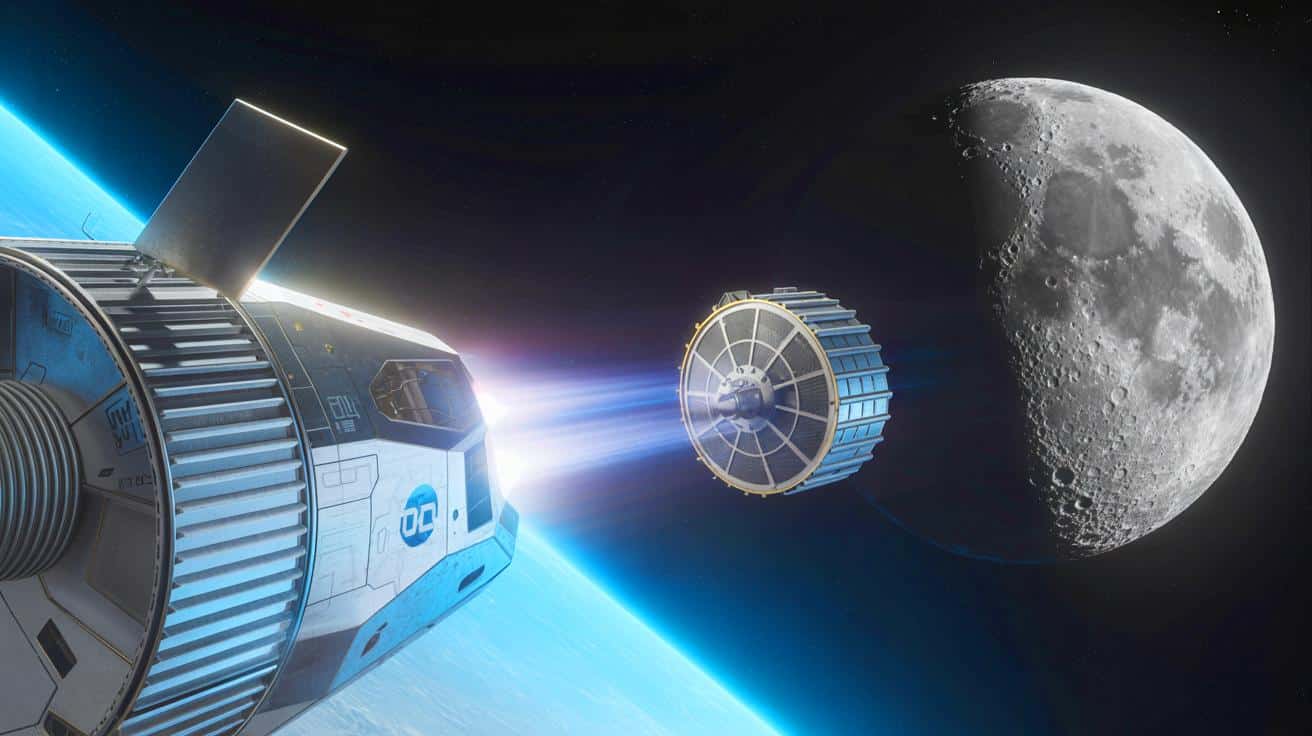
Firefly’s Elytra orbital vehicle will remain in lunar orbit for more than five years, offering long-term data relay and imaging services through its Ocula lunar imaging platform. This extended presence in lunar orbit underscores Firefly’s commitment to supporting ongoing lunar exploration efforts. The company plans to deploy two additional Elytra Dark vehicles before Mission 4, further enhancing its capabilities.
Chris Clark, Vice President of Spacecraft, emphasized the synergy between the Elytra Dark spacecraft and the Blue Ghost lander. He noted that these highly maneuverable vehicles are built with proven components and propulsion systems, ensuring their reliability for lunar missions. The Elytra constellation will enable Firefly to offer comprehensive lunar imaging, mission planning, and communication services across the Moon’s surface.
The inclusion of additional cargo capacity on both Elytra and Blue Ghost presents opportunities for commercial and government partners to participate in the 2029 mission. Firefly’s modular system aims to streamline future lunar logistics, aligning with NASA’s goals for sustainable lunar operations.
Commercial and Government Partnerships
Firefly’s invitation to commercial and government partners to join the 2029 mission reflects a broader trend in space exploration. Collaborative efforts between private companies and governmental agencies are becoming increasingly common, as they offer a way to share resources and expertise. This partnership model is crucial for achieving ambitious goals like sustainable lunar operations.
By providing room for additional cargo and offering its modular system, Firefly is positioning itself as a key player in the future of lunar logistics. This approach not only supports NASA’s objectives but also encourages innovation and investment in the space industry. As more companies and countries express interest in lunar exploration, partnerships like these will likely play a significant role in shaping the future of space travel.
Firefly’s Elytra Dark spacecraft are great companions for Blue Ghost – they’re highly maneuverable vehicles built with the same flight-proven components and propulsion system that successfully landed Blue Ghost on the Moon,” said Chris Clark.
Implications for Future Lunar Missions
The success of Firefly’s mission will have far-reaching implications for future lunar exploration. By demonstrating the feasibility of commercial partnerships and advanced technology, this mission could pave the way for more ambitious projects. The ability to analyze lunar resources and assess environmental hazards is vital for planning sustainable human presence on the Moon.
Moreover, the data collected from the mission will inform future endeavors, helping scientists and engineers design better tools and strategies for exploring the lunar surface. As the space industry continues to evolve, missions like these highlight the importance of innovation and collaboration in achieving breakthroughs.
With the Moon serving as a potential gateway for deeper space exploration, the insights gained from this mission could also influence plans for Mars and beyond.
As Firefly Aerospace and its partners prepare for this landmark mission, the space community watches with anticipation. What new discoveries will this mission uncover, and how will they shape the future of lunar exploration?

Wow, $177 million? That’s a lot of money! Is it all worth it? 🤔
Can someone explain what the Blue Ghost is? Sounds like a sci-fi movie title! 👻
I’m all for space exploration, but shouldn’t we focus on Earth first?
Thank you, Firefly, for pushing the boundaries of space exploration! 🚀
How does this mission help us with the current climate crisis?
Conquering the lunar south pole? Sounds ambitious! Best of luck!
Isn’t this just a waste of money when people are starving on Earth?