

| IN A NUTSHELL |
|
The construction industry is witnessing a groundbreaking advancement with the introduction of an internal curing concrete additive designed to revolutionize traditional methods. Named CureAssure, this innovative product claims to eliminate the need for conventional external curing while offering significant environmental benefits. Developed by Asian Paints, CureAssure aims to transform the concrete curing process by facilitating controlled and uniform hydration, ultimately leading to more durable and crack-resistant structures. As the construction sector grapples with issues of sustainability and efficiency, CureAssure presents a compelling solution that promises not only to enhance the quality of concrete but also to conserve water resources, a critical consideration in regions like the UAE.
Revolutionizing Concrete Curing
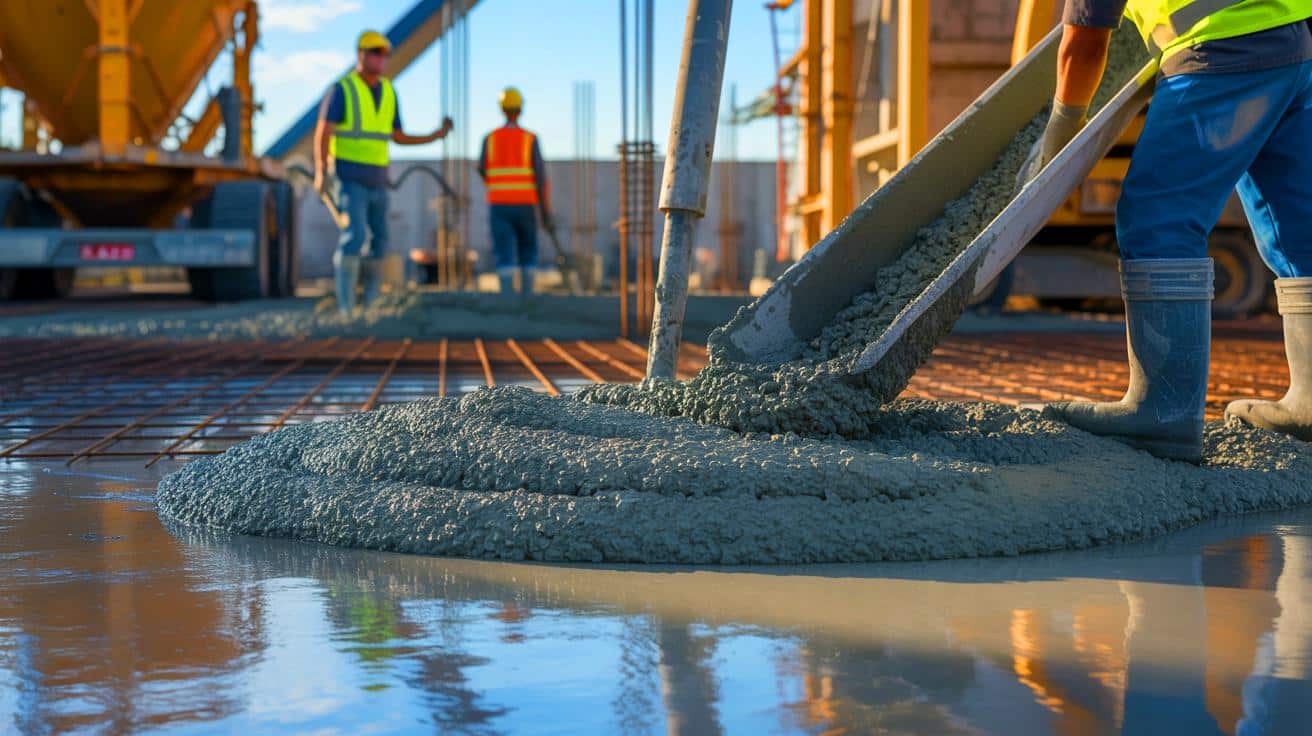
CureAssure marks a significant shift in concrete curing technology by introducing a self-curing liquid additive tailored for various construction applications. Unlike traditional methods that require external agents or coatings to maintain moisture, this product enhances the internal retention of water within the concrete itself. This innovation is particularly impactful as it eliminates the need for additional curing materials, reducing both costs and environmental impact. The advanced formulation of CureAssure incorporates unique polymers that optimize the curing process, providing an extraordinary level of efficiency.
The ability to retain moisture internally not only simplifies the curing process but also ensures the concrete achieves optimal strength and durability. By eliminating the need for external curing, construction projects can proceed more efficiently, saving time and resources. This development is poised to set a new standard in the industry, encouraging further innovations in sustainable building practices.
Reducing Cracks and Enhancing Durability
One of the standout features of CureAssure is its capacity to reduce cracks in concrete structures. By facilitating controlled and uniform hydration, the product minimizes stress generation and significantly decreases the occurrence of shrinkage cracks. This advancement is critical in constructing highly durable structures that can withstand environmental stressors. Mr. Joseph Eapen, CEO of Asian Paints, emphasized this point, stating, “With CureAssure, we’re not just launching a product; we’re redefining a foundational step in construction.” Such a statement highlights the transformative potential of CureAssure in building more resilient infrastructure.
Moreover, the reduction of cracks not only improves the aesthetic quality of concrete surfaces but also extends the lifespan of structures, offering long-term economic benefits. This attribute makes CureAssure particularly attractive for large-scale projects where longevity and reliability are paramount concerns.
Compatibility with Various Concrete Types
CureAssure’s versatility is further demonstrated by its compatibility with all types of portland cement, including OPC and SRC, as well as concretes containing pozzolanic materials. This flexibility allows it to be integrated into a wide range of concrete applications, from precast and high-fluidity concrete to ready-mixed and long-distance transport concrete. The ability to combine CureAssure with different concrete types without compromising performance is a significant advantage, providing engineers and builders with greater flexibility in their project designs.
Asian Paints advises conducting trial mixes to ensure the desired performance when combining CureAssure with other admixtures. This recommendation underscores the importance of precise formulation and testing in achieving optimal results. The innovative approach of embedding water availability directly within the concrete structure represents a paradigm shift in curing technology, promising to enhance the robustness of concrete regardless of environmental conditions.
Optimizing the Curing Process
For optimal results, Asian Paints recommends specific mixing procedures to ensure the effective integration of CureAssure into concrete. A thorough mixing process, lasting a minimum of 60 seconds, is crucial to achieving the intended benefits. The company also advises careful timing when adding gauging water to fine-tune concrete consistency, further highlighting the product’s advanced nature.
Mr. Amit DasGupta, Chief Senior Manager, Technology at AP Global, encapsulated the innovation’s essence by stating, “Developing CureAssure meant rethinking curing from the inside out.” This emphasis on addressing the root cause of curing challenges rather than merely treating surface symptoms positions CureAssure as a leader in sustainable construction solutions.
As the construction industry continues to evolve, the introduction of CureAssure raises important questions about the future of building practices. How will this innovation influence the adoption of sustainable technologies in construction, and what further advancements might it inspire in the pursuit of more resilient and efficient infrastructure?