




| IN A NUTSHELL |
|
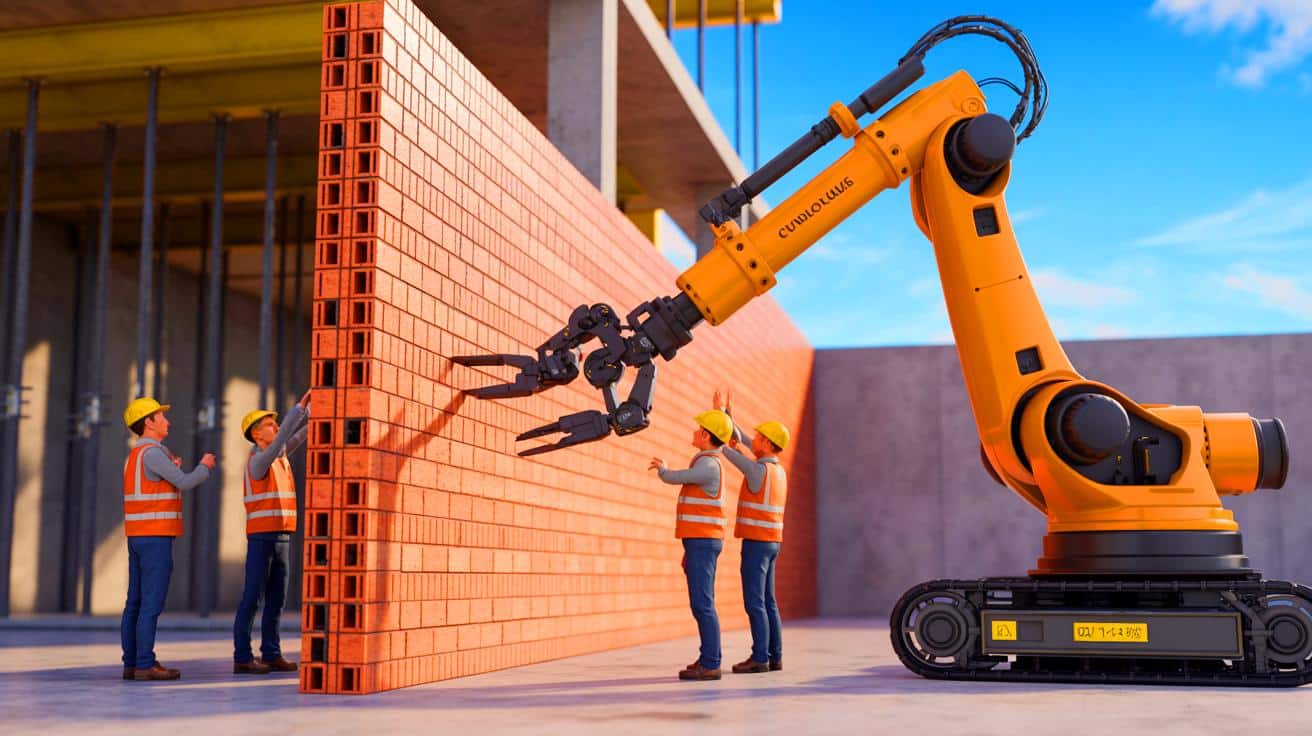
In recent years, the construction industry has seen a remarkable transformation with the advent of collaborative robotics. These innovations are not aimed at replacing human craftsmanship but rather enhancing it. A notable example of this is a project at the Technical University of Munich, where a robot was used to aid in building a climate-optimized wall. This initiative represents a significant step in integrating robotics into traditional construction methods, offering precision and efficiency that human workers alone cannot achieve. The project’s success could mark a turning point for construction practices globally, highlighting the potential for robots to complement and expand human capabilities.
Precision Beyond Human Limits
The use of robotics in construction offers a level of precision that is often beyond human capability. Markus Bruckner, a trainer for bricklayers and plasterers at the Munich-Ebersberg Building Guild, emphasized the robot’s ability to deliver accuracy where human skills may fall short. This precision is crucial when constructing complex structures like climate-optimized walls, where each brick’s angle can significantly impact energy efficiency.
Apprentice bricklayer Dragan Stanojevic shared his initial apprehension about working alongside a robot. However, he quickly adapted, recognizing the benefits of this collaboration. The robot’s ability to store and utilize a digital twin of the wall ensures seamless integration into the design process, thus enhancing overall construction quality. The combination of human expertise and robotic precision creates a powerful synergy that can revolutionize the construction industry.
Expanding Craftsmanship Through Collaboration
One of the key takeaways from the Munich project is that robotics does not replace human craftsmanship; it expands it. Kathrin Dörfer, Professor of Digital Fabrication at TUM, emphasizes that the interplay of digital planning, robotic execution, and traditional craftsmanship opens up new possibilities in construction. This approach allows for more innovative and efficient building techniques, encouraging trainees to embrace technology rather than fear displacement.
The project demonstrates how robotics can enhance the craftsmanship of skilled workers by taking over repetitive tasks, allowing humans to focus on more creative and complex aspects of construction. As technology advances, the construction industry is poised for a transformation that not only preserves but strengthens the role of artisans in the field.
Will “Recycled EV Batteries” Save the Planet or Fuel This New Environmental Nightmare?
The Simplicity of Monomaterial Construction
The project at TUM also explores the idea of simplifying construction through monomaterial techniques. By using only bricks, the construction process becomes more straightforward and sustainable. The wall constructed during the project was “four heads deep,” measuring a total of 55 centimeters, which is significantly thicker than typical constructions.
Bruckner and his team used weather-resistant clinker bricks on the outside and insulating bricks on the inside. This approach not only simplifies construction but also considers future dismantling and reusability. The focus on monomaterial construction could lead to more environmentally friendly building practices, reducing waste and promoting sustainability in urban development.
Future Prospects for Climate-Resilient Construction
The experiment at TUM aims to develop a methodology for designing climate-resilient building envelopes in urban environments. By using differentiated geometric configurations informed by climatic simulations, the project seeks to create buildings that are more energy-efficient and sustainable.
This innovative approach could set a new standard for urban construction, emphasizing the importance of climate considerations in building design. The findings from the project may influence future construction practices, encouraging a shift towards more sustainable and resilient building methods. The integration of robotics into these processes further enhances their potential, offering a glimpse into the future of construction.
The integration of robotics in construction is a promising development that has the potential to transform the industry. By offering precision, enhancing craftsmanship, and promoting sustainability, robotics could redefine what is possible in building design. As these technologies continue to evolve, how will the construction industry adapt to fully harness their potential while ensuring that human craftsmanship remains at the forefront?


Is this the beginning of the end for traditional construction jobs? 🤔
Why are people so scared of robots when they can actually help us do our jobs better?
How do they ensure that the robot’s precision doesn’t lead to more construction errors?
Great article! I didn’t know robots could be used in construction like this. Thanks!
Are there any plans to retrain workers who might be displaced by these robots?
Does this mean we won’t need to hire as many construction workers in the future?
The idea of a robot laying bricks is hilarious. What’s next? Robots making coffee? ☕
What’s the cost comparison between using robots and hiring human workers?
This sounds like a step forward for the industry. Embrace the change, people! 🌟