


| IN A NUTSHELL |
|
In a remarkable discovery that has captivated scientists and historians alike, the well-preserved remains of a man who lived a millennium ago are offering new insights into the ancient human gut microbiome. The remains, found in a cave in central Mexico, belong to a man now referred to as the “Zimapán man.” This naturally mummified individual provides a rare glimpse into the lives and health of ancient populations. The study of his intestinal tissue and preserved feces has revealed surprising details about the types of bacteria that resided within him, shedding light on the complex relationship between humans and their microbial companions in history.
The Discovery of Zimapán Man
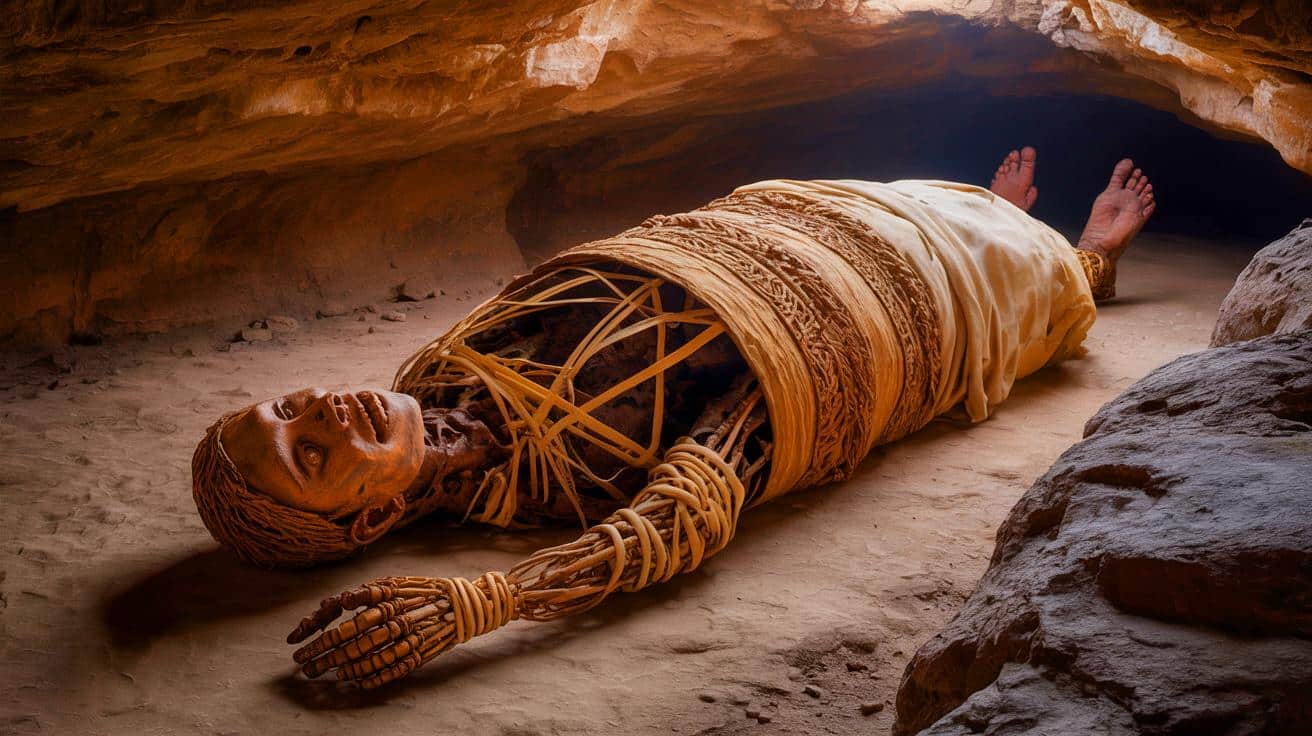
Zimapán man was discovered in 2014 by local residents in El Saucillo, Zimapán, Hidalgo. His body was found in a rock shelter that naturally preserved it, thanks to the unique environmental conditions of the cave. This discovery has intrigued researchers because of the exceptional preservation of soft tissues, including skin, fragments of the intestinal wall, and even blood vessels. The man, identified as Hna Hnu, lived approximately 1,000 years ago and likely belonged to the Otopame culture, a now-extinct group of hunter-gatherers. His body was wrapped in an elaborate funerary bundle, indicating his prominent status in society.
According to Santiago Rosas-Plaza, a researcher from the National Autonomous University of Mexico, the team used standard archaeological methods to study the remains. This included the analysis of DNA and other molecules, allowing scientists to explore the evolutionary history of the microbiome. The discovery is significant because it provides a rare opportunity to study ancient microbiomes, which can help us understand the health, diet, and lifestyle of ancient peoples.
Insights into the Ancient Gut Microbiome
The analysis of Zimapán man’s remains utilized advanced techniques, such as 16S rRNA gene sequencing, to identify the bacteria present in his gut. The study uncovered several families of bacteria known to be part of the human microbiome, including Peptostreptococcaceae, Enterobacteriaceae, and Enterococcaceae. These findings suggest that these bacterial families have long-standing symbiotic relationships with humans. Additionally, the presence of Clostridiaceae, previously found in mummies from ancient Andean civilizations, links Zimapán man to a broader cultural and biological context.
A particularly intriguing discovery was the identification of Romboutsia hominis, a bacterium not previously found in ancient microbiomes. This landmark finding provides new insights into the microbial evolution and diversification over the centuries. Researchers believe that the integration of anthropological, archaeological, and microbiome data can unravel the complex relationship between humans and their environments. The study of Zimapán man’s microbiome reveals the potential for ancient remains to preserve authentic gut bacteria, offering an unprecedented view into the past.
The Significance of Preservation Techniques
The preservation of Zimapán man is not only a testament to the cave’s natural conditions but also to the cultural practices of the Otopame people. The funerary bundle in which he was wrapped was made of maguey fiber mats and woven cotton, demonstrating an advanced understanding of materials and preservation techniques. The outer layer of the bundle, a mat made from long maguey fibers, was both strong and flexible. Beneath it was a sheet of native brown cotton, providing a protective layer over the body.
The study authors noted the complexity of the arrangement, highlighting the mathematical composition of the knots within the fabric. This attention to detail underscores the sophisticated cultural practices of the time. The preservation of the body speaks to the cultural intelligence and reverence for the dead, offering further insight into the values and beliefs of ancient societies. Such discoveries not only enrich our understanding of ancient peoples but also provide valuable lessons in preservation techniques that might be applicable even today.
The Broader Implications of the Study
The study of Zimapán man’s microbiome has broader implications for understanding human health and evolution. By examining ancient microbiomes, researchers can gain insights into how human health and disease have changed over time. This knowledge can inform modern medicine, particularly in understanding the role of the gut microbiome in health and disease. The findings from this study could have implications for microbiome research, potentially leading to new approaches in treating gut-related ailments.
The discovery of Zimapán man also highlights the importance of interdisciplinary research. The integration of archaeological, anthropological, and microbiological data provides a comprehensive view of ancient life, enriching our understanding of human history. As researchers continue to uncover the secrets of ancient microbiomes, the potential for new discoveries remains vast. What other hidden stories might ancient remains reveal about our past and its connection to our present?
The study of the Zimapán man’s remains offers a fascinating glimpse into the past, revealing the complex relationship between humans and their microbiomes. As we continue to learn from ancient discoveries, what other lessons might we uncover about our history, health, and the evolution of our species?