




| IN A NUTSHELL |
|
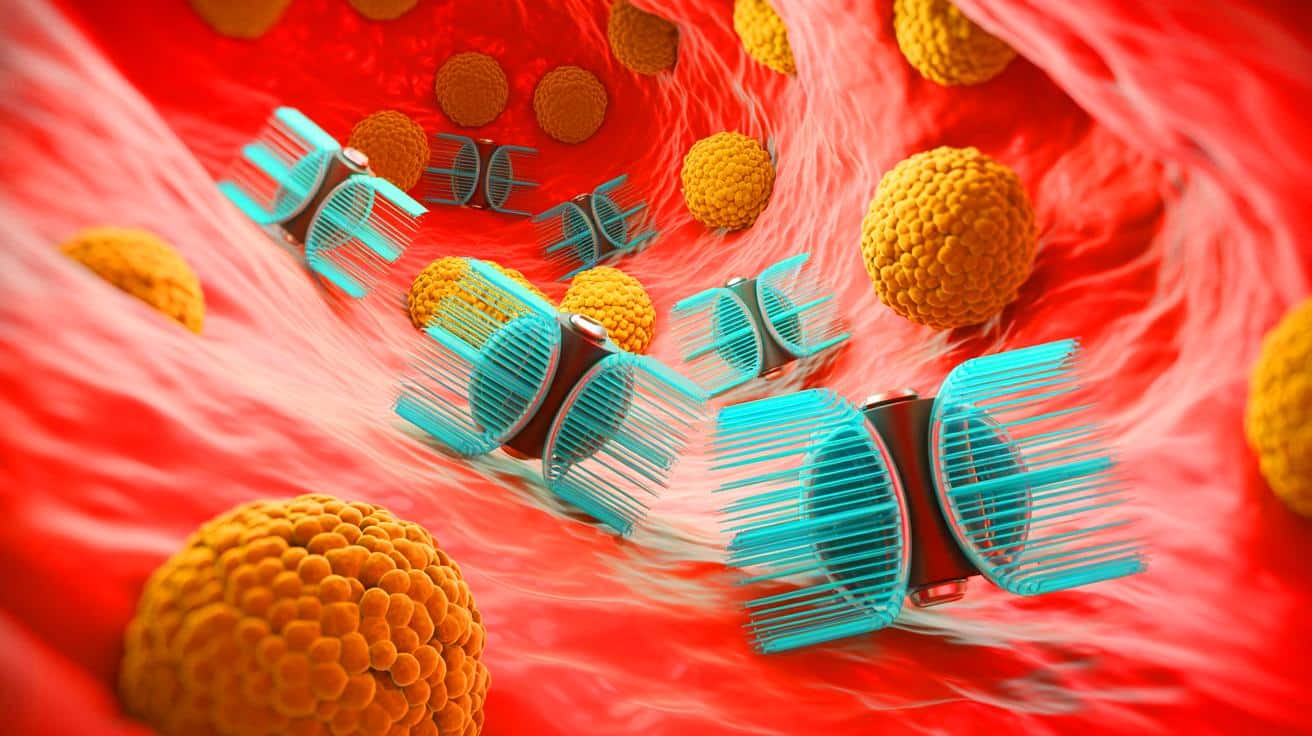
In a groundbreaking development in the world of bioengineering, researchers at Carnegie Mellon University have created a new class of biological robots known as AggreBots. These tiny machines, crafted from human lung cells, have the potential to revolutionize the delivery of therapeutic interventions within the human body. Unlike traditional biobots that rely on muscle fibers for movement, AggreBots leverage the motility of cilia, minute, hair-like structures, to navigate complex environments. This innovative approach opens up new possibilities for medical treatments and research applications, marking a significant step forward in the field of biohybrid robotics.
Innovative Approach to Biobot Engineering
Carnegie Mellon University’s pioneering work on AggreBots represents a significant shift in the engineering of biological robots. By using human lung cells, researchers have developed a method to create biobots with customizable motility. This is achieved through a modular assembly strategy that aggregates tissue spheroids engineered from lung stem cells. The result is a new type of biobot powered by cilia, a promising alternative to muscle fibers traditionally used in this field.
The Ren lab at Carnegie Mellon has been instrumental in developing this novel approach. By manipulating the shape and structure of cilia, they have overcome a significant challenge in the field. The ability to customize the location and abundance of cilia on the tissue surface allows for precise control over the biobots’ movement. This level of control is unprecedented and offers exciting possibilities for future research and applications.
Controlled Cilia for Precision
Dhruv Bhattaram, a Ph.D. student in biomedical engineering, described the process as analogous to removing oars from selected locations on a rowboat while paddling. This method allows researchers to control the behavior of CiliaBots by fusing together different spheroids into various shapes. The inclusion of nonfunctional spheroids further enhances the ability to direct the biobots’ movement.
Victoria Webster-Wood, an associate professor of mechanical engineering, emphasized the significance of this approach. By combining different ciliated and non-ciliated elements, researchers can create biobots with specific mobility patterns. Because AggreBots are made entirely from biological materials, they are naturally biodegradable and biocompatible. This could enable their direct application in medical settings in the future, offering a new dimension in the design of biohybrid robots.
Medical and Research Promise
The potential applications of AggreBots are vast, extending across the medical and research fields. These biobots could benefit the biorobotics community, clinicians, and medical researchers studying cilia-related diseases. For instance, they hold promise for treating conditions like primary ciliary dyskinesia and cystic fibrosis, where cilia motility is a critical factor.
One of the most exciting aspects of CiliaBots is their ability to be made from a patient’s own cells. This offers the potential for personalized therapeutic delivery vehicles, reducing the risk of immune rejection. As Xi (Charlie) Ren, an associate professor of biomedical engineering, points out, motility is crucial in the complex environment of the human body. The ability to control CiliaBot movement paves the way for novel therapeutic delivery mechanisms, enhancing the efficacy of treatments and potentially transforming patient care.
Future Directions and Implications
The development of AggreBots marks a significant milestone in the evolution of biohybrid robotics. By combining modular design with biodegradable materials and precise motility control, these biobots open up new possibilities for research and personalized medicine. The study, published in the journal Science Advances, highlights the potential for AggreBots to facilitate in vivo therapeutic delivery and contribute to our understanding of environmental hazards’ health impacts.
As researchers continue to explore the capabilities of AggreBots, the implications for medicine and biotechnology are profound. These tiny machines could revolutionize how we approach disease treatment and prevention. By providing a customizable platform for therapeutic delivery, AggreBots have the potential to transform the landscape of medical interventions, offering new hope for patients with a variety of conditions.
As the field of biohybrid robotics continues to advance, the question remains: How will future developments in this area reshape our approach to medicine and the treatment of complex diseases?